The honest answer to what the ranking factors for ai search are is uncomfortable for anyone selling a shortcut: most of them are the same factors that have always mattered, plus a handful of new ones that decide whether an AI answer will quote you by name. There is no secret schema tag or prompt trick that gets ChatGPT to cite your page. What gets you cited is being genuinely useful, clearly structured, and repeatedly referenced elsewhere — which is a harder sell than a checklist, but it is the truth.
This guide separates what carries over from classic SEO, what is genuinely new, and what you can act on this week. No hype, no “everything you know is obsolete.” Understanding the real ranking factors for ai search starts with understanding what “ranking” even means when the result is a paragraph instead of a list.
Ranking means something different now
In a blue-link search, ranking is a position: you are third, or you are not on page one. In AI search — ChatGPT, Perplexity, Google’s AI Overviews, Gemini — there is no page one. The model reads a set of sources, synthesizes an answer, and sometimes names a few of them. Your goal shifts from “be the top result” to “be one of the sources the model trusts enough to pull from and cite.”
That distinction changes the whole optimization target. A page can rank first in Google and never appear in the AI answer sitting above it, because the model chose to summarize a competitor who explained the concept more cleanly. Winning AI search is about being the clearest, most quotable, most corroborated source on a specific question — not about edging out one position in a ranked list.
The factors that carry straight over
Start with the reassuring part: the fundamentals did not disappear. AI systems either read the live web at answer time or train on a crawl of it, and in both cases they are pulling from the same pages search engines already index. That means the groundwork is familiar.
- Crawlability and indexing. If a bot can’t fetch and read your page, it can’t be quoted. Clean HTML, a working sitemap, and no accidental blocking still gate everything.
- Topical relevance. Content that actually answers the query, using the language real people use, still wins. Semantic relevance was always the point; models are just better at judging it.
- Authority and trust. Links, brand mentions, and a track record on a subject still signal that you are a source worth believing. Models lean on the same corroboration humans do.
- Freshness. For anything time-sensitive, recent and updated content gets pulled ahead of stale pages, the same as in regular search.
If your site is technically broken or thin, no amount of “AI optimization” saves it. The prerequisite for showing up in an AI answer is being a page a search engine would already respect.
What’s genuinely new: being quotable
Here is where AI search asks something of you that ranked lists never did. A model has to be able to lift a clean, self-contained statement out of your page and drop it into an answer. Rambling, hedged, or buried information does not survive that extraction, even when the underlying content is correct.
Practically, that rewards a few habits. Lead with the answer, then explain — the inverted-pyramid style journalists use. Write clear declarative sentences that stand on their own without three paragraphs of setup. Use descriptive headings that match how people actually phrase questions. Break comparisons and steps into lists and tables the model can parse. None of this is a trick; it is just writing that is easy to excerpt. The pages that get cited tend to be the ones a human editor would also find easy to quote.
Structured data helps, but doesn’t rescue weak content
Schema markup — FAQ, HowTo, Product, Organization — gives machines an unambiguous read on what your page is and who you are. It is worth adding. But treat it as clarification, not leverage: it makes good content easier to understand, and does nothing for content that isn’t worth citing in the first place. Add it where it fits naturally and move on.
Entity and brand signals off your own site
The factor most SEOs underweight is what the rest of the web says about you. Language models build an internal sense of entities — brands, people, products — from how often and how consistently they appear across sources. If your brand is described the same way in many credible places, the model develops a confident association and is far likelier to surface you for the topics you own.
That is why unlinked brand mentions, consistent descriptions, presence in respected industry roundups, and a coherent story across your own pages all matter more in AI search than they did for blue links. You are not just building backlinks anymore; you are building a consistent, corroborated identity that a model can recognize and repeat. Reviews, directories, and third-party coverage are part of your ranking surface now, whether or not they pass link equity.
The “SEO is dead” question, answered honestly
You will read that AI search kills SEO. It doesn’t — but it does change the scoreboard, and pretending otherwise is its own kind of dishonesty. When an AI answer resolves a question outright, the click that used to come to your page may never happen. Informational queries are the most exposed; commercial and comparison queries, where people still want to see and choose for themselves, are far more durable.
The right response is not panic and not denial. It is to notice that the work — be findable, be clear, be trusted — is continuous with good SEO, and to start measuring a new outcome alongside rankings: whether AI systems mention you at all. Visibility, not just position, is the metric that now decides whether the audience ever learns you exist.
How to know if it’s working
You cannot improve what you cannot see, and AI citations are invisible in a normal rank tracker. Checking by hand doesn’t scale — answers vary by phrasing, by user, and from day to day, so one lucky ChatGPT reply tells you nothing reliable.
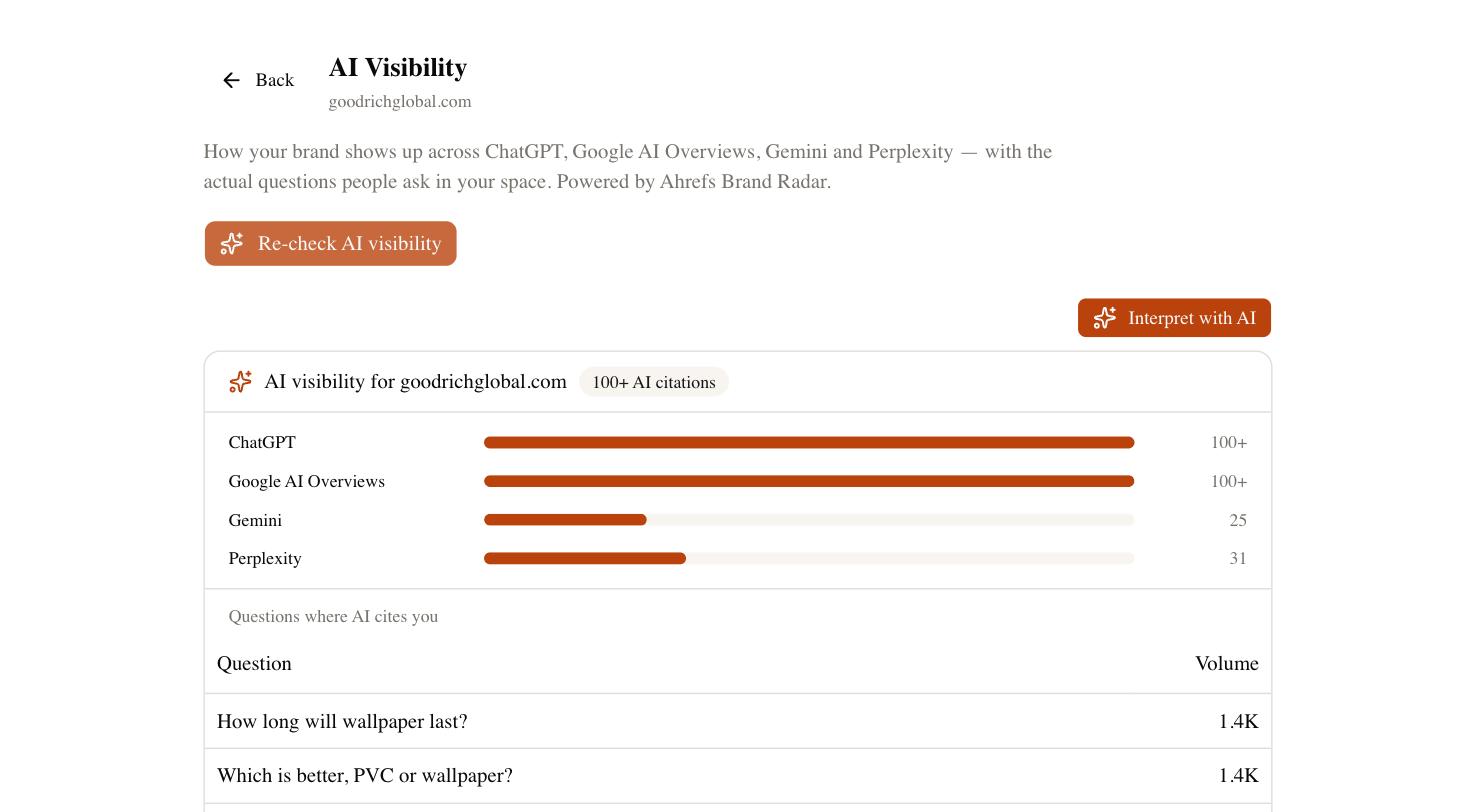
SEO Rocket’s Brand Radar is built for exactly this gap: it tracks whether — and where — your brand gets cited across ChatGPT, Perplexity, and Google’s AI Overviews for the queries that matter to you, so you can see movement over weeks instead of guessing from a single prompt. Pair that with the same tool’s Ahrefs-grade rank tracking and you can watch both scoreboards at once — traditional position and AI citation — and tell which of your changes actually earned a mention.
Where to start this week
Don’t rebuild your strategy around AI search; extend the one you have. Pick your ten highest-value questions and make each answer genuinely the clearest on the web — lead with the answer, structure it to be excerpted, back it with evidence. Fix any crawl or indexing issues, because those still gate everything. Tighten how your brand is described across your own site and the places that cover you, so a model sees one consistent entity. Then measure AI visibility deliberately rather than checking a chatbot on a whim.
The uncomfortable, freeing truth is that the ranking factors for ai search reward the same thing good SEO always did: being the most useful, most trustworthy, most quotable source on a question people actually ask. The tools for measuring it are new. The work is not.