
Most guides make this harder than it needs to be, so here is semantic SEO explained without the jargon: it is the practice of writing about a topic completely enough that a search engine can tell you understand it, rather than stuffing a page with one keyword and hoping. Search stopped matching strings of text years ago and started matching meaning, and semantic SEO is simply how you write for that shift.
The idea sounds abstract until you see what it changes in practice. It changes how you pick what to write, how you structure a page, and how you decide when a piece is actually finished. This guide walks through the concept, a concrete example, and the parts that genuinely move rankings versus the parts that are mostly noise.
What semantic SEO actually means
A search engine used to see the word “jaguar” and have no idea whether you meant the animal, the car, or the American football team. Modern search resolves that ambiguity by reading the words around it — habitat and rainforest point one way, horsepower and lease point another. That contextual understanding is the “semantic” part: meaning derived from relationships between words, not the words in isolation.
Semantic SEO is your side of that conversation. Instead of targeting a single keyword, you cover a topic and its related concepts, questions, and entities thoroughly enough that the meaning of your page is unmistakable. A page about “email marketing” that also naturally covers deliverability, segmentation, subject lines, and open rates reads as genuinely about email marketing. A page that repeats “email marketing” fifteen times and says nothing else does not.
Why search engines went semantic
The push toward meaning solved a real problem: keyword matching was easy to game and bad at answering questions. If ranking depended on exact-match phrases, the pages that won were often the ones best at repeating a phrase, not the ones best at helping. Language models inside search changed the economics of that by letting the engine understand a query the way a person would, including the intent behind it.
This matters even more now that a growing share of searches never reach a blue link. AI Overviews, ChatGPT, and Perplexity summarize answers directly, and they pull from sources that demonstrate real topical depth. Thin, keyword-first pages rarely get cited in those answers. The same qualities that make a page semantically strong — clear coverage, well-defined entities, direct answers — are the qualities that make it quotable to an AI system.
What matters, and what does not
Semantic SEO attracts a lot of pseudo-technical advice, so it is worth being blunt about what earns its keep. The things that genuinely help are unglamorous: covering the subtopics a reader actually needs, answering the real questions people ask, using natural related language instead of one repeated phrase, and structuring the page so both a human and a machine can follow it.
Several popular tactics matter far less than their reputation suggests:
- Keyword density — there is no target percentage. Write until the topic is covered, then stop. A “density” number tells you nothing about whether the page is useful.
- Cramming in LSI keywords — related terms should appear because you explained the topic, not because you pasted a list. Forced synonyms read exactly as forced.
- Schema as a ranking shortcut — structured data helps machines parse your page and can win rich results, but it does not rescue thin content. It labels substance; it does not create it.
- Word count for its own sake — depth is not length. A tight 900-word answer often beats a padded 3,000-word one.
The honest summary: semantic SEO rewards genuine subject-matter coverage. Most of the “tricks” are just proxies people reach for when they do not want to do the harder work of actually knowing the topic.
How to structure a page semantically
Structure is where the concept becomes concrete. Start from the primary topic, then map the questions and subtopics a knowledgeable reader would expect you to address. Each of those becomes a section, and each section answers its question directly before adding nuance. The goal is that someone could skim your headings and see the full shape of the topic.
A few habits do most of the work. Name your entities clearly — the products, people, places, and concepts your topic revolves around — so there is no ambiguity about what you mean. Answer the core question early rather than burying it under an introduction. Use headings that phrase real questions or clear subtopics instead of clever labels. And link related ideas together so the page reads as one coherent explanation, not a stack of loosely related paragraphs.
A concrete example
Say you sell running shoes and want to rank for “trail running shoes.” The keyword-first approach writes a page that repeats “best trail running shoes” in the title, the headings, and every other sentence. It reads thin because it is thin.
The semantic approach starts with the question a buyer is really asking: which trail shoe is right for me? That opens up the subtopics they need before they can decide — the difference between trail and road outsoles, how lug depth changes grip on mud versus rock, what “drop” means and who a low drop suits, waterproofing trade-offs, sizing for downhill toe room, and when a road shoe is honestly good enough. You define each entity, answer each question plainly, and the phrase “trail running shoes” appears naturally throughout because you are genuinely discussing trail running shoes. One page now covers the topic the way an expert salesperson would in person — and that is precisely what search is trying to reward.
Where SEO Rocket fits
The hardest part of semantic SEO is knowing which subtopics you are missing — you cannot see your own blind spots. This is where a competitor gap analysis earns its place. It surfaces the keywords and questions competitors rank for that you do not, which is the fastest way to find the sections your page needs to be considered complete.
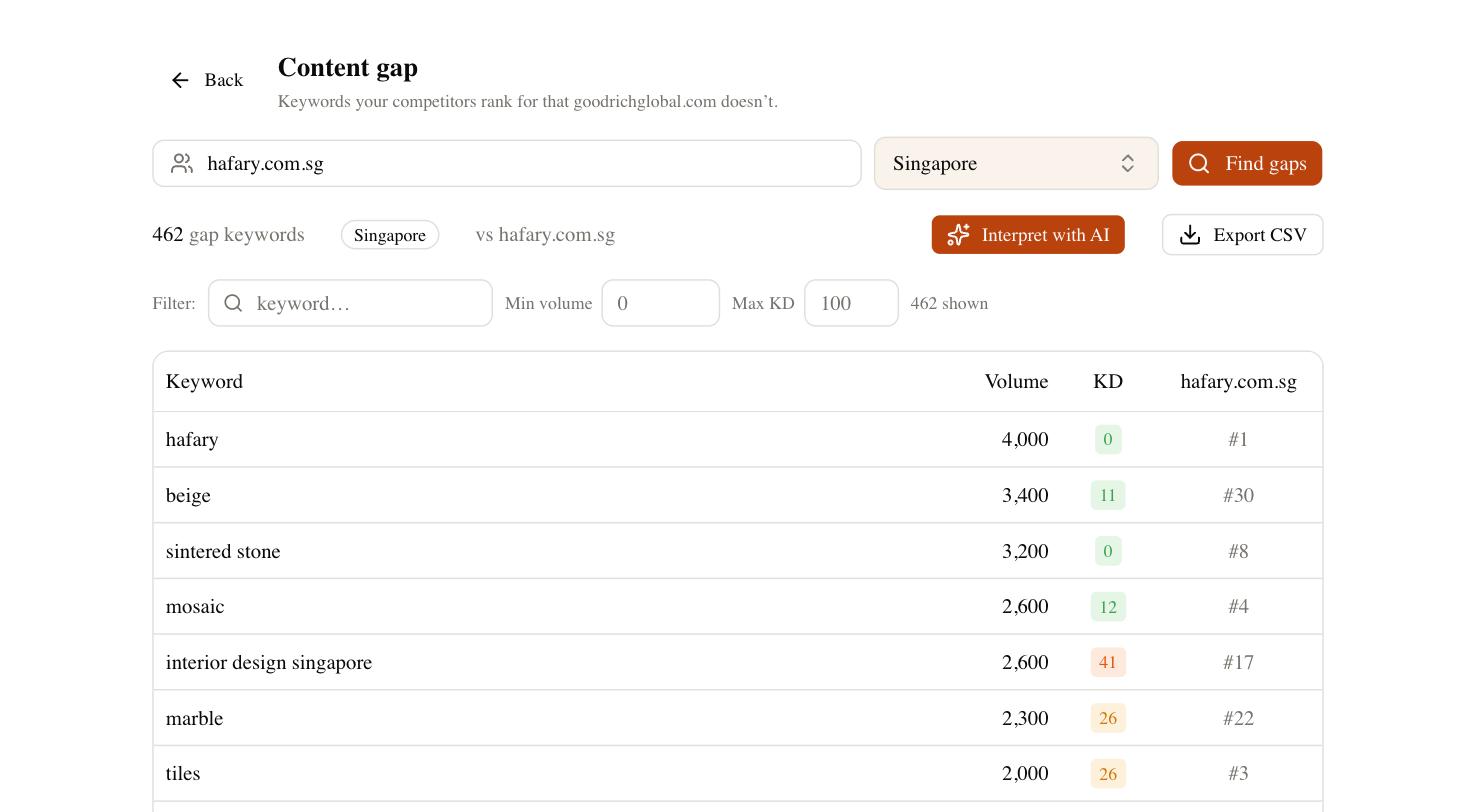
SEO Rocket runs that gap analysis on real, Ahrefs-grade data, then lets you draft the content in the same place. Because it is chat-first, you can ask it what a topic should cover, get the related keywords and questions grouped by intent, and build an outline that maps the full semantic territory before you write a word. The AI-visibility side then shows whether your finished page is actually getting cited in AI answers — the real test of whether your coverage was deep enough to be quoted. It does not replace knowing your subject, but it removes the guesswork about what “complete” means.
How to start today
You do not need a re-platform or a new methodology. Pick one page that matters and one topic it should own. Read the top few results and note every subtopic and question they answer that you do not — that gap list is your semantic to-do. Then rewrite the page to answer the core question early, cover each of those subtopics in its own clear section, and name your entities precisely, cutting any paragraph that repeats a keyword without adding meaning.
Be patient with the payoff. Rankings jitter a few positions day to day, and a semantic rewrite competes on depth, so give it a full crawl-and-reindex cycle before you judge it — usually a few weeks, not days. The upside is that depth compounds: a page that genuinely covers its topic keeps earning long-tail traffic and AI citations long after a keyword-stuffed page would have stalled. That, in one sentence, is semantic SEO working the way it is supposed to.