
SEO for architects is not the same job as ranking a shop or a SaaS product, because almost nobody buys an architect on impulse. A homeowner planning an extension, a developer scoping a new build, a business fitting out a restaurant — each one researches for weeks and shortlists three or four firms before a single call happens. Good SEO for architects is about being on that shortlist, in the right city, at the moment the search happens.
This guide covers what makes your niche different: how your buyers search, the keywords that actually turn into projects, where local beats national, and the mistakes that keep good firms invisible. It’s specific to architecture practices, not generic advice with your industry pasted on top.
Why search works differently for architecture firms
Two things shape everything else. First, the transaction is high-value and low-frequency — a single residential commission can be worth tens of thousands, so ranking for even a handful of the right searches pays for itself many times over. You don’t need traffic in the thousands; you need the twenty people this month who are ready to hire. Second, the decision is visual and trust-heavy. Your buyer wants to see work that looks like theirs, feel that you’ve done it before, and confirm you’re licensed and local. That means your site has to do double duty: satisfy a search engine and reassure a nervous person spending real money.
How your buyers actually search
Architecture searches cluster into three intents, and they don’t deserve equal effort. Top of the funnel are the researchers — “how much does an architect cost,” “do I need an architect for an extension,” “architect vs draftsman.” These pull big volume but weak intent; they’re worth a blog post, not your homepage. The middle is style and type — “modern home architect,” “barn conversion architect,” “sustainable house design.” The bottom, where the money is, combines a service with a place: “residential architects Austin,” “commercial architect near me,” “extension architect [your city].” Those last searches are short, unglamorous, and convert like nothing else, because the person typing them has already decided to hire someone — they’re just deciding who. Notice too that homeowners and commercial buyers search differently: a developer types the building type and district, while a homeowner types the project (“loft conversion,” “garage to bedroom”) and their town. Map your pages to both.
The keywords that bring in real projects
Chase intent, not volume. A national term like “architecture firm” looks impressive and will almost never call you; a local service term with a fraction of the searches fills your calendar. Here is how to read the main patterns an architecture practice should target:
| Keyword pattern | Intent | What it means | Priority |
|---|---|---|---|
| residential architects [city] | Local + commercial | Ready to hire, choosing a firm | Highest |
| architect near me | Local + commercial | Google serves the map pack — profile matters | Highest |
| house extension architect [city] | Service + local | Specific project, strong intent | High |
| commercial architects [city] | Local B2B | Developers, business owners | High |
| modern / passive house architect | Style + informational | Shortlisting by aesthetic or spec | Medium |
| how much does an architect cost | Informational | Early research — blog, not service page | Low–Medium |
Build one strong page per service-plus-place combination you genuinely serve, and let the informational terms feed those pages through internal links and a helpful blog. Don’t invent location pages for cities you can’t take on — thin, near-duplicate pages hurt more than they help.
Local SEO is your highest-leverage move
For most firms, the single biggest return comes from the local pack — the map and three listings that sit above the normal results for “architect near me” and city searches. Claim and fully complete your Google Business Profile: correct category, service area, real project photos, and your license details. Then earn reviews steadily, because review count and recency visibly move local rankings and they’re the first thing a homeowner reads. A firm with fifteen recent, specific reviews will outrank a more famous studio with three, in that buyer’s city, almost every time. Reviews that mention the project type and the neighborhood help even more, because they reinforce exactly the searches you want to win. Ask the client to name what you built and where.
Make sure your name, address, and phone number are identical everywhere they appear — your site, the profile, the AIA directory, and local listings. Inconsistent details quietly suppress local rankings, and it’s one of the most common problems on architecture sites that were built once and never touched again.
Turn your portfolio into pages that rank
Architects build beautiful sites that search engines can’t read. A project shown as a full-screen slideshow with no text, no headings, and a URL like /project-047 gives Google nothing to rank. Fix that by treating each project as a real page: a descriptive title (“Rear Extension & Kitchen Remodel, [Neighborhood]”), a few hundred words on the brief, the constraints, the materials and the outcome, and image file names and alt text that describe what’s shown. You keep the visual impact and gain a page that can rank for the exact project type someone is searching for — which is often how a stranger finds the one case study that convinces them.
Common mistakes architecture firms make
The recurring pattern is a portfolio that forgets it’s also a sales tool. The usual culprits:
- Image-only pages — stunning galleries with zero text for a search engine to index.
- No service pages — “extensions,” “new builds,” and “commercial” buried in one paragraph instead of dedicated pages.
- No location signals — the city they work in never stated clearly, so they’re invisible for local searches.
- Ignoring reviews — treating the Google Business Profile as a formality, then wondering why they miss the map pack.
- Chasing vanity terms — optimizing for “architecture” instead of the local service searches that actually convert.
None of these are hard to fix. They persist because architecture sites are usually designed once by a studio and then left alone, while SEO rewards steady, ongoing attention.
How SEO Rocket fits an architecture practice
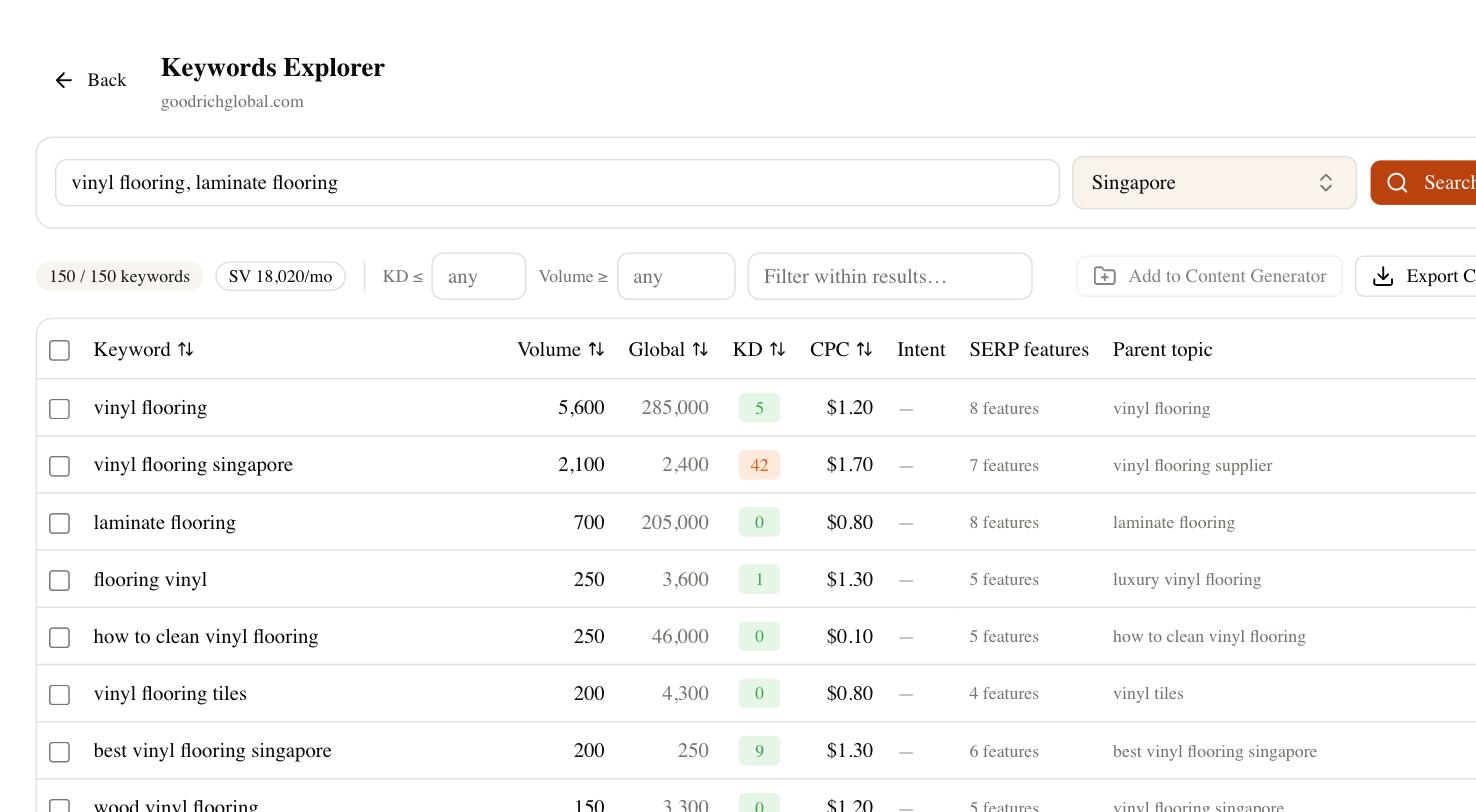
SEO Rocket is built to run this workflow without a specialist on staff. You ask, in plain language, which local searches you could realistically rank for, and it returns keyword ideas with real volume and difficulty on Ahrefs-grade data — so you can see that “residential architects [city]” is winnable while a national term isn’t worth the fight. It’ll draft the service and project pages you’re missing, track where you sit for your target city searches week to week, and show which competing firms are ranking and why. The rank tracker matters here specifically because architecture volumes are low and jittery — you want a clear trend over a full cycle, not a panic over one day’s movement. For a small firm, that’s the difference between guessing and knowing where the next few clients will come from.
A simple 90-day priority checklist
If you do nothing else, do these, roughly in order:
- Claim and fully complete your Google Business Profile with real project photos and your correct category.
- Build one clear page per core service — extensions, new builds, commercial, renovations.
- Add or rewrite location signals so your city and service area are unmistakable.
- Convert your best five projects from galleries into indexable case-study pages with real text.
- Ask every finished client for a Google review, and keep asking every month.
- Track your position for three target “service + city” searches and check the trend, not the daily wobble.
Search won’t replace referrals for an architecture practice, and it shouldn’t try to. What it does is capture the buyers who aren’t referred — the people three weeks into planning an extension who type their city and their project into Google. Being the firm they find, with a page that answers exactly what they searched, is the whole game. Do the local basics well, make your work readable to search engines as well as beautiful to clients, and you’ll be on the shortlist that matters.