
SEO for construction companies is not the same job as SEO for a SaaS startup or an online store, and treating it like one wastes money. Get SEO for construction companies right and you win the local searches that turn into site visits and signed contracts; get it wrong and you rank for traffic that never calls. Your buyers are searching from a truck, a job trailer, or a project manager’s desk, and most of them want a contractor who can start soon and prove they have done the work before.
This guide skips the generic advice. Below are the search patterns specific to contractors, the keywords that actually bring in jobs, the moves worth doing first, and the mistakes that keep good builders invisible on Google.
How construction buyers actually search
Construction search intent splits sharply, and each split needs a different page. A homeowner types “kitchen remodel contractor near me” or “how much does a deck cost.” A general contractor sourcing a sub types “commercial concrete contractor Dallas” or “steel erector for sale near me.” A property manager with a flooded basement types “emergency water damage restoration” at 2 a.m. and calls the first number that loads. These are not the same buyer, and a single “Services” page cannot satisfy all of them.
The other pattern that matters: construction searches are overwhelmingly bottom-of-funnel. Someone Googling “tilt-up construction contractor” is not browsing — they have a project and a budget. That is good news. It means a small number of well-built pages can outperform a blog that publishes weekly, because you are catching people at the exact moment they need a bid. It also means seasonality is real: roofing and paving searches spike in spring and after storms, so plan your pages before the season, not during it.
The keywords that bring in jobs
Money keywords in construction follow a simple formula: service plus location, sometimes plus a qualifier like “commercial,” “emergency,” or “cost.” Chasing broad head terms like “construction” is a trap — the volume is huge but the intent is scattered and the competition is national. Go specific.
| Example keyword | Who’s searching | Intent |
|---|---|---|
| commercial roofing contractor Phoenix | Facility manager, GC | Ready to request a bid |
| concrete driveway cost per square foot | Homeowner | Researching budget, close to buying |
| emergency foundation repair near me | Property owner in trouble | Will call within the hour |
| metal building erectors [state] | GC sourcing a specialty sub | Comparing a shortlist |
| ADU builder [city] | Homeowner adding a unit | Early but high-value project |
| tenant improvement contractor | Commercial tenant / broker | Scoping a fit-out |
Build one page per service-and-city combination that you genuinely serve. If you do commercial concrete in three metros, that is at least three pages, each written for that market with local project photos, not one page that lists every city in a footer.
Local is the whole game (mostly)
For most contractors, the map pack and local organic results decide who gets the call. That makes your Google Business Profile the single highest-return asset you own. Fill it out completely: correct primary category (there is a specific one for your trade), accurate service areas, real hours, and a steady stream of photos from actual job sites. A profile with fifty real project photos and dozens of reviews beats a slicker website with an empty profile almost every time.
The exception is specialty and modular builders who ship or travel nationally — prefab structures, disaster-restoration franchises, or niche industrial work. If your service area is the whole country, you compete on national organic and content depth instead of the map. Know which game you are in before you spend a dollar, because the tactics barely overlap. Most contractors, though, live and die within a fifty-mile radius, and for them the map pack is the whole scoreboard.
The highest-leverage moves for contractors
A short list beats a long one here. Do these before anything else.
- Claim and load your Google Business Profile — right categories, service areas, and fresh job-site photos every month.
- Build individual service-area pages — one per trade per city, each with local proof, not a thin template swap.
- Put your best projects front and center — before-and-after galleries, project scope, and location. This is your portfolio and your ranking signal at once.
- Ask every satisfied client for a review — reviews drive both map rankings and the decision to call.
- Add LocalBusiness and Service schema — structured data helps Google understand your trade and coverage area.
- Make the site fast on mobile — buyers search from the field, and a slow page loses the click before it renders.
Notice what is missing: a weekly blog. Content has its place — a genuinely useful “cost of X in [city]” page can rank and pre-qualify buyers — but for most contractors it comes after the profile, the service pages, and the reviews are working.
Mistakes construction companies keep making
The most common one is a single, thin “Services” page trying to rank for every trade and every city at once. Google cannot tell what that page is about, so it ranks for nothing. Split it. The second mistake is ignoring the Google Business Profile while pouring money into a website redesign — for local searches, the profile often matters more than the site.
Two more worth naming. Contractors chase national head terms (“best construction company”) that will never convert and never rank, instead of the specific service-plus-city phrases that do. And many hide their best asset: real photos of finished work. Stock images of hard hats signal nothing. A gallery of your actual pours, framing, or roofs signals competence to both buyers and search engines.
Where SEO Rocket fits
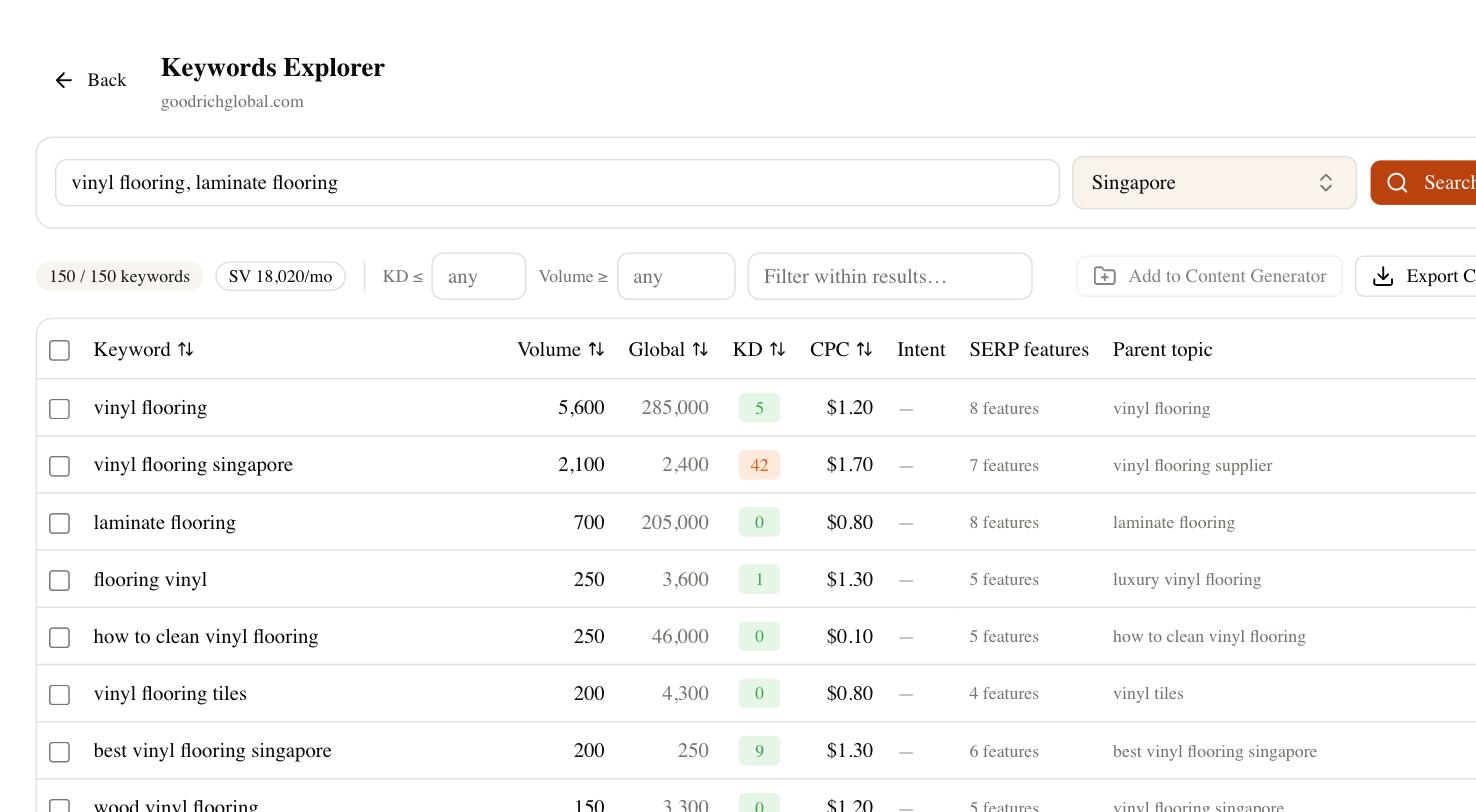
You can run all of this by hand, but a few pieces are hard to eyeball. SEO Rocket’s Keywords Explorer surfaces the exact service-plus-city phrases in your trade with real volume and difficulty scores, so you build pages people actually search for rather than guessing. Rank tracking watches those local terms over time — remember that positions jitter a few spots day to day, so judge the trend across a couple of weeks, not one morning’s check.
The competitor gap tool shows which keywords the contractor already dominating your metro ranks for that you do not, which is usually the fastest route to a page plan. The site audit catches the slow-mobile and broken-schema issues that quietly cost you clicks. And because some buyers now ask ChatGPT or Perplexity “who’s a good commercial roofer in Phoenix,” Brand Radar tracks whether your company gets named in those AI answers — a surface no map pack covers yet. For an agency running several contractor clients, the client dashboards hand each one a clean, read-only view of their own rankings.
A 30-day priority checklist
If you do nothing else this month, work this list in order. Each item ships value on its own, so you are never waiting on the whole plan to see results.
- Verify your Google Business Profile and set the correct primary trade category.
- Upload at least twenty real job-site photos and set your true service areas.
- List your core services, then map each one to the cities you actually cover.
- Build one dedicated page per top service-and-city pair with local project proof.
- Add LocalBusiness and Service schema, and confirm your name, address, and phone match everywhere.
- Request reviews from your last ten happy clients and reply to every existing one.
- Run a site audit, fix the mobile-speed and crawl issues first, and start tracking your local keywords.
Done honestly, this is enough to move a local contractor onto page one for the searches that matter within a ranking cycle or two. There is no trick to it — the builders who win at search are the ones who show real work, cover the right terms, and keep their profile alive. Pick the one service and one city that matter most, and start with the profile today; everything else compounds from there.