SEO for contractors is not the same game as SEO for a blog or a SaaS company. Your buyer isn’t browsing — they have a burst pipe, a leaking roof, or a kitchen they finally decided to gut, and they want someone local who can start soon. That urgency and that geography change everything about how you should rank.
Done right, SEO for contractors turns “emergency plumber near me” and “kitchen remodel cost” searches into booked estimates. This guide covers how your buyers actually search, the keywords that bring money instead of tire-kickers, the moves that matter most, and the mistakes that quietly cost contractors leads every month.
Why contractor SEO works differently
Most contractor searches carry two things a national blog never has to worry about: a location and an intent to hire soon. Someone typing “gutter installation Austin” is not researching for fun — they want three quotes this week. That means the winners aren’t the sites with the most content; they’re the ones Google trusts to serve a specific service in a specific place.
Search volume is also lower and more valuable. A term like “foundation repair Dallas” might get a few hundred searches a month, not thousands, but the person behind it could be worth $8,000 in work. Chasing high-volume, low-intent terms like “how to fix a faucet” wastes effort — those visitors are trying to avoid hiring you, not find you. You want the smaller, hotter searches where the click is a lead, and you want to own the handful of them that map directly to the services you make money on.
The keywords that actually bring jobs
Contractor keywords fall into a few clear buckets, and each one deserves a different page. Emergency terms convert fastest. Service-plus-city terms are your bread and butter. Cost and “near me” terms pull people who are close to deciding. Here’s how the intent breaks down.
| Keyword example | Intent | What it’s worth |
|---|---|---|
| emergency roof repair Denver | Ready to hire now | Highest — book it today |
| bathroom remodel contractor near me | Comparing local options | High — estimate stage |
| how much does a deck cost to build | Budgeting, pre-decision | Medium — nurture lead |
| licensed electrician Phoenix | Verifying, ready to call | High — trust-driven |
| concrete driveway installation cost | Research plus intent | Medium-high |
| best HVAC company [city] | Final vetting | High — reputation stage |
Notice the pattern: almost every valuable term pairs a service with either a place, a price, or a proof word like “licensed” or “best.” Build one strong page per service you actually sell, and target the city variations within it rather than spinning up thin duplicate pages for every suburb.
Local is the whole game
For most contractors, the map pack — those three business listings above the regular results — captures the bulk of the clicks. Ranking there depends heavily on your Google Business Profile, not just your website. Fill it out completely: correct service categories, service areas, hours, photos of real jobs, and a steady flow of reviews with the service and city mentioned naturally in them.
Consistency matters more than most contractors realize. Your business name, address, and phone number need to match exactly across your site, Google, Yelp, and industry directories. Mismatched listings confuse Google and quietly suppress your local rankings. Fix those citations once and they keep paying off. Proximity plays a role too — you generally rank strongest for searches physically near your address — so if you serve a wide region, the location pages on your site do the work the map pack won’t, extending your reach into the towns where a competitor’s pin sits closer than yours.
Your highest-leverage moves
If you only have a few hours a month, spend them here. First, build a dedicated page for each core service — “roof replacement,” “gutter cleaning,” “kitchen remodeling” — instead of cramming everything onto one “Services” page. Google ranks pages, not businesses, and a focused page can rank for its exact term.
Second, create genuine location pages only for the areas you truly serve, each with real detail: local projects, neighborhoods, permits, or conditions specific to that area. Third, collect reviews relentlessly — ask every satisfied customer the day the job wraps. Reviews feed both your map ranking and the trust that turns a click into a phone call. Fourth, make sure your site loads fast on a phone and shows a click-to-call button, because a huge share of these searches happen on mobile in the moment.
Common mistakes contractors make
The most expensive mistake is treating the website like an online brochure and never updating it. Google rewards sites that look alive. The second is targeting vague, national terms — “best contractor” — instead of the specific service-and-city phrases that convert. You’ll never outrank Home Depot for a generic term, but you can absolutely own “tile installation” in your county.
Other frequent misses: thin location pages that are just the service page with the city swapped in, which Google flags as low quality; ignoring reviews or, worse, having no system to request them; and burying the phone number so a ready-to-hire visitor has to hunt for it. Fixing these costs nothing but attention, and each one directly affects how many calls come in.
How SEO Rocket fits a contractor’s workflow
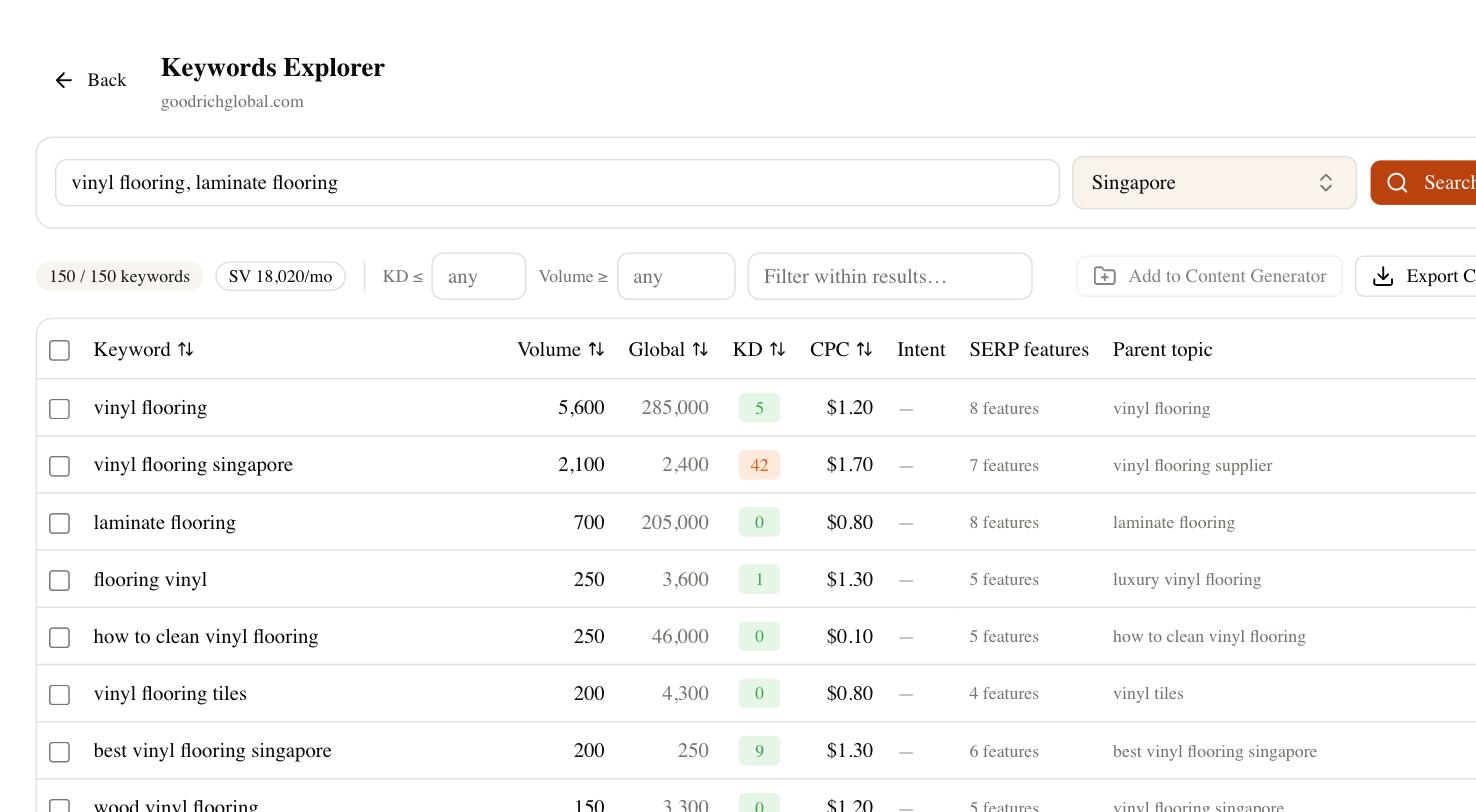
You don’t have time to learn a dense enterprise SEO tool between jobs, and that’s the point of SEO Rocket. You ask in plain language — “what are people searching for roofing in my area?” — and it pulls real keyword data with volume and difficulty, so you can see which service-city terms are winnable versus which are locked up by national sites.
From there, the same tool drafts the service and location pages for those keywords, tracks where you rank in your target city over time, and shows the competitor gap — the terms a rival contractor ranks for that you don’t. The rank tracking is honest about the noise: local positions jitter a few spots day to day, so judge progress over weeks, not mornings. For a contractor who’d rather be on a job site than in a dashboard, having research, writing, and tracking in one place is the difference between doing SEO and meaning to.
A priority checklist to start this week
Work this list top to bottom. Each item is something you can act on without a big budget, and the order reflects what moves leads fastest.
- Claim and fully complete your Google Business Profile with accurate service areas and categories.
- Fix name, address, and phone consistency across every directory and your site.
- Build one focused page per service you sell, targeting the service-plus-city term.
- Set a routine to request a review from every finished job.
- Add a visible click-to-call button and confirm the site loads fast on mobile.
- Research your local keywords, then track your city rankings monthly and fill the biggest gaps first.
None of this is glamorous, and none of it works overnight — expect a few months before local pages gain traction. But contractor searches are among the highest-intent traffic on the web, and the businesses that show up when someone’s roof is leaking are the ones that stay booked. Start with the profile and the service pages, keep the reviews flowing, and let the data tell you where to push next.