
SEO for event planners is a different game from SEO for a national brand, and treating it like one is the fastest way to waste a year. Most of your buyers are not typing “event planning” into Google — SEO for event planners lives in the specific, local, high-intent searches a couple makes when they have a date and a budget and need someone to run the day. Get those right and a slow month turns into a booked quarter.
This guide is specific to your industry. It covers how event buyers actually search, the keywords that lead to signed contracts, the moves that matter most, the mistakes that quietly cost you leads, and where a tool like SEO Rocket earns its place. No generic checklist with “event planner” pasted over it.
Why event planners search differently
Event buyers rarely browse. Someone planning a wedding, a company offsite, or a milestone birthday has a fixed date, a rough budget, and a short window to hire — so their searches are urgent and intent-heavy. They are not researching a category for fun; they are trying to find someone competent, nearby, and available before the date slips.
That changes your whole strategy. Head terms like “event planning” carry big volume but almost no buying intent — most of that traffic is students, curious hobbyists, and people who will never hire anyone. The searches that fill your calendar are longer, more specific, and often tied to a city or an event type. Lower volume, far higher value. A single “corporate event planner Austin” booking can be worth more than a thousand visits to a generic tips post, and it usually takes far less content to win it.
The keywords that actually book events
Sort your keywords by intent, not by volume. The table below groups the patterns event planners should target, roughly from ready-to-hire down to early research. You will fill in your own city and event types, but the shape holds across the industry.
| Example keyword | Search intent | Priority |
|---|---|---|
| corporate event planner [city] | Ready to hire, local | High |
| wedding planner near me | Ready to hire, local | High |
| day-of coordinator [city] | Specific service, high intent | High |
| birthday party planner [city] | Ready to hire, local | High |
| destination wedding planner | Considering, less local | Medium |
| how much does a wedding planner cost | Researching budget | Medium |
| corporate retreat ideas | Early research | Low |
The top rows are where money lives. They pair a service with a location or an urgent qualifier, and the person searching is minutes from filling in a contact form. The bottom rows still matter — a “how much does a wedding planner cost” post can catch someone early and warm them up — but they should never come before you own the ready-to-hire terms in your own city.
Local intent is your biggest lever
For most planners, geography is the whole ballgame. Weddings, parties, and corporate events are booked by people who want to meet you, visit venues nearby, and know you understand the local scene. That means your competition is not every planner on the internet — it is the handful within driving distance, which is a fight you can actually win.
Two things do the heavy lifting here. First, a complete Google Business Profile with your real service area, event categories, honest photos, and a steady flow of reviews — the map pack is often the first thing a local buyer sees. Second, a dedicated page for each city or region you serve, written for that place rather than a single “areas we cover” list. A planner working three metros needs three real pages, each targeting that metro’s ready-to-hire searches, not one thin paragraph naming all three.
The highest-leverage moves
You do not need forty pages. You need the right ten, in the right order. Start here:
- One page per core service — weddings, corporate events, private parties. Each targets its own buyer and its own keywords instead of a single blurred “services” page.
- Location pages for every city or region you genuinely serve, each pointed at that area’s high-intent searches.
- A real portfolio — past events with photos, event type, venue, and a short story. This is proof, and it quietly ranks for venue and event-type terms.
- Reviews and Google Business Profile kept current, because local buyers trust recent, specific reviews more than any headline you write.
- Venue and vendor backlinks — the caterers, florists, photographers, and venues you already work with are your most natural, most relevant links. Ask to be listed on their preferred-vendor pages.
Common mistakes event planners make
The same errors show up again and again. The biggest is chasing volume: pouring effort into ranking for “event planning ideas” while ignoring “corporate event planner” in your own city, where an actual buyer is waiting. Volume feels like progress; bookings pay the bills.
Close behind is the single-page trap — one long “what we do” page trying to rank for weddings, galas, conferences, and kids’ parties at once. Google cannot tell what that page is for, and neither can a buyer. Splitting it into focused service and location pages almost always lifts rankings on its own. The third mistake is neglecting proof: no reviews, a stale portfolio, thin location pages with no local detail. Event buyers are hiring trust as much as skill, and a page that shows neither will lose to a weaker planner who simply looks more credible.
Where SEO Rocket fits
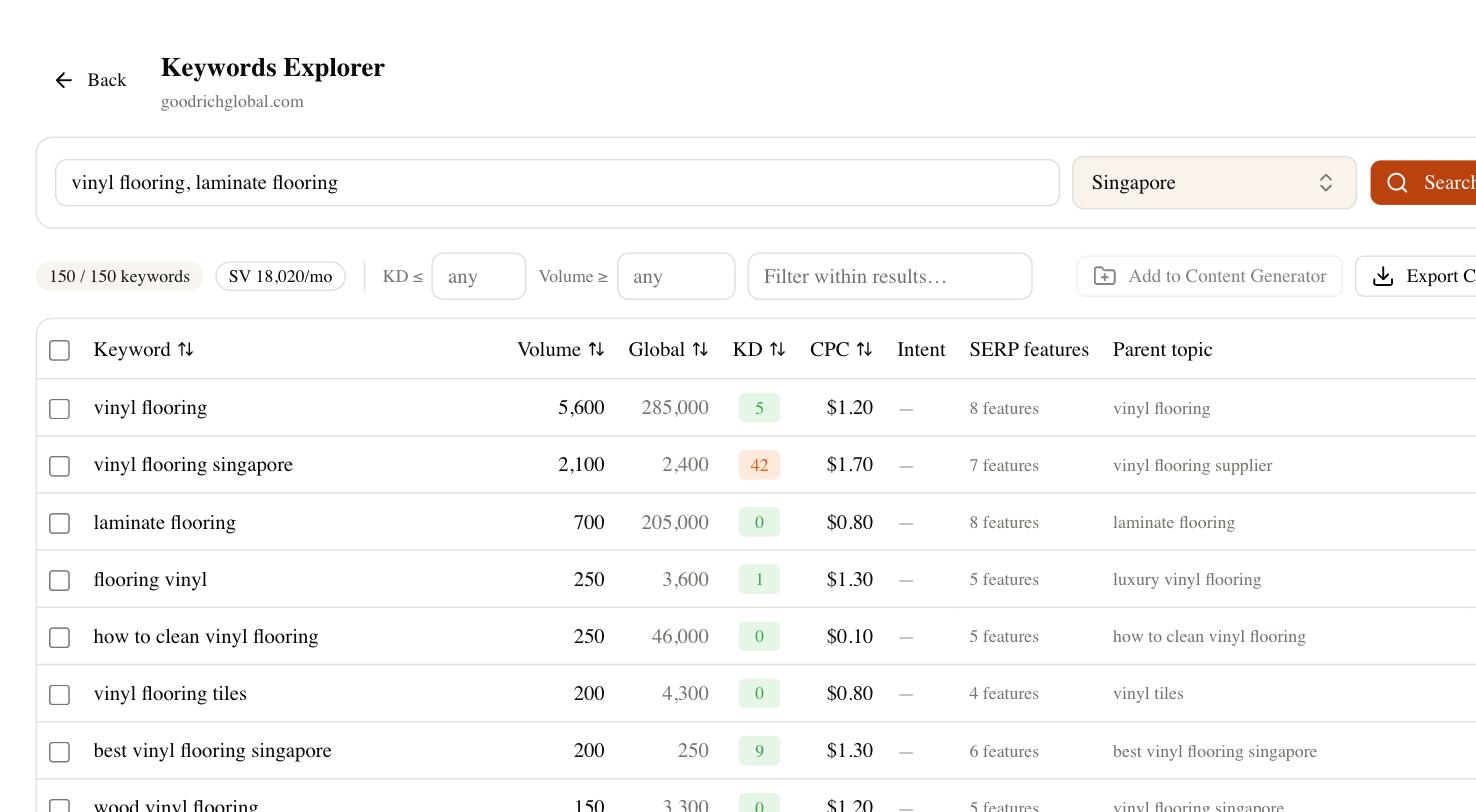
You can run all of this by hand, but the research and tracking is where planners stall. SEO Rocket is built to collapse that work. Ask its Keywords Explorer for ideas around a seed like “corporate event planner” and it returns the long-tail, city-level variations with volume and difficulty on real, Ahrefs-grade data — so you can see which ready-to-hire terms are actually winnable in your market before you write a word.
From there the competitor gap tool shows what the planners already ranking in your city rank for that you do not, which is usually a tidy to-do list of missing service and location pages. Rank tracking watches your target terms so you know whether a new location page is climbing or stuck, and the site audit catches the technical issues — slow venue-photo galleries, missing titles — that hold local pages back. If you manage marketing for several planners or venues, the client dashboards hand each one a clean, read-only report without exporting anything.
How to start this month
Do not try to do everything. Pick your single most valuable service in your single best city — say, corporate event planning in your home metro — and own it end to end: one focused service page, one location page, a complete Google Business Profile, and three fresh reviews. Track that one term for a full month before you judge it, because local rankings jitter a few spots day to day and one good week means nothing on its own.
Once that page is pulling inquiries, repeat the pattern for the next service or the next city. SEO for event planners rewards depth over breadth: a handful of pages that each nail one buyer, in one place, will out-book a sprawling site that tries to rank for the whole industry. Build the pages your buyers are actually searching for, prove you can be trusted, and let the calendar fill.