
SEO for furniture stores lives or dies on one thing: catching buyers at the exact moment they stop browsing and start buying. Furniture is a considered, high-ticket purchase, so the person typing “grey fabric sectional with chaise” is far closer to a sale than someone skimming a listicle about living-room trends — and doing SEO for furniture stores well means building pages that serve both, in the right order.
This guide skips the generic advice. Below is what actually moves revenue for a furniture retailer: the keywords worth ranking for, when local beats national, the highest-leverage pages to build, and the mistakes that quietly cost sales every month.
Why furniture SEO is different
Two things set this niche apart. First, intent splits hard by product specificity. A search like “sofas” is enormous but mostly window-shopping; “L-shaped modular sofa washable covers” has a fraction of the volume and a buyer with a wallet out. Your job is to win the specific, high-intent terms first and treat the broad heads as a long-term prize, not a starting point.
Second, furniture is both a local and a national game at once. A store with a showroom competes on “furniture store near me” and city terms, while the same store’s online catalog competes nationally on product searches. Most retailers pick one lane and leave the other wide open. You need a plan for both, because the two audiences convert completely differently — one wants directions and a delivery radius, the other wants swatches, dimensions, and a returns policy.
The money keywords furniture buyers actually search
Forget vanity head terms for a moment. The searches that pay are product-plus-modifier queries and local queries. Buyers describe material, size, color, room, and style because that is how they shop. Here is how the intent tends to break down.
| Example search | Intent | Best page to rank |
|---|---|---|
| furniture store near me | Local, ready to visit | Location / showroom page |
| leather recliner sofa | Transactional, national | Category page |
| solid wood dining table for 6 | Transactional, specific | Filtered category or product |
| best sectional for small apartments | Commercial research | Buying guide + product links |
| how to clean a fabric sofa | Informational, post-purchase | Blog / care guide |
| custom sofa upholstery [city] | Local, high-value service | Service + location page |
Notice the pattern: the closer a query gets to a specific product or a specific place, the closer it sits to a transaction. Informational terms like “how to clean a fabric sofa” still matter — they build topical authority and catch buyers before their next purchase — but they should never be the first pages you optimize when sales are the goal.
Local intent versus national intent
If you have a showroom, local search is your highest-return work and the easiest to underrate. A fully built Google Business Profile, consistent name-address-phone details across directories, real photos of your floor, and location pages for each city you serve will often outperform months of blogging. Someone searching “sofa store [your city]” is a near-guaranteed visit if you show up in the map pack.
National product SEO is a longer, more competitive grind against big-box retailers and marketplaces. You will not outrank a national chain on “sofa” — and you should not try. You win by being more specific and more useful: detailed category pages, honest product copy with real dimensions and materials, and buying guides that answer the questions a generic marketplace listing never does. Pick the product lines where you have genuine depth and own those niches instead of spreading thin.
The highest-leverage moves
Start with the pages nearest the money. Category and collection pages are the workhorses of furniture SEO, yet most stores leave them as bare grids of products with no copy, no internal links, and thin title tags. Give each important category a real page: a short intro that uses the natural search language (“modern sectional sofas”), links to relevant subcategories, and structured product data so search engines understand what you sell.
Second, fix product pages. Unique descriptions beat manufacturer boilerplate every time, and furniture buyers genuinely want dimensions, weight, material, care instructions, and delivery expectations spelled out. Add review schema where you have real reviews. Third, build a small set of buying guides that target commercial-research terms and link straight to the products they recommend — these catch buyers earlier and feed your category pages with internal links and context.
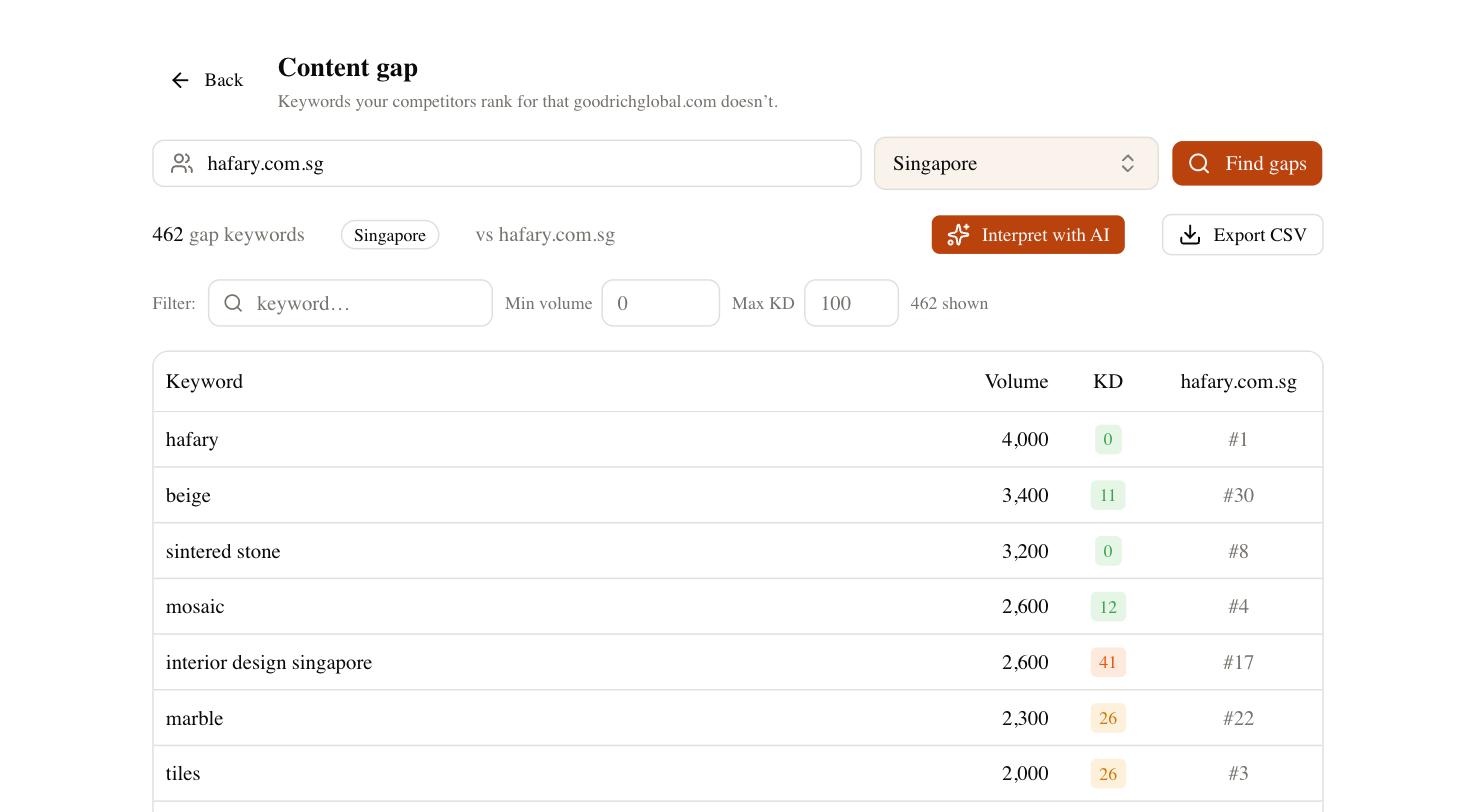
The fastest way to find these opportunities is to see exactly what your competitors rank for that you do not. That gap — a competitor pulling traffic on “reclaimed wood coffee table” while you have no page for it — is a ready-made content plan, sorted by how much traffic each term is worth and how hard it is to win.
Common mistakes furniture stores make
The most expensive mistake is ignoring category pages in favor of the blog. Blogging feels productive, but a care-tips post rarely converts, while a well-built category page captures buyers with intent. The second mistake is duplicate and thin product copy — importing the same manufacturer description across fifty listings tells search engines your pages add nothing.
Other quiet killers: slow-loading pages stuffed with huge, uncompressed product photos; no local pages when you have physical stores; letting discontinued products 404 instead of redirecting them; and treating every keyword as equal instead of chasing specific, high-intent terms first. Furniture images are heavy by nature, so compression and lazy loading are not optional — a sluggish product page loses buyers who were ready to check out.
How SEO Rocket fits your workflow
You can run all of this from one chat-first workspace instead of stitching five tools together. Ask SEO Rocket to pull the keywords your competitors rank for and it returns them with real search volume and difficulty on Ahrefs-grade data, so you can prioritize by revenue rather than guesswork. Its rank tracker watches your category and local terms so you know whether the work is landing, and the competitor gap view turns “what should I build next” into a sorted list.
When you have picked a target, the AI writer drafts the category intro, buying guide, or product copy — grounded in the actual search data, not generic filler you have to rewrite. If you run stores for clients or multiple brands, the client dashboards hand each one a clean, read-only view of progress without exporting spreadsheets. The point is less tool-switching and more shipping.
A priority checklist to start this week
Work top-down — the earliest items return the most for the least effort.
- Claim and fully complete your Google Business Profile, with real showroom photos and accurate hours.
- Build or rewrite location pages for every city you physically serve.
- Add unique intro copy and internal links to your top five category pages.
- Replace manufacturer boilerplate on your best-selling products with real dimensions, materials, and care details.
- Run a competitor gap check and pick three specific, high-intent keywords you have no page for.
- Publish one buying guide that links directly to the products it recommends.
- Compress your heaviest product images and enable lazy loading.
None of this requires a big team or a big budget — just doing the high-intent work before the vanity work. Furniture buyers tell you exactly what they want in the search box; strong SEO for furniture stores is mostly the discipline of building the page that answers them and getting out of their way. Start with the pages nearest a sale, prove the lift with rank tracking, then widen out.