SEO for garage door companies is not the same job as ranking a blog or an e-commerce store, and treating it like one is why so many shops pour money into content that never rings the phone. Your buyer is rarely browsing — a spring snapped, the door is stuck half-open, or the opener died overnight, and they need someone today. SEO for garage door companies lives or dies on catching that person in the exact minute they search, in the exact town you serve.
This guide is specific to your trade: how garage door customers actually search, which keywords are worth chasing, the handful of moves that move revenue, and the mistakes that quietly bleed leads to the competitor three towns over.
How garage door buyers actually search
Most of your demand is urgent and local. Someone types “garage door won’t close,” “broken torsion spring,” or “garage door repair” plus their city, and they call one of the first names they see — usually within the hour. This is bottom-of-funnel, high-intent traffic, which is good news: you do not need to educate these people, you just need to show up and be reachable.
The rest splits into two smaller buckets. There are planned purchases — “new garage door cost,” “insulated garage door installation,” “carriage house door” — where the buyer compares for a few days before booking. And there is a thin layer of pure research, like “why is my garage door humming,” which mostly matters as a way to catch a future repair customer early. Weight your effort toward the urgent repair searches first; that is where the money and the fastest wins are.
The keywords that actually make money
Forget “garage door” as a target — it is broad, national, and dominated by manufacturers. Your money keywords are service-plus-location and problem-plus-location phrases. Here is how the main buckets compare on intent, so you know which pages to build first.
| Example keyword | Intent | Priority |
|---|---|---|
| garage door repair [city] | Urgent, ready to call | Highest |
| garage door spring replacement [city] | Urgent, specific fault | Highest |
| garage door opener installation [city] | Planned service booking | High |
| garage door won’t open | Panic search, needs help now | High |
| garage door cable replacement cost | Comparing before booking | Medium |
| new garage door installation [city] | Higher-ticket, longer decision | Medium |
| insulated garage door | Product research | Lower |
The pattern is clear. Repair and specific-fault searches convert fastest because the buyer has already decided to spend money; they just need a phone number. Installation and “cost” queries are worth pages too, but they sit further from the sale, so build them after your repair pages are earning. Run your seed terms through a keyword tool to pull the exact phrases and search volumes in your metro — the language shifts by region, and “garage door service” outperforms “garage door repair” in some markets.
Local is the whole game
For a garage door company, local search is not one channel among many — it is the channel. Two things drive it. First, your Google Business Profile: a complete, category-correct profile with your real service area, current hours, photos of actual jobs, and a steady flow of reviews will out-earn a prettier website almost every time. The map pack sits above the regular results for nearly every repair search, and most callers never scroll past it.
Second, if you serve more than one town, you need a real page for each one — not a single “service areas” list with thirty city names stuffed at the bottom. A genuine city page names the neighborhoods you cover, mentions local landmarks, shows jobs you have done there, and answers the questions that town’s customers ask. Google can tell the difference between a page written for a place and a template with the city name swapped in, and so can the homeowner reading it.
Build a page for every service, not one “services” page
The single most common structural mistake is cramming every offering onto one page. Spring replacement, cable repair, opener installation, off-track doors, and new installs are different searches with different intent, and each deserves its own page that can rank on its own. A dedicated “garage door spring replacement” page — explaining torsion versus extension springs, rough cost range, and how fast you can come out — will beat a homepage that mentions springs in passing every time.
Depth wins here. The shop that writes honestly about what a repair involves, what it roughly costs, and how long it takes builds trust before the call and ranks better because the page genuinely answers the query. Thin pages with three sentences and a phone number rarely hold position once a competitor writes something better.
Mistakes garage door companies keep making
Most of the losses are self-inflicted and fixable. Run down this checklist honestly:
- Ignoring the Google Business Profile — leaving it half-filled, wrong-category, or without fresh reviews while pouring effort into the website.
- One thin services page instead of a real page per service that can rank on its own.
- Chasing broad head terms like “garage doors” instead of the local, high-intent repair phrases that actually convert.
- Fake or copied city pages — the same template with the town name swapped, which Google discounts and readers see through.
- No call tracking, so you cannot tell which pages or keywords produce booked jobs and which just look busy.
- Slow, hard-to-tap mobile pages — most of your traffic is a stressed homeowner on a phone who will bounce if the number is not one tap away.
Fix the profile and the per-service pages first. Those two alone move the needle for most shops before you touch anything more advanced.
How SEO Rocket fits the workflow
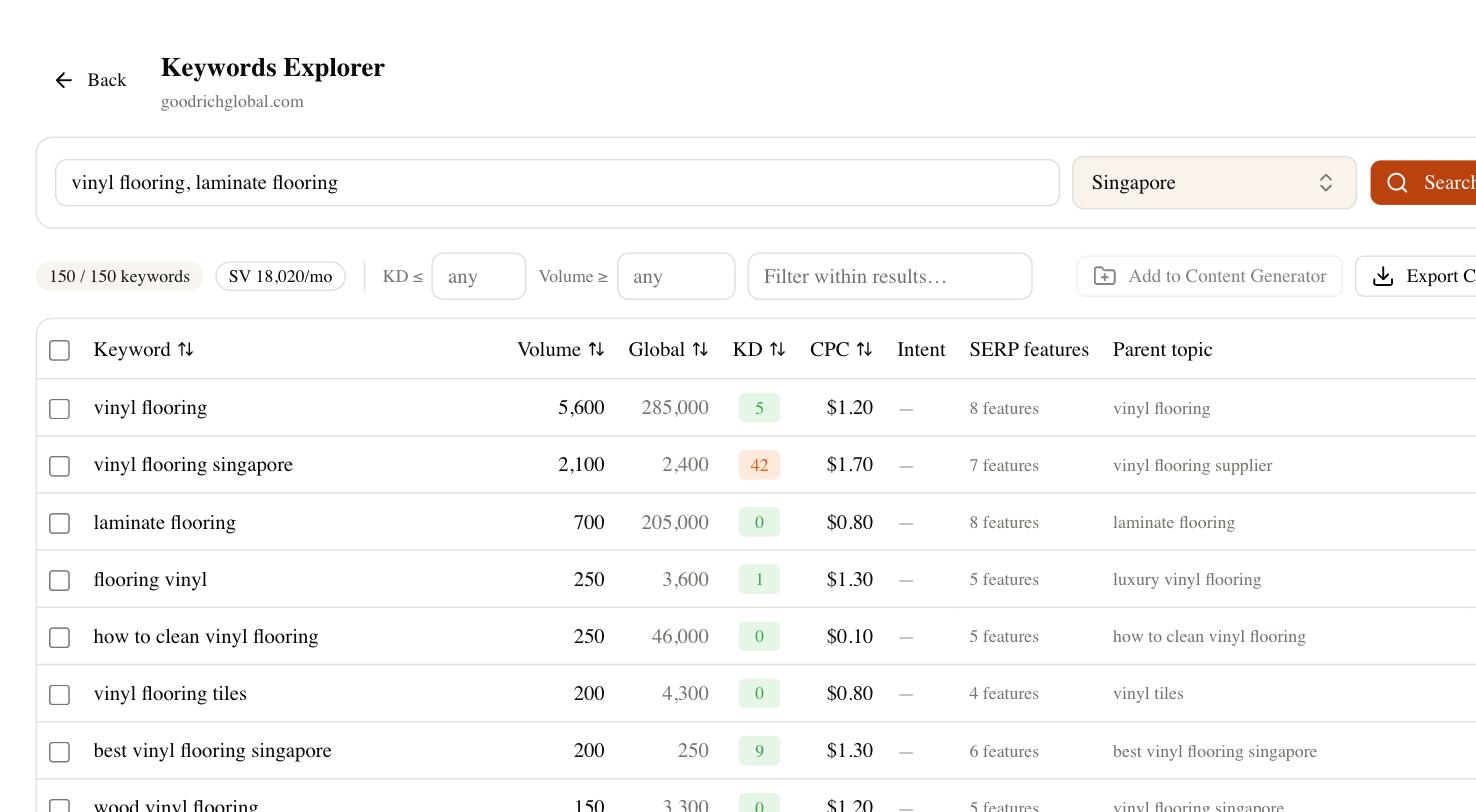
You do not need a wall of dashboards to run this. In SEO Rocket you ask in plain language — “show me garage door repair keywords in Phoenix with volume and difficulty” — and it pulls real, Ahrefs-grade data so you can see which service and city terms are worth a page. The Keywords Explorer surfaces the exact phrases your customers use, the competitor-gap view shows what the shop outranking you covers that you do not, and rank tracking watches your positions town by town so you know whether the new spring page is climbing.
Two other pieces matter for this trade. The site audit catches the slow-loading, hard-to-tap mobile issues that quietly cost you emergency calls, and Brand Radar shows whether AI assistants like ChatGPT recommend you when someone asks for a garage door company in your area — a search surface that is only growing. If you run multiple locations or report to a boss, the client dashboards hand over a clean read-only view without exporting spreadsheets.
Where to start this week
Keep it simple and sequenced. Claim and fully complete your Google Business Profile, then ask every finished-job customer for a review — this is the fastest lever you have. Next, build or rewrite a dedicated page for your top two repair services and, if you serve several towns, one real city page for your busiest area. Pull your local keyword list so you are targeting phrases people actually type, then set up rank tracking and call tracking so you can see which moves produce booked jobs. Do those things and good SEO for garage door companies stops being abstract — it becomes a phone that rings more often, from the exact neighborhoods you want to work in.