
SEO for martial arts schools is almost entirely a local game, and that changes everything about how you should spend your time. A parent searching for a kids karate class is not comparing you to a dojo three states away — they want a place within a fifteen-minute drive that has open beginner spots and a good vibe. Get found by those people, and a single top-three ranking can keep your intro classes full for years.
The problem is that most schools treat their website like a brochure and hope. This guide covers what makes SEO for martial arts schools different from generic advice, the keywords your buyers actually type, and the handful of moves that move the needle.
Why this niche plays by its own rules
Two things separate a dojo from most local businesses. First, you sell to two very different buyers: parents shopping for their kids, and adults shopping for themselves. A mom looking for “toddler martial arts” and a 28-year-old looking for “BJJ gym near me” want different pages, different photos, and different reassurances. Second, your product is a discipline, not a generic service. Someone who wants Muay Thai will scroll right past a page that just says “martial arts classes.” The searcher’s intent is specific, so your pages have to be specific too.
There is also a strong trial dynamic. Almost nobody signs a membership cold. They search, they book a free intro or a first week, and they decide on the mat. That means your job in search is not to close the sale — it is to win the trial booking. Every page should make booking that first class the obvious next step.
The keywords your students actually search
Money keywords in this space cluster around three patterns: discipline plus location, “near me,” and audience plus discipline. People rarely search for abstract benefits; they search for the exact thing they want to do, near where they live. Here is how the intent breaks down.
| Example keyword | Who’s searching | Intent |
|---|---|---|
| bjj near me | Adults, ready to train | High — wants a gym to visit this week |
| kids karate [city] | Parents | High — comparing local dojos |
| muay thai classes [city] | Adults | High — discipline-specific, local |
| martial arts for 4 year olds | Parents of toddlers | Medium — researching, not booked yet |
| self defense classes near me | Adults, safety-driven | High — often urgent |
| free trial martial arts [city] | Both | Very high — ready to book |
| is bjj good for weight loss | Adults | Low — top-of-funnel research |
Notice the split. The “near me” and discipline-plus-city terms are where the enrollments come from — treat those as your priority. The research questions (“is taekwondo good for ADHD,” “what age to start judo”) pull in parents earlier in the decision and are worth a blog post each, but they will not fill your mat this month. Build for the booking-intent keywords first, then layer in the research content once those are ranking.
Win the map pack before anything else
For a local dojo, the three-result map pack at the top of Google is worth more than any blue link below it. It shows your rating, your hours, your photos, and a “Directions” button — everything a nearby parent needs. Ranking there starts with your Google Business Profile, not your website.
Claim and fully complete the profile: correct primary category (“Martial arts school”), accurate hours, real photos of your actual space and classes, and every discipline listed in the services. Then work on reviews, because they are the single biggest lever most schools ignore. Ask every student who tests for a belt, and every parent after a first great class, to leave a review that mentions the discipline and the town — “great BJJ gym in Fairfield” is worth more to your rankings than a bare five stars. Reviews that name your services and location reinforce exactly the searches you want to win.
Build a page for every discipline and location
The biggest structural mistake dojos make is cramming everything onto one “Programs” page. Google cannot rank one thin page for karate, BJJ, Muay Thai, and kids classes all at once. Give each program its own page with its own headline, its own photos, its own schedule, and its own booking button.
If you have more than one location, the same logic applies to towns. A dedicated page for “Muay Thai in Springfield” will beat a generic homepage for that exact search every time, because it matches what the person typed. Put the real address, embedded map, class times, and a few lines about that specific space on each one. Write these for humans — a nervous first-timer wants to know what to wear, whether they need to be fit, and how the first class works. Answer those questions on the page and you convert the visit, not just the click.
The mistakes that quietly cost you students
A few patterns show up in almost every underperforming dojo site. Fix these before you spend a dollar on ads.
- No location or discipline pages. One page trying to rank for everything ranks for nothing specific.
- Ignoring the Google Business Profile. A half-filled profile with no recent photos or reviews loses the map pack to the school down the road.
- Hiding the schedule. If class times and the trial offer take three clicks to find, people leave. Put them up front.
- Instagram instead of a site. Social builds trust, but you do not own it and it does not rank for “karate near me.”
- Thin, stock-photo pages. Real photos of your students and space build trust and give Google something local to index.
Where SEO Rocket fits
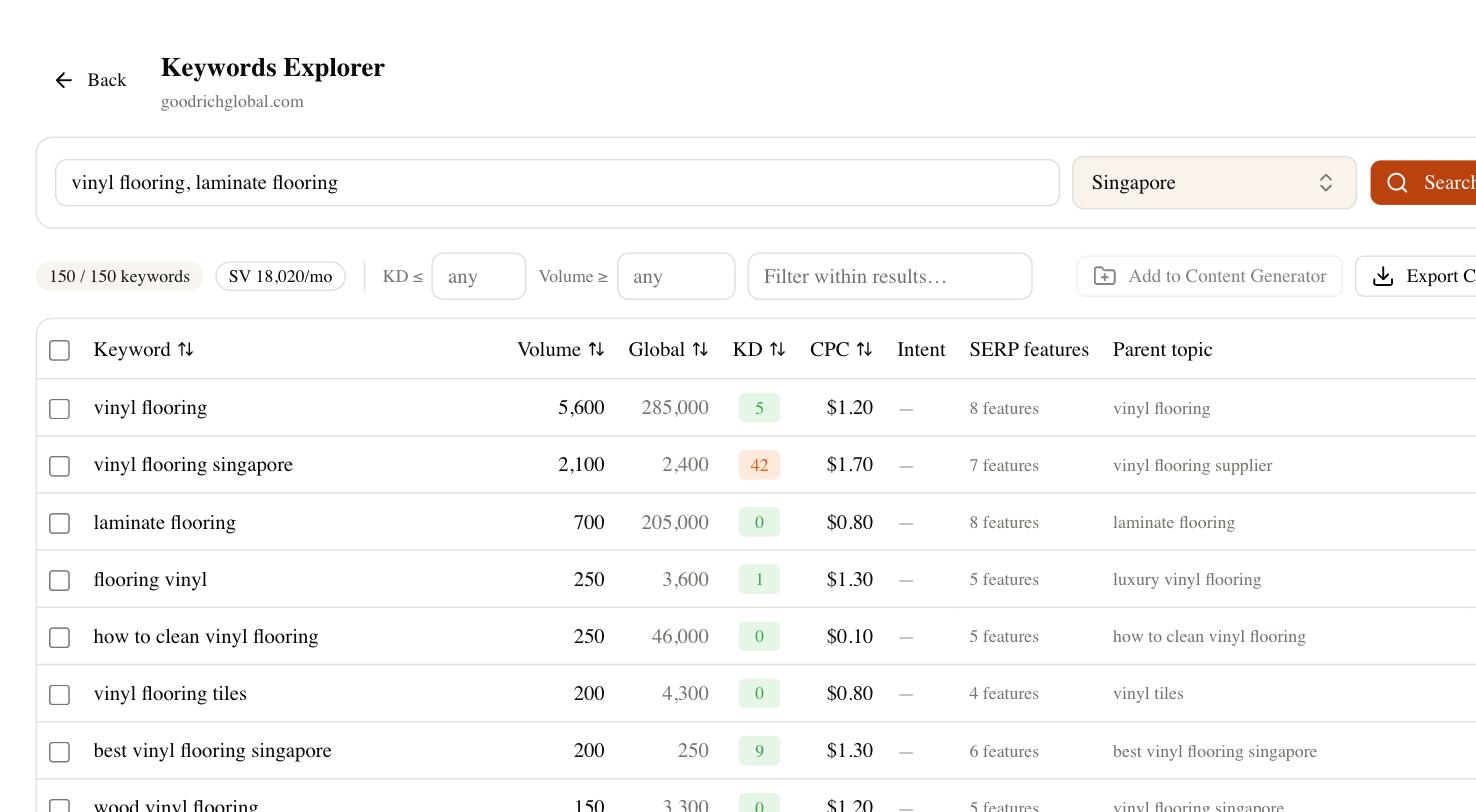
You can do all of this by hand, but the research and tracking are where a tool earns its keep. SEO Rocket’s Keywords Explorer shows you the real search volume and difficulty behind terms like “kids martial arts [your city],” so you build pages for demand that actually exists instead of guessing. The competitor gap report shows which discipline-plus-city keywords the dojo across town ranks for that you do not — usually the fastest list of pages to build next.
From there, rank tracking watches your map-pack and organic positions for each program so you know whether the new BJJ page is climbing. The site audit flags the technical basics — slow pages, missing titles, broken schedule links — that hold local sites back. And because it is chat-first, you can ask for a keyword list or a competitor comparison in plain language rather than learning a dashboard. For multi-location schools, the client dashboard view keeps each town’s numbers in one place.
A priority checklist to start this week
Do not try to do everything at once. Local SEO compounds, so start with the highest-leverage moves and let them build. In order: fully complete and verify your Google Business Profile, then start systematically asking students for reviews that name the discipline and town. Next, split your programs page so each discipline has its own dedicated page with a schedule and a trial-booking button. If you run more than one location, add a page per town. Then publish one research-intent article a month for the questions parents ask before they commit.
Give it a real ranking cycle before you judge results — local positions and map-pack rankings shift day to day, and reviews take weeks to accumulate. Good seo for martial arts schools is not a launch; it is the steady work of matching real pages to what nearby people search, then earning the reviews that prove you are the obvious choice. Do that consistently, and search becomes the enrollment channel you stop having to think about.