
SEO for nail salons is almost nothing like SEO for a software company or a national e-commerce store. Nobody flies across the country for a fill, so SEO for nail salons is a local game — you are competing for the handful of people within a ten-minute drive who are searching for gel, dip, or a pedicure right now and deciding where to spend the next hour.
That single fact changes everything about your strategy. You are not chasing thousands of visitors. You are chasing the person typing “nail salon near me” at 6 p.m. on a Thursday, and you want to be the first name they tap. This guide covers how that person actually searches, the keywords that turn into bookings, the moves that matter most, and the mistakes that quietly cost salons chair time every week.
Why nail salon search is almost entirely local
Most beauty searches carry heavy local intent, and Google knows it. When someone types “acrylic nails” from a phone, the results are dominated by the map pack — those three business listings with stars, hours, and a “Directions” button sitting above the regular blue links. Ranking on that map is worth more than ranking first in the normal results, because that is where the taps go.
So the center of gravity for a salon is not your website’s homepage. It is your Google Business Profile and the reviews attached to it. Your website still matters, but it plays a supporting role: it confirms your services, prices, and vibe once someone has already found you on the map and is deciding whether to trust you with their hands.
This local focus is good news if you have felt priced out of SEO. You are not fighting a national brand with a huge content budget. Your competition is a short list of salons in the same few zip codes, and most of them are neglecting the basics. Distance from the searcher, relevance to what they typed, and how well-established your profile looks are the three things Google weighs most for local results, and every one of them is within your control.
The keywords that actually bring bookings
Not all nail keywords are equal. A term like “how to remove gel polish at home” pulls traffic but never fills a chair — that searcher wants to skip the salon. The money keywords are the ones with local, ready-to-book intent. Here is how the main groups sort out:
| Keyword example | Intent | Worth chasing? |
|---|---|---|
| nail salon near me | High — ready to book now | Yes, top priority |
| gel manicure [your city] | High — service + location | Yes |
| dip powder nails [city] | High — specific service | Yes |
| nail salon open now | High — urgent, walk-in | Yes (hours must be accurate) |
| Russian manicure [city] | High — premium, low competition | Yes, easy win |
| acrylic nails prices | Medium — comparing | Yes, if you show pricing |
| nail art ideas | Low — browsing, not booking | Rarely worth it |
| how to remove gel at home | None — avoiding the salon | No |
Notice the pattern. The keywords that pay start with a specific service and often end with a city or neighborhood: “SNS nails downtown,” “pedicure walk in [suburb],” “eyelash extensions near me.” Premium and niche services — Russian manicures, structured gel, Japanese gel — tend to have far less competition than the generic “manicure,” so a salon that offers them can rank quickly and attract higher-spending clients.
There is also a seasonal rhythm worth planning around. Searches for “prom nails,” “wedding nails,” and “holiday nail designs” spike hard for a few weeks each year, then fade. If you publish a page and post photos two or three weeks ahead of each peak, you catch that wave while competitors are still reacting to it. The goal is not to rank for every term a person might type — it is to own the handful of high-intent, local phrases that describe exactly what you sell.
The highest-leverage moves
If you only have a few hours a month, spend them here, roughly in order:
- Perfect your Google Business Profile. Correct name, address, phone, and hours. Pick the primary category “Nail salon,” then add secondary categories for what you actually offer. Fill every service with a short description and a real price.
- Ask every happy client for a review, on the spot. Reviews are the strongest local ranking signal you control, and fresh ones matter more than old ones. A simple QR code at the front desk that opens your review link removes all the friction.
- Post photos constantly. Nail work is visual. Upload sharp, well-lit shots of real sets weekly — Google favors active profiles, and clients scroll photos before they call.
- Build one landing page per core service. A dedicated page for “gel manicures in [city]” beats one homepage trying to rank for everything.
None of this requires a big budget. It requires consistency, which is exactly why most salons never do it — and why the ones that do pull ahead.
The mistakes nail salons make most
The single most common one is a dead Google Business Profile: created years ago, wrong hours, no recent photos, three reviews from 2021. A profile like that quietly loses to the salon two blocks away that posts every week. Right behind it is inconsistent business information — your address listed one way on Google, another on Yelp, a third on Facebook. Those mismatches confuse Google and drag down trust.
Two more show up over and over. Salons ignore reviews instead of replying to them, when a short, polite response to every review (including the rough ones) signals an active, cared-for business. And many hide their prices entirely, forcing the “acrylic nails prices” searcher to call a competitor who published theirs. Transparency wins the booking more often than mystery does.
A quieter mistake is treating the salon website like a brochure that never changes. A single homepage that lists every service in one paragraph gives Google nothing specific to rank. It also loads slowly on phones if it is stuffed with heavy image sliders, and nearly all of your searchers are on a phone. Thin, generic pages lose to focused ones, so a short, fast page built around one service and one location will almost always outrank a bloated all-in-one homepage.
How SEO Rocket fits a nail salon
You do not need to guess which keywords locals use. SEO Rocket’s Keywords Explorer shows real search volume and difficulty for terms like “dip nails [city]” or “Russian manicure near me,” so you can see which services people are actually searching for in your area before you build a page for one.
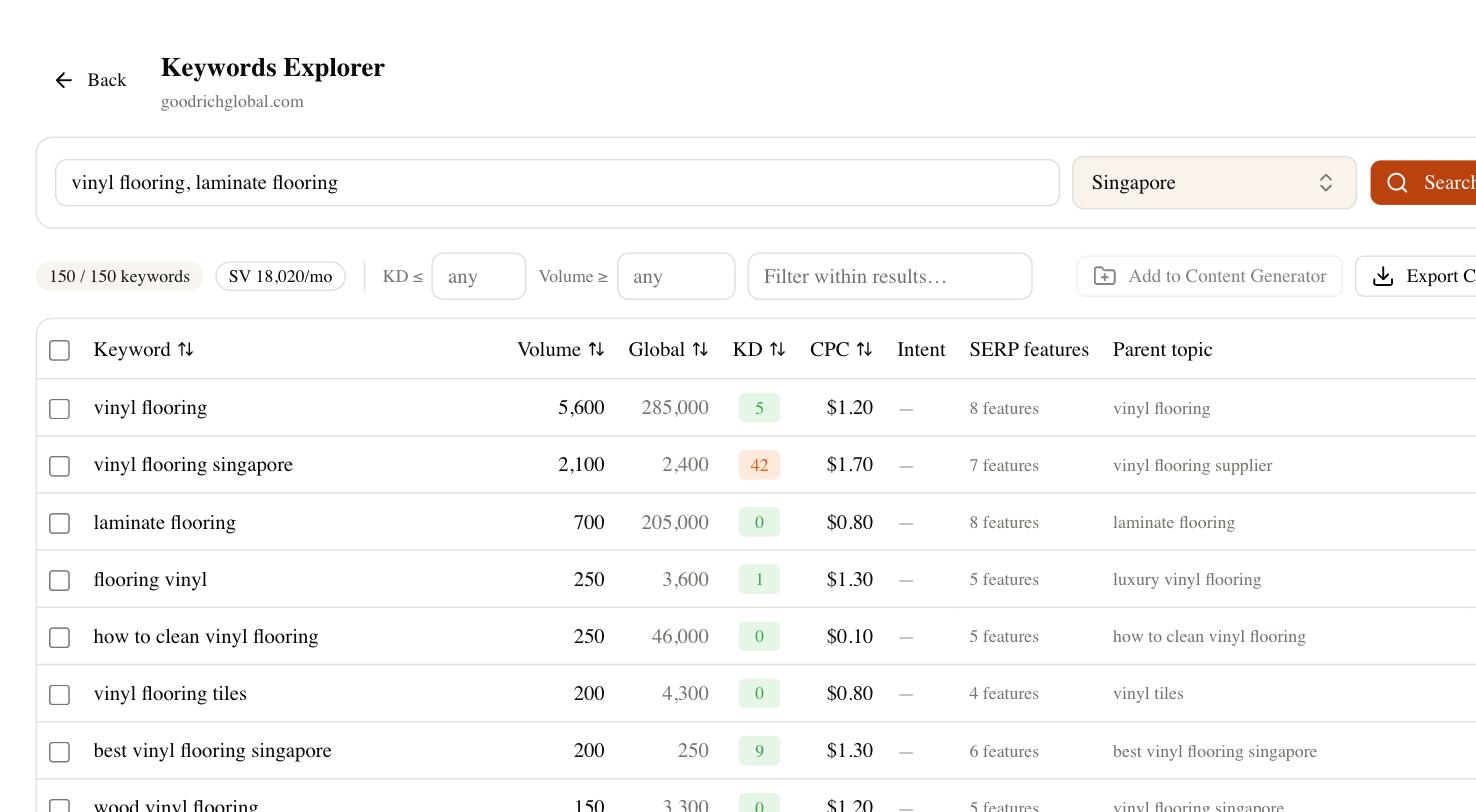
From there, the same tool drafts the service pages for you, tracks where you rank for each local term week to week, and shows the competitor gap — the keywords the busy salon across town ranks for that you don’t. The site audit flags the technical basics that trip up small business sites, like slow mobile pages and missing local schema, and the client dashboard is handy if you run more than one location or manage salons for other owners.
A simple starting checklist
Do not try to do everything at once. Work down this list over your first month, and you will cover more ground than most salons manage in a year:
- Claim and fully complete your Google Business Profile, with accurate hours.
- Add every service with a price and a one-line description.
- Set up a QR-code review request at the front desk and ask on every visit.
- Upload ten recent, high-quality photos of your actual work.
- Make your name, address, and phone identical everywhere online.
- Build one landing page for each of your top three services, city included.
- Reply to every review within a day or two.
Good seo for nail salons is not complicated, but it rewards the owner who shows up consistently. Get the map listing right, earn steady reviews, publish real photos and prices, and you will win the searcher who is deciding between you and the salon down the street — which is the only searcher who ever mattered.