
SEO for pool companies is not the same game as ranking a national blog or an e-commerce store, and treating it like one is why most pool contractors quietly waste money on it. Your buyers are local, their jobs are worth thousands of dollars each, and the search that leads to a signed contract almost always carries a city name or a “near me.” Get that reality right and a handful of pages can feed your calendar for years.
This guide covers what makes seo for pool companies genuinely different, the keywords that pay, the highest-leverage moves, and the mistakes that keep good builders invisible.
Why pool-company SEO is its own thing
A homeowner searching “inground pool cost” and one searching “pool builder near me” are miles apart in intent, even though both mention pools. The first is researching and months away from spending. The second is comparing three contractors this weekend. Pool work is high-ticket and considered, so your buyers move through a long research phase and then a short, intense hiring phase — and the searches that matter for revenue are the hiring-phase ones.
The other defining trait is geography. Nobody buys a pool from a company two states away. That means you are not competing against every pool site on the internet, only the builders and service companies in your metro. That is good news: the field is small enough to win, and the winners take a disproportionate share of a very valuable local market.
There is also a natural two-sided business hiding here. New pool builds are big, infrequent tickets, but cleaning, repair, resurfacing, and leak detection are recurring work that keeps cash flowing between installs. A smart search strategy targets both — the one-time build searches and the steady service searches — because the service pages are usually easier to rank and start paying sooner while your build pages mature.
The keywords your buyers actually type
Money in this niche lives in local, service-specific searches — not broad terms like “swimming pool.” Someone typing “fiberglass pool installation Tampa” is worth ten times a visitor reading “history of swimming pools.” Sort your targets by intent and start where the buyers are closest to a decision.
| Example keyword | Intent | Priority |
|---|---|---|
| pool builder near me | Ready to hire | Highest |
| inground pool installation [city] | Ready to hire | Highest |
| pool resurfacing [city] | Ready to hire (service) | High |
| weekly pool cleaning service [city] | Recurring revenue | High |
| fiberglass vs concrete pool | Researching | Medium |
| inground pool cost | Early research | Medium |
| pool leak detection [city] | Urgent service | High |
Notice the pattern: the highest-priority terms pair a service with a place. Those are the ones with buyer intent and low enough competition that a focused pool company can rank. The research terms are worth targeting too, but with content that captures the reader early and keeps you in mind, not with pages you expect to book jobs tomorrow.
Win local search before anything else
For most pool companies, the single highest-leverage move has nothing to do with blog posts. It is your Google Business Profile and the local map pack it feeds. When someone searches “pool builder near me,” Google shows three local businesses above the regular results, and those three get the clicks. Getting into that pack is often worth more than ranking first in the blue links below it.
The levers are concrete: a complete, accurate profile with the right primary category, real photos of jobs you have finished, consistent name-address-phone details everywhere they appear online, and a steady flow of reviews from happy customers. Reviews are the part most builders neglect and the part that moves the needle most. Ask every satisfied customer, every time, and make it easy. A company with dozens of recent, detailed reviews will beat a better builder who never asks.
Proximity matters too, and you cannot control where a searcher is standing. What you can control is how strong and complete your presence looks compared to the other companies in the pack. Keep the profile active with fresh photos of recent work, respond to every review including the critical ones, and make sure the address and service area you list match reality. Those signals are what tip a close call in your favor when a homeowner is choosing who to call first.
Build a page for every service and every area
One page that lists all your services and all your towns will rank for none of them well. Google rewards specificity, so the structure that wins is a dedicated page for each service crossed with each area you serve: fiberglass pool installation in one town, concrete pool remodeling in another, weekly cleaning in a third.
These pages have to be real, not spun copies with the city name swapped. Each one should show finished projects in that area, answer the questions local buyers actually ask, mention neighborhoods and conditions specific to the place, and load fast on the phone most people will use to find you. A dozen genuinely useful service-area pages will out-earn fifty thin ones, and thin duplicates can get the whole site ignored.
Prioritize by two factors: how much a job is worth and how ready the searcher is to hire. A page targeting inground pool installation in your best market beats a page about a low-margin add-on you rarely sell. Build the pages that map to your most profitable, most in-demand services first, then expand outward to the surrounding towns as those early pages start ranking.
The mistakes pool companies keep making
The same errors show up again and again, and each one is fixable.
- Chasing traffic instead of jobs. Ranking for “how deep should a pool be” feels good and books nothing. Prioritize the local, service-specific terms where buyers hire.
- Ignoring the Google Business Profile. Builders pour money into a website while their map listing sits half-finished — backwards for a local business.
- One thin services page. Trying to rank a single page for every service in every town beats none of the specific searches that matter.
- Never asking for reviews. The cheapest, most effective local-SEO lever, left on the table because no one built the habit of asking.
- Forgetting seasonality. Pool demand swings hard by season and climate. Publish and build links before your busy season, not during it, because rankings take weeks to move.
How SEO Rocket fits a pool company
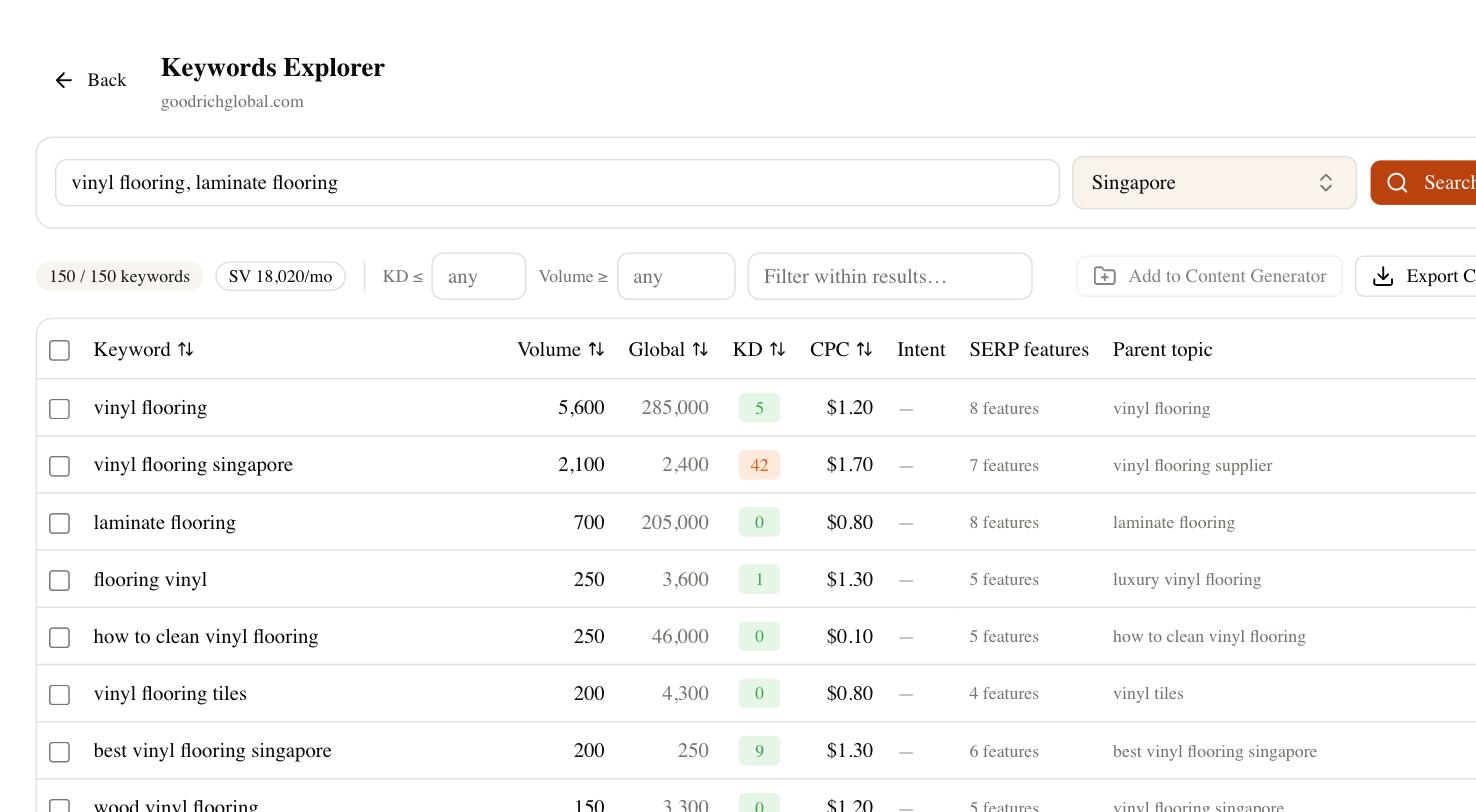
You do not need a marketing degree to run this, but you do need real data instead of guesses. SEO Rocket lets you ask, in plain language, which pool keywords in your metro have genuine search volume and how hard each is to rank for, so you build the service-area pages that will actually pay rather than the ones that sound good.
From the same chat you can see which competing builders rank for the terms you want and where the gaps are, track your positions for “pool builder [your city]” over time, and draft the service-area pages with content that reads like a person wrote it. For a small pool company without a dedicated marketer, having keyword research, competitor gaps, rank tracking, and content writing in one place is the difference between doing SEO consistently and doing it once and forgetting.
A priority checklist to start this week
Do not try to do everything at once. Work down this list in order — the top items produce jobs fastest.
- Claim and fully complete your Google Business Profile with the correct primary category.
- Set up a simple system to ask every finished customer for a review.
- List your services and the towns you serve, then plan a dedicated page for each pairing.
- Research the real local keywords and their difficulty before you write a word.
- Build the highest-intent service-area pages first, with photos of local work.
- Track your rankings for your money keywords so you know what is working.
None of this is fast — local SEO typically takes months to compound, and positions jitter day to day, so judge it over a season, not a week. But it stacks. The pool company that shows up when a homeowner is finally ready to build is the one that wins the job, and steady, specific work is how you become that company.