
SEO for solar companies is a different problem than most guides admit. A solar buyer is rarely browsing for fun — they are usually mid-decision, comparing installers in one metro area, checking whether the federal tax credit still applies, and weighing a five-figure purchase. Get in front of that person at the right moment and the install is nearly booked; miss them and they call the competitor whose city page loaded first. That is why generic advice like “publish blogs and build links” leaves most solar sites stuck.
This guide stays specific to the niche: how your buyers actually search, the keywords that pay, why local beats national for most installers, and the mistakes that quietly cost you jobs. Done right, SEO for solar companies turns your site into a steady lead source instead of a brochure nobody finds.
How solar buyers actually search
Solar demand splits into two mindsets, and they search in completely different ways. The first is the researcher, typing “how much do solar panels cost,” “is solar worth it in Texas,” or “solar panels vs generator.” They are months from buying and want education. The second is the shopper: “solar installers near me,” “solar company Phoenix,” “commercial solar installation Denver.” That person wants quotes this week.
Most installers pour effort into the first group because those keywords carry big volume, then wonder why traffic never turns into calls. The revenue lives in the shopper terms — lower volume, far higher intent, and almost always local. A page ranking for “solar installers Tucson” is worth more than one ranking nationally for “solar energy benefits.” Sort your keyword list by intent before you ever sort it by volume.
The two mindsets are connected, though, and that is the opportunity. A homeowner who reads your honest “is solar worth it in Arizona” post today becomes the “solar company near me” searcher three months later — and if your name is already the one they trust, you skip the price war entirely. Educational content is not wasted; it is the top of a funnel that ends on your city page. The mistake is treating research keywords as the whole strategy instead of the on-ramp.
The money keywords worth ranking for
Here is a realistic map of solar search intent. Volumes swing wildly by market, so treat this as a shape rather than a scoreboard — the point is which buckets deserve a dedicated page.
| Keyword example | Intent | What to build |
|---|---|---|
| solar installers near me / solar company [city] | Ready to buy, local | City service page + Google Business Profile |
| cost to install solar panels [state] | Comparing, high intent | Cost page with local price ranges |
| commercial solar installation [city] | B2B, high value | Dedicated commercial landing page |
| solar tax credit [state] / solar rebates [city] | Motivated, time-sensitive | Incentives guide, refreshed yearly |
| is solar worth it in [state] | Early research | Educational post with local ROI numbers |
| solar financing / solar loan vs lease | Mid-funnel | Financing explainer |
Notice how many of those include a place name. For a local installer, the bracketed [city] and [state] modifiers are exactly where the winnable, profitable rankings sit — and where national competitors rarely bother to compete.
Local is where most installs are won
If you install within a service area rather than shipping panels nationwide, local SEO is the highest-leverage work you can do. That means a well-optimized Google Business Profile with real project photos and a steady stream of reviews, consistent name-address-phone details across directories, and — the part most installers skip — a separate, genuine landing page for each city or county you serve.
“Genuine” is the operative word. One page listing twenty towns will not rank for any of them. A page about solar in a specific city, with local incentive details, local project photos, and the panels that suit that climate, can rank and convert. Reviews carry more weight here than in almost any other trade — a five-figure roof decision leans hard on social proof, so make asking for a review part of every completed install.
Prioritize your city pages by where you already have installs on the ground. Local project photos, a real address in the service area, and a review from a nearby customer send stronger signals than any amount of keyword tuning. Start with the two or three metros that drive most of your revenue, get those pages ranking and converting, then expand outward. Trying to launch thirty city pages at once usually produces thirty thin pages that rank for nothing.
Content that builds trust and books quotes
Solar is a considered purchase, so content has a concrete job: remove doubt. The pieces that consistently earn links and rankings are the practical ones — a clear cost breakdown with local ranges, an honest payback-period explainer, a guide to current state and utility incentives, and straight answers to the objections you hear on every sales call (“what happens when it snows,” “do panels work during a blackout”). Refresh the incentives content at least once a year, because outdated tax-credit information is the fastest way to lose a reader’s trust.
Avoid thin, spun blog posts. A single thorough page answering “is solar worth it in your state” with real numbers will outrank ten generic articles and keep pulling in quotes long after you hit publish.
Common mistakes solar companies make
The same handful of errors show up on installer sites over and over. Each one is fixable.
- Chasing national head terms. Ranking for “best solar panels” against manufacturers and review sites is a losing battle. Win your metro instead.
- One generic service-area page. A wall of city names in the footer does not rank. Build real, individual pages.
- Ignoring cost and incentive keywords. These are high-intent and locally winnable, yet most sites bury them or skip them entirely.
- Neglecting the Google Business Profile. For “near me” searches, the map pack often sits above every organic result.
- Publishing and forgetting. Tax credits, utility rates, and panel technology all change. Stale pages quietly slide down the results.
A priority checklist for solar SEO
If you are starting from a thin site, work in this order. Each step compounds on the one before it.
- Claim and fully optimize your Google Business Profile, and start collecting reviews on a set schedule.
- Build one strong landing page per city you serve, with local details, photos, and incentives.
- Publish a cost page and an incentives page for your main state, using real price ranges.
- Add a commercial page if you sell to businesses — it is low competition and high value.
- Track rankings by location, not nationally, so you measure the results that actually matter.
- Fix technical issues; slow pages and broken mobile layouts cost the most on high-value queries.
How SEO Rocket fits
Every move above needs data, and that is where SEO Rocket earns its place. Ask it in plain language for keyword ideas around a seed like “solar installation” and it returns the local and long-tail variants — city modifiers, incentive terms, cost queries — with volume and difficulty, so you can see which pages are worth building before you write a word.
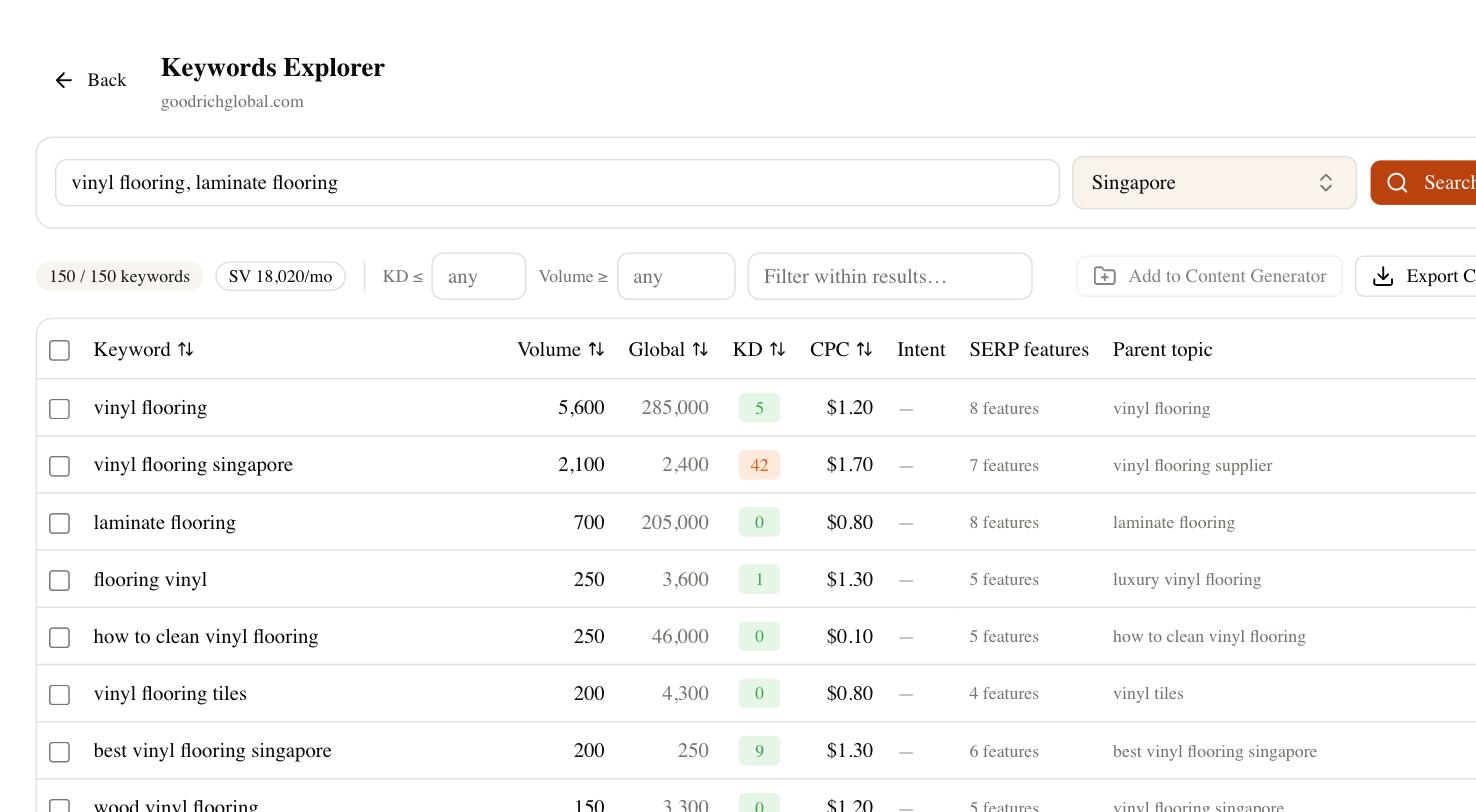
From there, the rest of the workflow lives in one place. Track your rankings for “solar installers [city]” by location, run a competitor gap against the installer already dominating your metro to see the exact pages they rank for that you do not, and audit your site for the speed and mobile issues that sink high-intent traffic. Brand Radar shows whether AI assistants mention your company when someone asks ChatGPT “who installs solar in my city” — an increasingly common first step for solar buyers. And if you run a franchise or manage multiple locations, client dashboards give each one a clean, read-only view without exporting anything.
None of this is a shortcut. Rankings still take months, positions still jitter a few spots day to day, and links still matter. But seo for solar companies rewards focus more than budget: nail your local pages, own the incentive and cost keywords, and keep the trust content current, and you will outrank bigger competitors who spread themselves thin. Start with the checklist, measure by booked quotes, and let the data decide what to build next.