
SEO for travel agencies is a different game than SEO for a shop or a SaaS product, because your buyer is rarely ready to book the moment they search. Someone typing “10 day Japan itinerary” is dreaming; someone typing “travel agent for Japan honeymoon” is close to handing over a deposit. Getting SEO for travel agencies right means understanding that spread — from idle daydream to booking intent — and building pages that catch people at every stage without wasting effort on traffic that never converts.
This guide is specific to how travel buyers actually search, which money keywords are worth chasing, and the handful of moves that move the needle for an agency. No generic checklist with “travel” pasted on top.
How travel buyers actually search
Travel search happens in layers, and each layer needs a different page. At the top, people research destinations and experiences: “best time to visit Bali,” “is Vietnam safe for families,” “Maldives vs Seychelles.” This traffic is huge but cold — it fills your funnel, not your calendar. In the middle, searchers compare options: “all inclusive Mexico packages,” “small group Europe tours,” “escorted South America trips.” At the bottom, they look for someone to book with: “travel agent near me,” “corporate travel management company,” or a named specialist like “Disney travel agent” or “safari specialist.”
Most agencies pour their energy into the cold top of the funnel because those keywords have the biggest volumes, then wonder why rankings never turn into revenue. The stronger play is to own the middle and bottom first — the searches where someone is choosing a package or a person — and only then build the destination content that feeds them.
It also pays to notice how much travel research now happens outside a plain Google search. Buyers ask friends, scroll social feeds, read reviews, and increasingly pose full questions to an AI assistant before they ever type a booking term. That means your job is not only to rank a page but to be the name that keeps coming up across those touchpoints, so that when the search finally turns transactional, you are already the obvious choice rather than one of ten blue links.
The money keywords worth targeting
The keywords that pay for themselves are the ones tied to a specific package, a specific niche, or a specific place plus a booking word. Below is how the main intent types break down for a typical agency, with the kind of terms that sit in each.
| Search term | Intent | Why it matters |
|---|---|---|
| travel agent near me | Local, high intent | Ready to book, wants a person nearby — your Google Business Profile competes here |
| honeymoon travel agent / Disney travel agent | Commercial, niche | High-value, low-competition specialist searches |
| all inclusive Maldives package | Transactional | Comparing packages — a dedicated package page wins these |
| corporate travel management company | Commercial, B2B | Long sales cycle, high lifetime value per account |
| 10 day Italy itinerary | Informational | Top-of-funnel dreamer — capture the email, not the booking |
| best time to visit Japan | Informational | Builds topical authority and internal links to packages |
Notice the pattern: the terms with a niche (“honeymoon,” “safari,” “corporate”) or a destination-plus-package shape are where a small agency can realistically outrank an online travel giant. You will not beat Expedia for “cheap flights,” but a focused agency absolutely can rank for “small group Morocco tours for over 50s.” Narrow beats broad every time your budget is smaller than an OTA’s.
The volume on these narrower terms looks small on a keyword tool, and that scares people off. Do not be fooled. A term that gets a few hundred searches a month but is full of people ready to book a five-figure trip is worth more than a broad guide term with fifty times the traffic and no buying intent. Judge keywords by the value of the booking behind them, not by the size of the number next to them.
Local versus national intent
Whether you fight for local or national rankings depends on how you sell. If you rely on walk-ins, referrals, and a physical office, “travel agent near me” and city-based searches are your bread and butter — and that battle is won mostly through your Google Business Profile, real reviews, and location pages, not blog posts. If you sell nationally by phone and video call, geography matters less and your edge is specialization: being the agency that clearly owns “African safari planning” or “multi-generational family cruises.”
Plenty of agencies are both, and the mistake is treating them the same. Local intent rewards proximity and reviews; national intent rewards depth and authority on a niche. Decide which one pays your bills, and weight your effort accordingly instead of spreading it thin.
The highest-leverage moves
A few things return far more than the rest. Start here before you touch anything else.
- Build real package and niche pages. One strong, detailed page per package or specialty (“Kenya safari holidays,” “corporate travel management”) beats fifty thin blog posts. These are the pages that rank for money terms and convert.
- Own your Google Business Profile if you serve a local market. Complete every field, post updates, and ask happy clients for reviews by name — this is the cheapest ranking lever an agency has.
- Turn destination guides into feeders. Write the “best time to visit” and itinerary content, then link it internally to the relevant package page so cold traffic has somewhere to go.
- Plan for seasonality. People book summer trips in winter. Publish and refresh seasonal content two to three months ahead of when demand actually searches, not during it.
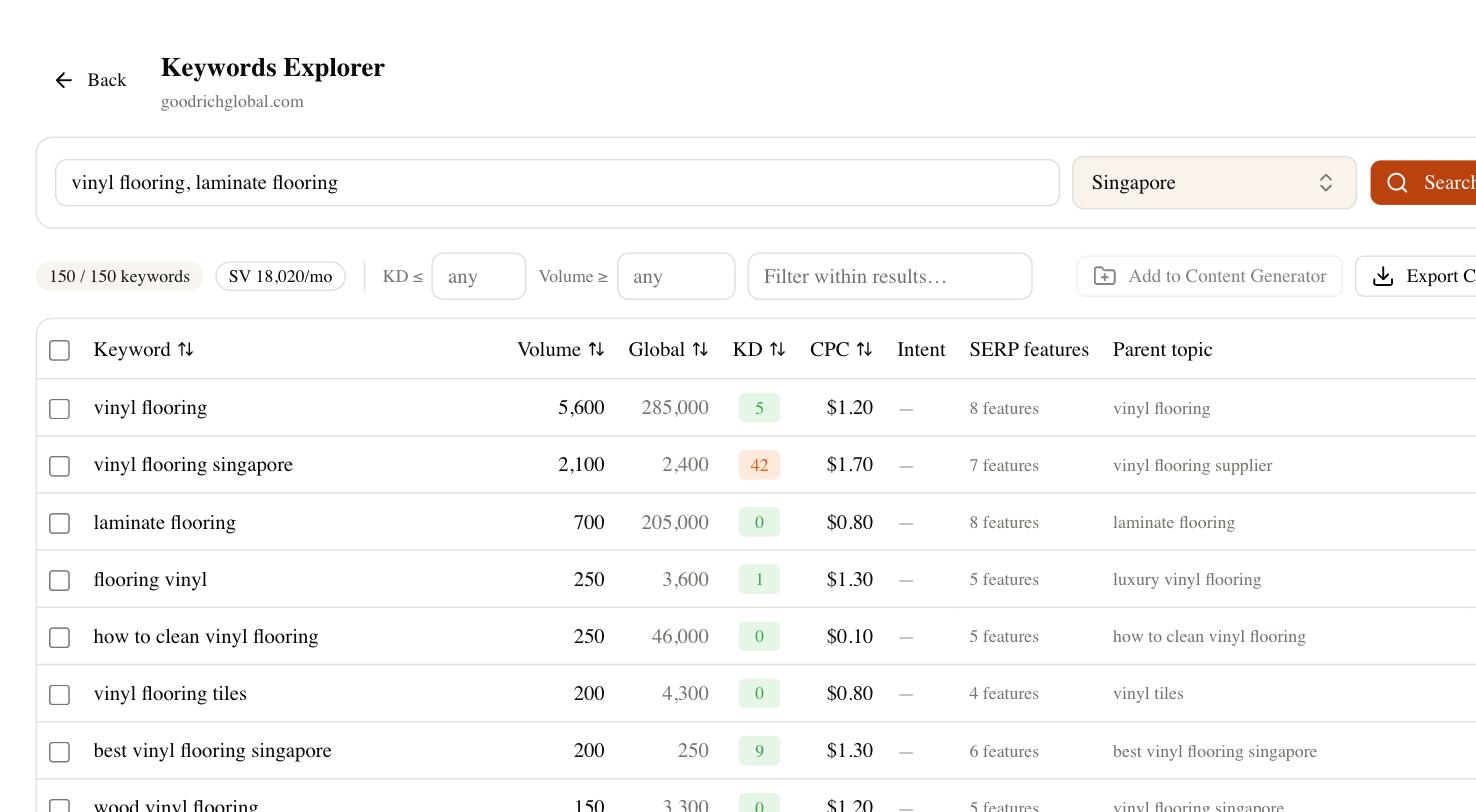
This is where a tool earns its place. SEO Rocket lets you ask, in plain language, for keyword ideas around a seed like “Italy tours” and see volume and difficulty side by side, so you can tell which package pages are worth building and which niches are still uncontested. The same workflow surfaces the destination questions worth answering and tracks whether your pages actually climb once they are live.
Common mistakes travel agencies make
The recurring errors are predictable. The biggest is chasing head terms like “holidays” or “flights” that you cannot win and that would not convert if you did. Close behind is publishing brochure-style destination pages that read like the tour operator’s copy — duplicate, thin, and invisible to search. A third is neglecting the Google Business Profile while paying for ads, when organic local visibility is free and durable.
Two more quietly bleed results. Agencies often ignore how long travel content takes to rank — a new package page can take months to mature, and pulling it too early wastes the work. And many never track whether their brand shows up when someone asks an AI assistant “who’s a good travel agent for a Japan honeymoon,” which is increasingly where research now starts. SEO Rocket’s Brand Radar watches those AI answers, and its rank tracking and competitor gap tools show which package pages a rival is winning that you are not — so you fix the specific gap instead of guessing.
Where to start this week
If you do one thing, list the three trips you most want to sell and check whether you have a genuine, dedicated page for each. Most agencies do not — they bury packages inside a booking widget with no crawlable content. Build those pages first, wire your best destination guides to them, and clean up your Google Business Profile if you sell locally. That sequence puts your effort where booking intent already lives.
Give it time, and be honest about the timeline. Rankings move slowly in travel, positions jitter a few spots day to day, and no tool’s estimates are exact. But an agency that owns its niche package terms and its local profile compounds every month, while the one still chasing “cheap holidays” keeps paying an OTA’s price for an OTA’s game. Pick the searches you can actually win, and win them properly.