
Done right, SEO for solar installers is one of the highest-return channels you have, because a homeowner searching “solar panel installation” this week is often signing a contract next month. Unlike most niches, SEO for solar installers lives or dies on local intent and on a handful of high-value pages — not on chasing broad national head terms that will never convert into a site survey.
This guide is specific to your trade. It covers how solar buyers actually search, the keywords worth ranking for, the pages that turn a search into a quote request, and the mistakes that quietly waste months of effort.
How solar buyers actually search
Solar is a considered, high-ticket purchase, so people research for weeks before they call anyone. That means two distinct search modes, and you need both. Early on they ask cost and eligibility questions — “how much do solar panels cost,” “are solar panels worth it in Arizona,” “federal solar tax credit 2026.” Closer to buying, the searches get local and commercial: “solar installers near me,” “solar companies in Sacramento,” “Tesla Powerwall installer Phoenix.”
The commercial searches almost always carry a city, a neighborhood, or “near me.” Someone typing “best solar company Austin” is comparing three or four installers and will call one within days. Someone typing “do solar panels work in winter” is months out. Rank for the first group and you book jobs this quarter; rank for the second and you build the trust that wins those jobs later.
There is a second split that most installers miss: residential versus commercial. A homeowner and a facilities manager use different words, weigh different things, and land on different pages. If you serve both, you need separate content for each, because a residential-flavored site rarely ranks for “commercial solar installer [city]” no matter how good it is.
The money keywords, ranked by intent
Not all rankings pay. A page-one spot for “solar panels” sends huge, unqualified traffic that rarely converts, while a page-one spot for “commercial solar installer Denver” sends a handful of visitors who are ready to sign. Prioritize by intent, not volume.
| Keyword example | Intent | Priority |
|---|---|---|
| solar installers near me | Ready to hire, local | Highest |
| solar panel installation [city] | Ready to hire, local | Highest |
| commercial solar installation [city] | High-value B2B lead | High |
| Tesla Powerwall installer [city] | Product-specific buyer | High |
| solar panel cost [city/state] | Comparing, pre-quote | Medium-high |
| [state] solar incentives 2026 | Eligibility research | Medium |
| are solar panels worth it | Early research | Lower (trust-building) |
Build your keyword map from the bottom of that funnel up. The “near me” and city-specific service terms deserve dedicated, well-optimized pages first. The cost and incentive terms come next as supporting content. The broad national terms come last, if ever.
Win the local pack before anything else
For “near me” and “[service] [city]” searches, Google shows the map pack — three business listings above the regular results — before it shows a single website. That real estate is worth more than a page-one blue link, and it runs on a different engine: your Google Business Profile, your review volume and recency, and consistent name, address, and phone details across the web.
Fill your profile out completely. Pick the primary category “Solar energy company,” add every service you offer, set an accurate service area, and post real project photos regularly. Then make review generation a habit — ask every satisfied customer at the moment you flip their system on, when they are happiest. A steady stream of recent, location-mentioning reviews moves the local pack more reliably than almost anything you do on your website.
Consistency matters just as much as volume. If your business name, address, and phone number read differently on your site, your profile, and old directory listings, Google loses confidence in which listing to trust. Pick one exact format and make every mention match it. This is unglamorous work, but for a service-area business it often separates the three installers in the pack from the dozen below it.
Build the pages that convert research into quotes
Most installers have a thin homepage and a contact form. That is not enough to rank for the searches that matter. You need three page types working together.
- City and service-area pages — one genuinely useful page per town or metro you serve, with local projects, local incentive details, and specifics about that area’s roofs and utilities. Not fifty near-identical pages with the city name swapped; Google spots that instantly.
- Cost and incentive guides — “solar panel cost in [state]” and “[state] solar incentives and rebates” pull in high-intent researchers. Keep the numbers current, because outdated tax-credit figures destroy trust.
- Product and battery pages — “Tesla Powerwall installation,” “Enphase microinverter systems,” and similar terms attract buyers who have already decided on a technology and just need a certified installer.
Common mistakes solar installers make
The same errors show up on installer sites again and again. Chasing national head terms like “solar panels” wastes your budget on traffic that never books a survey. Spinning up doorway pages for a hundred cities you barely serve gets the whole set devalued. Letting incentive pages go stale — still quoting last year’s federal credit percentage — quietly costs you conversions from your most motivated visitors.
Two more are almost universal. Installers neglect their Google Business Profile while pouring effort into the website, when the profile drives more local calls. And they ignore commercial intent entirely, publishing only residential content while “commercial solar installer [city]” — far fewer searches, far bigger contracts — sits uncontested. Fixing these four things usually beats any amount of new blog content.
One last mistake worth naming is impatience. Solar SEO rewards installers who keep a consistent city page and review routine going for two or three quarters, and it punishes the ones who publish a burst of content, see no movement in a month, and quit.
How SEO Rocket fits the workflow
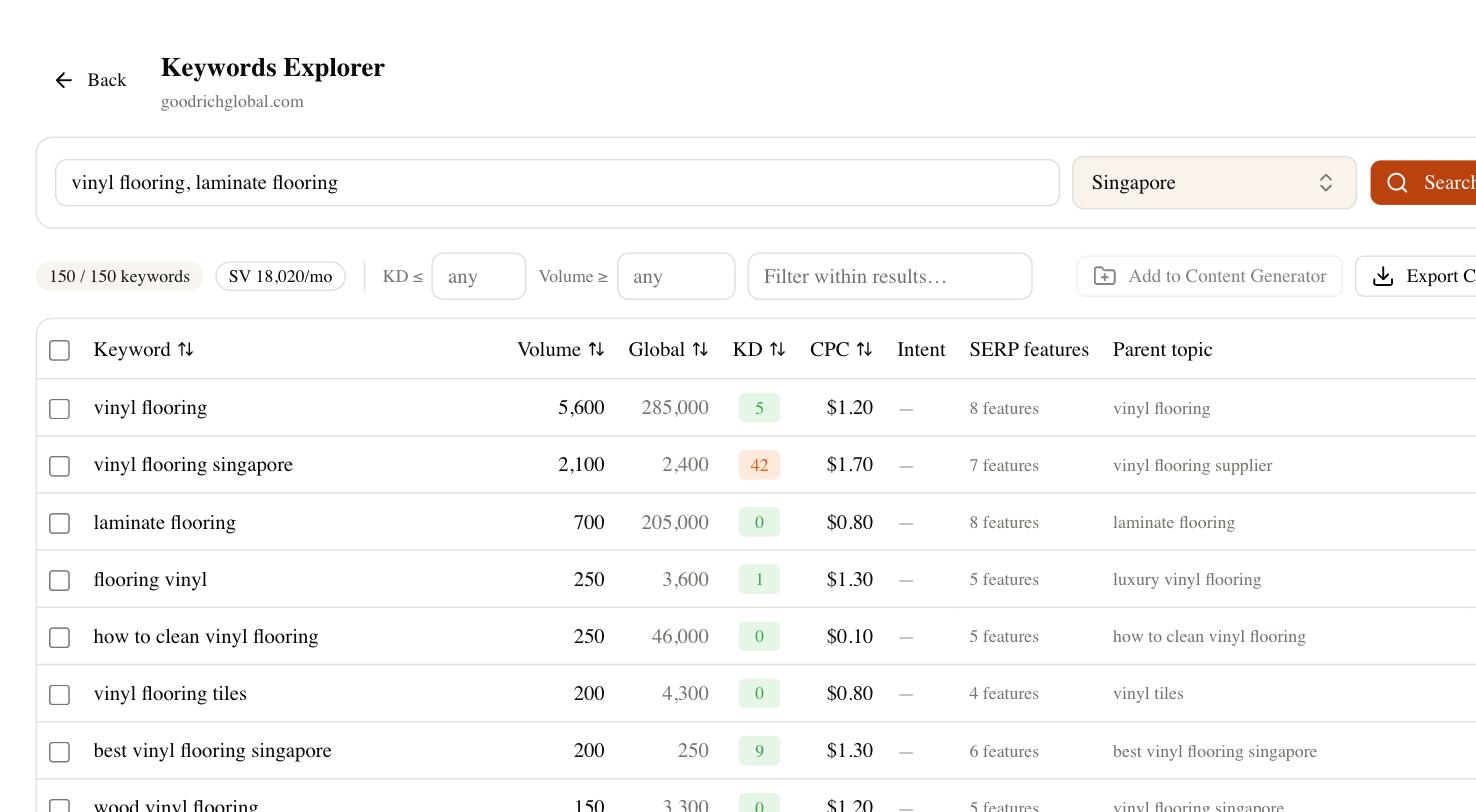
You can run all of this by hand, but a connected tool removes the guesswork. In SEO Rocket you ask, in plain language, for keyword ideas around “solar installation [your city]” and get real volume and difficulty figures, so you know which city terms are winnable and which are locked up by a national brand. The competitor-gap tool shows exactly which pages are ranking for the installer down the road, so you can see the service and city pages you are missing.
From there, rank tracking watches your priority terms by location, the site audit catches the technical issues that hold service pages back, and the AI writing tools help you draft city and incentive pages fast without publishing thin filler. If you manage marketing for several installers, the client dashboards hand each one a clean, read-only view of their own progress.
Don’t forget AI search visibility
A growing share of “which solar company should I use in [city]” questions now get asked to ChatGPT, Perplexity, and Google’s AI Overviews, and those answers name specific installers. Ranking first in classic results no longer guarantees you appear in the AI answer. SEO Rocket’s Brand Radar tracks whether you are being cited across those surfaces, so you can see where you show up and where a competitor is being recommended instead.
Your priority checklist
If you do nothing else, work this order. It front-loads the moves that book jobs soonest.
- Complete and verify your Google Business Profile, then build a steady review habit.
- Publish one strong page for each city or service area you actually serve.
- Add current cost and incentive guides for your state.
- Create product pages for the batteries and panels you install.
- Add a commercial solar page if you take those jobs.
- Track your priority local keywords and your AI-search visibility, and revisit monthly.
Solar SEO is not fast — new pages can take a few months to settle, and local rankings jitter day to day — but it compounds. Get the profile, the service pages, and the incentive content right, and you build a lead source that keeps producing long after the ad budget stops.