SEO for spas is not the same job as ranking a national e-commerce store, and treating it like one is why most spa websites stall. Almost every person who books a facial, a massage, or a med-spa treatment is searching for something near them, on a phone, often within a day or two of paying. That single fact — local, mobile, high-intent — should shape every decision you make about your site.
Get it right and SEO for spas becomes one of the cheapest, most durable booking channels you have. You are not competing with the whole internet. You are competing with the handful of other spas in your city, and most of them are getting the basics wrong. This guide covers what actually moves bookings for a spa, in priority order.
Why spa search is a local game
Think about how your buyers actually search. Almost nobody types “best facial in the world.” They type “facial near me,” “day spa downtown,” or the name of your suburb plus a treatment. Google reads that intent as local and answers it with the map pack — the three businesses shown above the regular results with pins, ratings, and hours.
That map pack is the whole ballgame. Ranking fourth in the organic list below it earns a fraction of the clicks of a spot in those top three map results. So the goal of spa SEO is not abstract “authority” — it is landing in that local three-pack for the treatments you make the most money on, in the neighborhoods you actually serve.
This also changes what “the competition” means. You are not up against every spa website in the country, only the ones a short drive away. That is good news: the bar in most local markets is low. If your rivals have thin sites, stale listings, and no reviews strategy, you can pass them with a few weeks of focused, unglamorous work rather than a huge budget.
The keywords that actually bring bookings
Spa keywords split into two buckets, and confusing them wastes months. Bottom-of-funnel terms are people ready to book: they name a treatment and usually a place. Top-of-funnel terms are people researching: “how long does microneedling last,” “is a hydrafacial worth it.” Both matter, but they need different pages and you should chase the booking terms first.
| Example keyword | Intent | What to do with it |
|---|---|---|
| day spa near me | Ready to book | Google Business Profile + a strong homepage |
| couples massage [city] | Ready to book | Dedicated service page for that treatment |
| hydrafacial [city] | Ready to book | Treatment page with price and duration |
| med spa [suburb] | Ready to book | Location-focused page or GBP |
| prenatal massage near me | Ready to book | Niche service page you likely lack |
| is microneedling worth it | Researching | Blog post that links to your booking page |
| gift certificate spa [city] | Occasion buyer | Simple, fast-loading gift page |
Notice how specific the booking terms are. “Massage” alone is vague and brutally competitive; “prenatal massage” or “deep tissue massage [your suburb]” is narrower, easier to rank for, and pulls in people who know exactly what they want. Those long, specific phrases are where a spa wins.
Your Google Business Profile does the heavy lifting
For a spa, your Google Business Profile matters more than your website, and it is free. This is the listing that feeds the map pack. Fill in every field: exact business name, a precise category (Day Spa, Medical Spa, Massage Therapist), hours, phone, and a booking link. Then add each treatment as a service with a short description and price.
Photos matter more here than anywhere else in your marketing. People choose a spa on how it looks and feels. Upload real interior shots, treatment rooms, and your team — not stock images. Keep the profile fresh with a post every week or two, because Google rewards active listings and a stale profile quietly slips down the pack.
One detail trips up almost every spa: your name, address, and phone number must match exactly everywhere they appear — the profile, your website footer, and any directory listing. Even small differences, like “St” in one place and “Street” in another, muddy the signal Google uses to trust that you are a real, single business at one location. Pick one format and use it everywhere.
Build a page for every treatment you sell
The most common structural mistake is cramming every service onto one “Services” page. Google cannot rank a single page for facials, massage, waxing, and injectables at once. Give each meaningful treatment its own page: a clear title, what it involves, who it suits, how long it takes, the price, and a booking button.
Write these pages for a nervous first-timer, not for Google. Answer the real questions — does it hurt, how long is recovery, how often should I come back. When you name the treatment and your city naturally in the heading and copy, you cover the exact phrase people search without stuffing anything. A spa with fifteen honest treatment pages will out-rank one with a single bloated services page almost every time.
Reviews and reputation are ranking fuel
Reviews do double duty for a spa. They influence where you sit in the map pack, and they are the single biggest factor in whether someone picks you over the spa next door. A steady flow of recent, genuine reviews beats a big pile of old ones, so build a simple habit: text or email a review link a few hours after every appointment, while the glow is still there.
Reply to all of them, the warm ones and the critical ones. A calm, professional response to a two-star review reassures the next reader far more than a wall of perfect fives. Never buy reviews — Google is good at spotting fake ones, and a filtered or suspended profile costs you far more than the reviews were ever worth.
Common mistakes spas make
A few errors show up again and again, and each one quietly caps your bookings.
- Chasing national keywords. Trying to rank for “best facial” instead of “facial [your city]” means fighting the entire industry for traffic that will never drive to you.
- A slow, image-heavy site. Spa sites love huge photos, but a page that takes five seconds on mobile loses the booking. Compress images and keep it fast.
- No prices anywhere. People searching for treatments want a ballpark before they call. Hiding prices sends them to the competitor who shows theirs.
- Ignoring the phone experience. Almost all spa traffic is mobile. If your booking button is hard to tap, the ranking does not matter.
- Set-and-forget. Reviews, posts, and fresh content all decay. A profile left alone for six months slides down the pack.
How SEO Rocket fits a spa’s workflow
The hardest part of spa SEO is knowing which treatments people actually search for in your area, and in what volume. That is where the research tools earn their keep. You can ask in plain language for keyword ideas around a treatment and see real search volume and difficulty, so you build pages for the terms that exist rather than guessing.
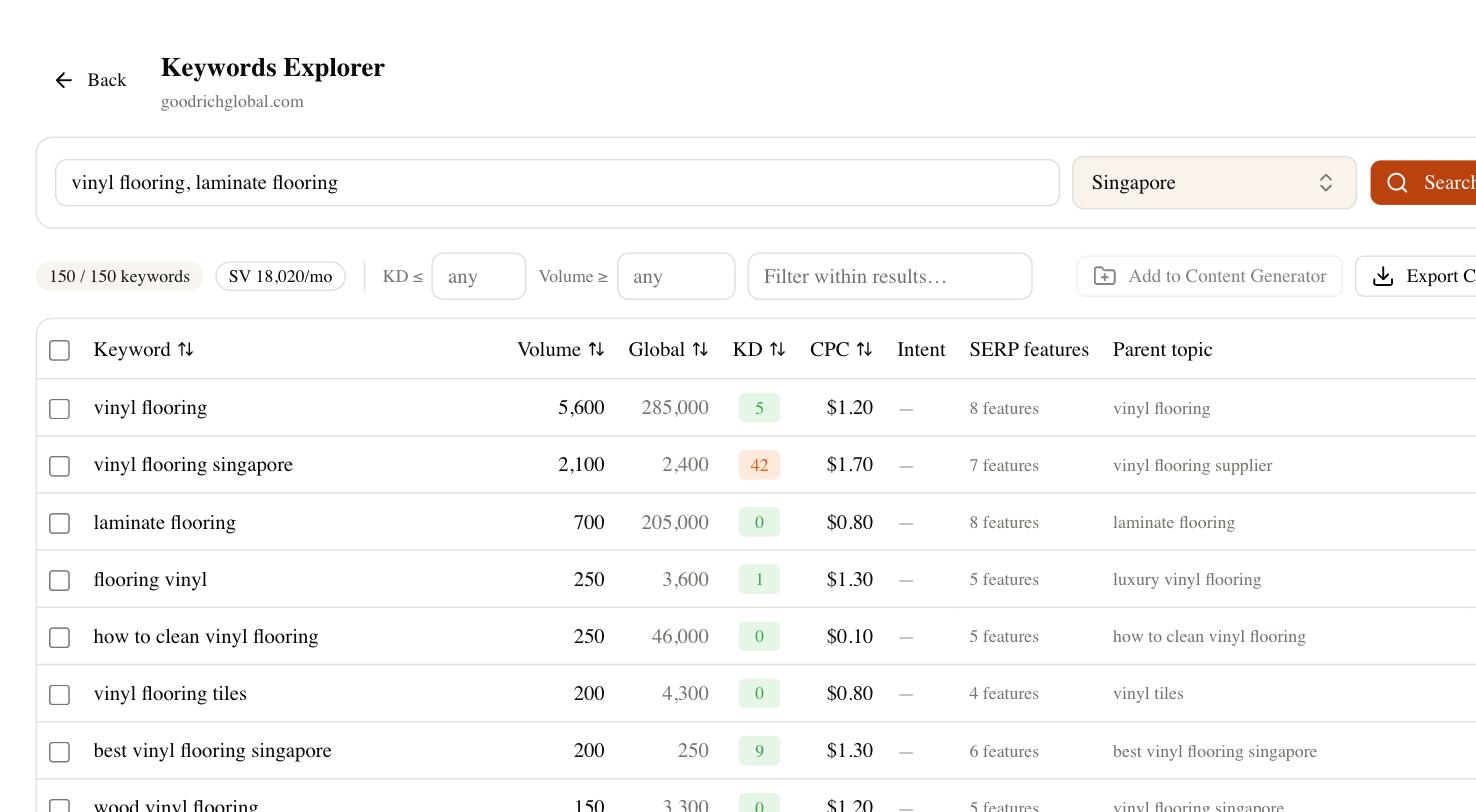
From there the same workflow helps you draft honest treatment and blog pages, track where you rank for your money keywords over time, and watch what the other spas in your city are ranking for that you are not. For a small team without an agency budget, having research, writing, rank tracking, and competitor gaps in one place is the difference between doing SEO consistently and never getting to it. Pick your three top treatments, build a proper page for each, tidy your Google Business Profile, and ask for a review after every visit. That short list, done well, out-performs almost every spa website in your market.