
SEO for orthodontists is a local game long before it is a content game. Almost nobody drives two hours for braces or clear aligners, so SEO for orthodontists lives or dies on whether you appear when a parent or an adult within a few miles of your office reaches for their phone. Get that part right and a single new case can be worth thousands of dollars in production. Get it wrong and you are invisible for the exact searches that decide where someone books a consult.
This guide is specific to your practice, not generic advice with “orthodontist” pasted in. Below are the searches your buyers actually run, the pages that convert them, the mistakes that quietly cost you cases, and where a tool like SEO Rocket saves you real hours.
Why orthodontic SEO is different
Two things set your niche apart. First, the buyer is often not the patient. A mom researching braces for a twelve-year-old searches, compares, and reads reviews very differently than a 34-year-old weighing Invisalign against traditional brackets for herself. Second, the decision is expensive and slow. People do not impulse-buy a two-year treatment plan, so they run a long chain of searches over weeks: symptom, options, cost, then a shortlist of local names. Your job is to be present at every step, not just the final “book now” moment.
The money is concentrated, too. You do not need thousands of visitors. You need the handful each month who are ready to start treatment, and those visitors cluster around a small set of high-intent local queries. That makes the work focused: win a short list of terms in your city and you have won. It also means your competition is not every practice in the country, only the handful ranking for the same local searches, which is a fight you can realistically plan and win within a year.
How your patients actually search
Search intent splits cleanly in this niche. There are research queries (“braces vs Invisalign,” “how long do braces take”), cost queries (“how much are braces,” “Invisalign cost”), and local intent queries with “near me” or a city name attached. The near-me and cost searches are where the appointments come from. Someone typing “orthodontist near me” or “Invisalign [your city]” is close to booking; someone reading “do I need braces” is months out but worth capturing early so you are the familiar name later.
Here are representative keywords and the intent behind each, so you can see where to point your effort.
| Example keyword | Intent | Priority |
|---|---|---|
| orthodontist near me | Local, ready to book | Highest |
| Invisalign [city] | Local, high commercial | Highest |
| how much do braces cost | Cost research, warming up | High |
| clear aligners for adults | Service + audience | High |
| braces for kids [city] | Local, parent buyer | High |
| braces vs Invisalign | Comparison, early stage | Medium |
| free orthodontic consultation [city] | Offer-driven, ready | High |
Notice how many carry a city or “near me.” That is the signal to build for place, not just topic. A national ranking for “clear aligners” does nothing for a practice that only serves one metro.
Win the local pack first
The three-result map block at the top of local searches drives more consult calls than the classic blue links below it. Your Google Business Profile is the lever there, and it is often neglected. Pick the primary category “Orthodontist,” fill every service and attribute, add real photos of your office and team, and keep your name, address, and phone number identical everywhere they appear online. Inconsistent addresses across directories are a quiet ranking drag.
Reviews do heavy lifting here. Volume, recency, and your replies all matter, and orthodontics is a category where prospects read them closely because they are trusting you with their child’s smile. Build a simple habit of asking happy patients at debond, and respond to every review, including the occasional critical one, in a calm and professional voice. A steady trickle of recent reviews signals an active, trusted practice far better than a big number that stopped growing two years ago.
Build pages that match intent
One thin “Services” page cannot rank for everything, and it will not. Give each major treatment its own page written for a real buyer: an Invisalign page, a metal-braces page, a clear-aligners-for-adults page, an early-treatment page for kids. Each should answer the questions that query implies, including the one most practices dodge.
That question is cost. People search price constantly, and pages that stay silent lose them to the competitor who gave a range. You do not have to publish a fixed number, but a straight explanation of what drives the cost and a realistic range earns trust and captures the cost searches at the same time. Add a location page if you serve distinct areas, and put your city in titles, headings, and body copy naturally rather than stuffing it.
Common mistakes orthodontists make
The pattern repeats across practices. The biggest miss is chasing national head terms while ignoring the near-me and city searches that actually book. Close behind is a neglected Google Business Profile with stale photos and unanswered reviews. Many sites also hide their locations, load pages with stock smile photos and no real content, and never mention price anywhere.
- Ranking for “braces” nationally instead of “braces [your city]” locally.
- Letting the Google Business Profile sit unmanaged with no fresh reviews.
- One generic services page instead of a page per treatment.
- No cost information, so price-shoppers bounce to a competitor.
- Slow, image-heavy pages that frustrate mobile users mid-search.
- Ignoring the parent-versus-adult split and writing to no one in particular.
None of these are hard to fix. They persist because no one owns them, not because they are technically difficult.
A practical priority checklist
If you do nothing else this quarter, work down this list in order. It is sequenced by leverage, not by effort.
- Claim and fully complete your Google Business Profile, correct category included.
- Fix name, address, and phone consistency across every directory.
- Launch a steady review-request routine and reply to all reviews.
- Build a dedicated page for each core treatment you offer.
- Add honest cost ranges and drivers to those pages.
- Create city or neighborhood pages if you serve more than one area.
- Confirm the site loads fast on a phone and the click-to-call button works.
Where SEO Rocket fits
The hard part of all this is knowing which local terms are worth chasing and then producing the pages without burning a week. That is the gap SEO Rocket closes. You ask in plain language for keyword ideas around a seed like “Invisalign” or “braces for adults,” and it returns real search volume and keyword difficulty so you can separate the terms worth targeting from the ones that will never move.
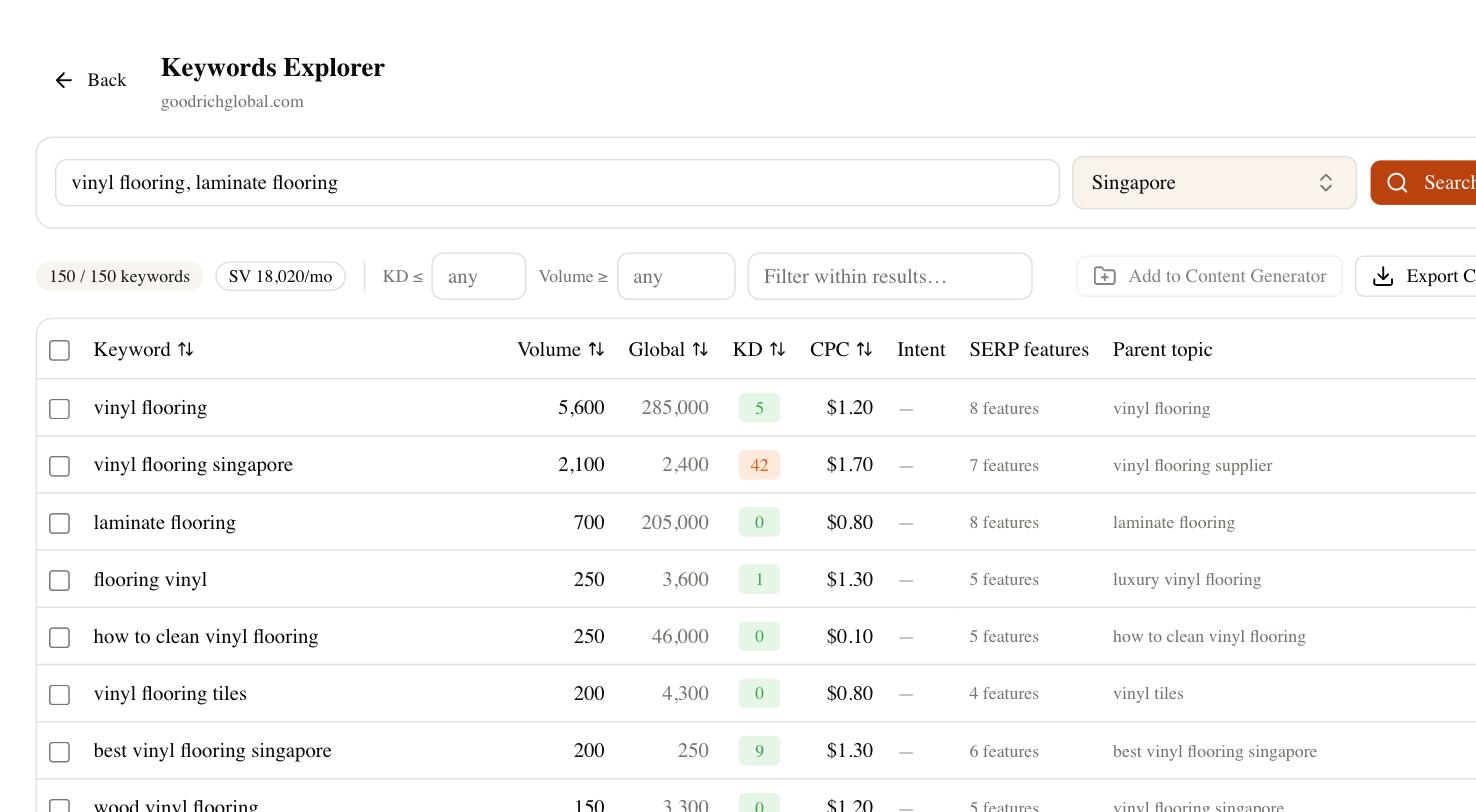
From there the same workflow drafts the treatment and cost pages, tracks where you rank for your priority local terms, and runs a site audit so slow or broken pages surface before they cost you appointments. The competitor-gap view is especially useful in a local market: it shows the keywords the practice ranking above you already covers and you do not, which is usually the fastest route to a plan. It even tracks whether your practice gets mentioned in AI answers, since more patients now ask an assistant for a recommendation before they ever open a map. One connected tool doing the research, the writing, and the tracking is what makes this manageable for a practice that would rather be treating patients than fighting a dashboard.