
SEO for optometrists is a local game before it is anything else. Almost nobody drives an hour for an eye test, so SEO for optometrists lives or dies on whether you show up for the person three suburbs away typing “optometrist near me” on their phone at lunch. Get that right and the rest of your marketing gets easier; get it wrong and a slicker practice two blocks over quietly takes the appointments you should have booked.
This guide is specific to eye-care practices — the searches your patients actually run, the services that pay for the chair, the mistakes that cap most optometry sites, and where each part of the workflow fits. It is not generic advice with “optometrist” pasted over the top.
Why optometry is a local-intent business
Nearly every valuable search an optometry patient makes carries geographic intent, even when they do not type a city. Google reads “eye exam,” “dry eye specialist,” or “kids glasses” from a phone and serves a local pack — the map with three listings — above the regular results. That map is the real front page. Ranking tenth nationally for “progressive lenses” is worth nothing; ranking in the top three of the local pack for “eye test [your suburb]” fills your calendar.
The exception is content that pulls people in from further out: myopia control for children, ortho-k, scleral lenses, or medical eye care. Parents will travel for a paediatric myopia program, so a genuinely useful page on it can rank across a whole metro area, not just your street. Know which of your services are walk-in-radius and which are destination services — you optimise them differently.
This split changes how you measure success too. For everyday exams, the honest scoreboard is your position in the local pack and the number of calls and bookings it drives. For destination services, it is organic rankings across a wider area and the enquiries that come from outside your immediate suburb. Judging a specialty page by walk-in traffic, or a general exam page by metro reach, leads you to fix the wrong thing.
The keywords your patients actually search
Split your keywords by intent, because a “book now” search and a “what is this” search need different pages. High-intent commercial terms — the ones close to a booking — deserve dedicated service and location pages. Informational terms build trust and feed the top of the funnel. Here is the pattern that repeats across optometry practices.
| Example keyword | Intent | What it should map to |
|---|---|---|
| optometrist near me / eye test [suburb] | High — ready to book | Homepage + Google Business Profile |
| eye exam [city] | High — comparing local options | Location page |
| myopia control for children | Commercial — destination service | Dedicated service page |
| dry eye treatment [city] | Commercial — high margin | Service + location page |
| ortho-k / scleral lenses | Commercial — specialty | Service page, metro-wide |
| optometrist that takes [insurance] | High — filtering by cover | Insurance/FAQ page |
| how often should I get an eye exam | Informational — top of funnel | Blog post linking to booking |
| blue light glasses worth it | Informational — awareness | Blog post |
The money is in the middle rows. General eye exams keep the lights on, but specialty services — myopia management, dry eye clinics, ortho-k, specialty contact-lens fittings, medical eye care — carry the margin and face far less competition in local search. Most practices under-invest in exactly the pages that would win those searches.
The highest-leverage moves
Do these before anything clever. First, claim and fully complete your Google Business Profile — correct category, hours, services, real photos of the practice, and a steady flow of patient reviews. For a local optometry search, the profile does more heavy lifting than your website. Second, build one page per service and one page per location if you have more than one branch. A single “Our Services” page listing twelve things ranks for none of them; twelve focused pages each rank for their own term.
Third, earn reviews on purpose. Ask every satisfied patient at the front desk, and make it a habit, not a campaign. Volume and freshness of reviews correlate strongly with local-pack position, and they are the first thing a nervous new patient reads. Fourth, get your name, address, and phone number identical everywhere online — your site, directories, health listings. Inconsistent details quietly erode local rankings.
These moves compound. A complete profile earns more clicks, more clicks bring more reviews, and a steady stream of reviews lifts you in the pack, which earns still more clicks. It is unglamorous work, and it is exactly why so many practices skip it — which is precisely why doing it consistently sets you apart. None of it requires a big budget; it requires showing up every week for a few months.
Google Business Profile is half the battle
Treat your profile as a living page, not a set-and-forget listing. Post updates, answer the Q&A section, add each service with a short description, and reply to every review — good and bad — in a calm, human voice. Practices that keep their profile active tend to hold the local pack; ones that leave it stale slide out of it. If you only had one hour a week for SEO, this is where it should go.
Photos matter more than most optometrists expect. Patients choosing between three map listings look at the pictures — a clean dispensary, the frame wall, a friendly team shot — before they read a word. Fresh, real photos beat stock every time.
Common mistakes optometrists make
- One page for everything. Cramming every service onto the homepage means you rank for none of the specialty terms that actually pay.
- Chasing national keywords. Fighting big retailers and lens brands for “buy contact lenses” is a losing battle; your advantage is local and in-person care.
- Ignoring reviews. No system to collect them, and no replies to the ones you have — both cost you rankings and bookings.
- Thin service pages. Two sentences on “dry eye” will not outrank a competitor who explains symptoms, treatments, and what a visit involves.
- Forgetting mobile. Most of these searches happen on a phone. A slow page or a hard-to-tap booking button loses the patient in seconds.
None of these are exotic. They are the ordinary gaps that leave the door open for the practice next door — which means closing them is the fastest way to gain ground.
Where SEO Rocket fits
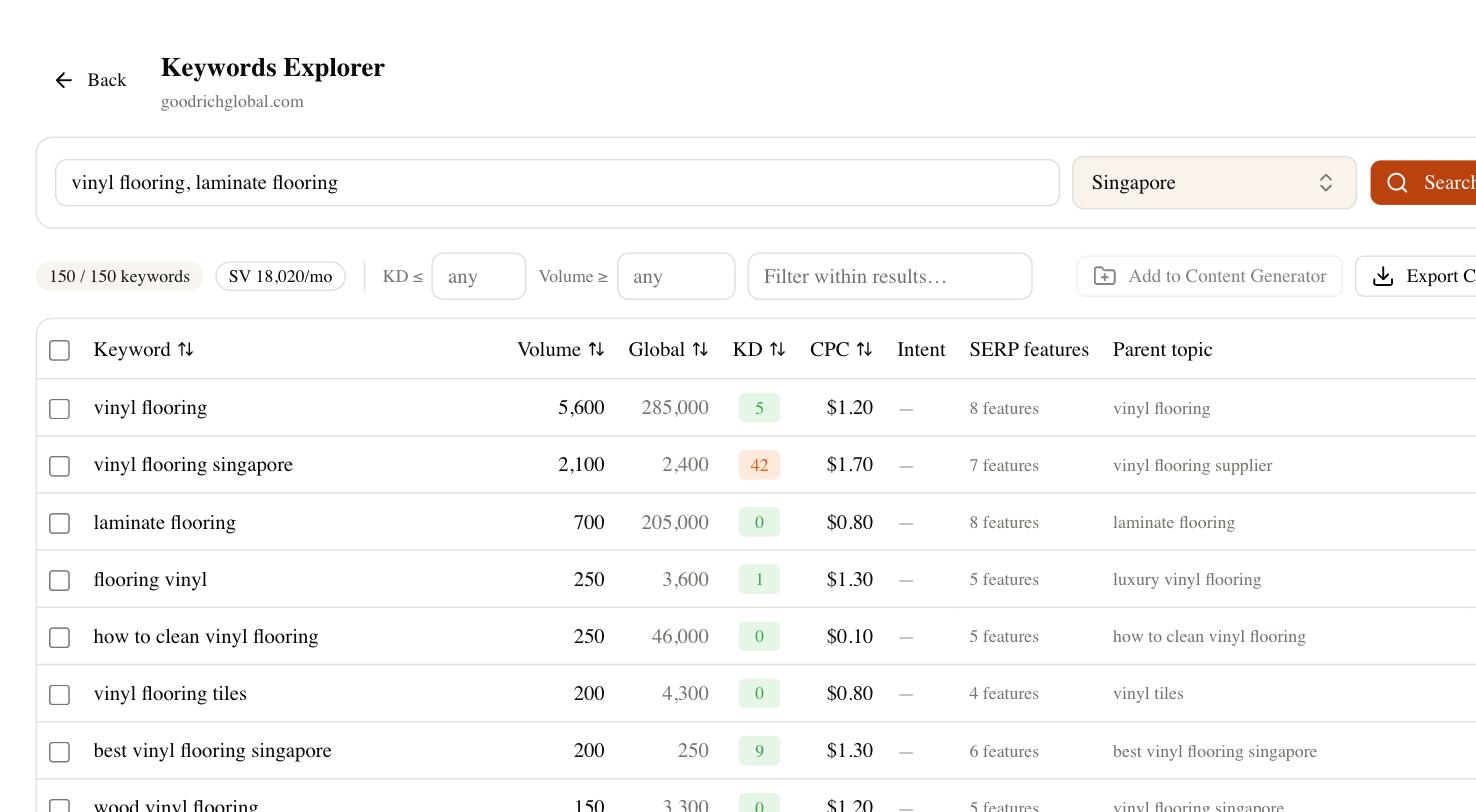
You can run all of this by hand, but a connected tool removes the guesswork. SEO Rocket’s Keywords Explorer pulls real search volume and difficulty for terms like “myopia control [city]” or “dry eye clinic near me,” so you build pages for demand that actually exists rather than what you assume patients type. Rank tracking watches your local-pack and organic positions over time — useful, because local rankings shift by a few spots day to day and you want the trend, not the noise.
The competitor gap view shows which service keywords the practices ranking above you cover that you do not — often a specialty page you have simply never written. Brand Radar checks whether AI assistants recommend you when someone asks ChatGPT or Perplexity for “the best optometrist for kids in [city],” an increasingly common way patients shortlist. And because it drafts content and hands clients a read-only dashboard, a multi-location group or a marketing partner can run the whole workflow from one place.
Where to start this week
Pick one high-value service and go deep before you go wide. Fully complete your Google Business Profile, ask your next ten happy patients for a review, and write one strong page for your best specialty service — myopia control or dry eye is usually the smart choice. Track the three or four keywords that page targets so you can see it move. That is a realistic, honest first month of SEO for optometrists: not a hundred tasks, but the handful that put you in front of the patient searching right now.