
SEO for hair salons is not the same job as ranking a national online store, and treating it like one is the reason most salon websites sit on page three. Almost every booking starts with someone a few miles from your chair typing into a phone, so seo for hair salons lives or dies on local signals — your Google Business Profile, your reviews, and pages that name the exact services and neighborhoods you serve.
The good news is that the field is beatable. Most salons publish a single thin homepage, never touch their map listing, and wonder why the shop two streets over outranks them. If you fix the handful of things that actually move local rankings, you can climb past competitors who have been open far longer than you.
Why salon SEO is a local game, not a national one
Your buyers are not comparison-shopping across the country. A client who wants balayage wants it within driving distance, this month, from someone whose past work they can see. That narrows your entire search strategy to two things: showing up in the local map pack when someone searches “hair salon near me,” and having pages that match specific service-plus-location queries.
This is why chasing a broad head term like “hair salon” is a waste of effort. It is dominated by directories, it is far too competitive for a single-location business, and half the traffic is in the wrong city anyway. The searches that fill your calendar are longer, more specific, and far easier to win.
It also changes how you measure success. You do not need thousands of visitors a month. A hundred people searching “keratin treatment” in your city, landing on a page that matches, are worth more than ten thousand curious readers with no intent to book. Keep that ratio in mind every time you decide what to write.
The keywords that actually book chairs
Salon search intent splits cleanly into two buckets. There are people who know the service they want and are ready to pay, and people still deciding. You want most of your pages aimed at the first group, because that is where the money is. A “balayage” client is worth far more than someone reading a how-to about washing color-treated hair at home.
Here are the kinds of queries worth building pages around, and what each one tells you about the searcher:
| Example keyword | Intent | Why it matters |
|---|---|---|
| hair salon near me | Local, ready | Map-pack query — won with your Google Business Profile, not your site |
| balayage [city] | High-value service | Premium ticket, strong booking intent, needs a dedicated page |
| keratin treatment [city] | High-value service | Repeat-visit service; photos and pricing close the sale |
| color correction near me | Urgent, high-margin | Someone unhappy with another salon — easy to win on trust |
| hair extensions [neighborhood] | Considered purchase | Long research cycle; a detailed page earns the booking |
| curly hair specialist [city] | Niche, loyal | Low competition, high retention if you genuinely specialize |
| bridal hair [city] | Seasonal, planned | Booked weeks ahead; a portfolio page and reviews matter most |
Notice the pattern: service plus place. Each of those deserves its own page, because Google rewards specificity and because a client searching “color correction” does not want to land on a generic homepage that lists nine services in a paragraph.
Your Google Business Profile is the real homepage
For a local salon, your Google Business Profile does more heavy lifting than your website. It is what shows in the map pack, it is where reviews live, and it is the first thing a “near me” searcher sees. Fill out every field: exact categories, correct hours, service list with prices where you can, and a steady stream of recent photos of real work.
Reviews are the single biggest lever most salons ignore. Volume and recency both matter, so build a simple habit of asking every happy client to leave one, and reply to all of them — good and bad. A profile with fresh reviews and current photos will outrank an older, neglected listing even when the competitor has a better website. Keep your name, address, and phone number identical everywhere they appear online, because inconsistency quietly drags your rankings down.
Build a real page for every service you offer
The most common structural mistake is cramming every service onto one page. Split them out. A dedicated balayage page can talk about your process, show before-and-after photos, list a price range, name the stylists who specialize in it, and answer the questions clients actually ask. That page can rank for “balayage [city]” in a way a homepage never will.
Each service page needs enough substance to be genuinely useful — a few hundred words, real photos of your own work rather than stock images, and clear next steps to book. Add an FAQ that answers what people ask in the chair: how long it lasts, what it costs, whether it damages hair, how to maintain it. Those questions are also live searches, and answering them well is how you earn the click.
Link these pages together so a visitor who lands on your extensions page can find your color services in one tap. Internal structure like this helps clients navigate and helps Google understand that you are a full-service salon rather than a one-trick shop. It is a small effort that compounds as you add more pages over the year.
The mistakes that keep salons invisible
Most salons lose on the same handful of issues. Run through this checklist honestly before you spend a dollar on anything fancier:
- No claimed or optimized Google Business Profile — the fastest win, and the one most often skipped.
- One thin page for the whole business — no service pages means nothing to rank for specific searches.
- Stock photos instead of real work — clients and Google both prefer proof you can actually do the service.
- Ignoring reviews — not asking, not replying, and letting the profile go stale.
- No city or neighborhood on the page — if the page never names where you are, it will not rank locally.
- A slow, hard-to-book mobile site — most salon traffic is on a phone, and a clunky booking flow loses the sale after the click.
None of these need a developer or a big budget. They need attention, and most of your competitors are not paying any.
Where SEO Rocket fits a salon workflow
Doing this well means knowing which service-and-city keywords are worth a page and which are dead ends. SEO Rocket handles that research in plain language — you describe your salon and your services, and it pulls real keyword data so you can see search volume and difficulty side by side instead of guessing.
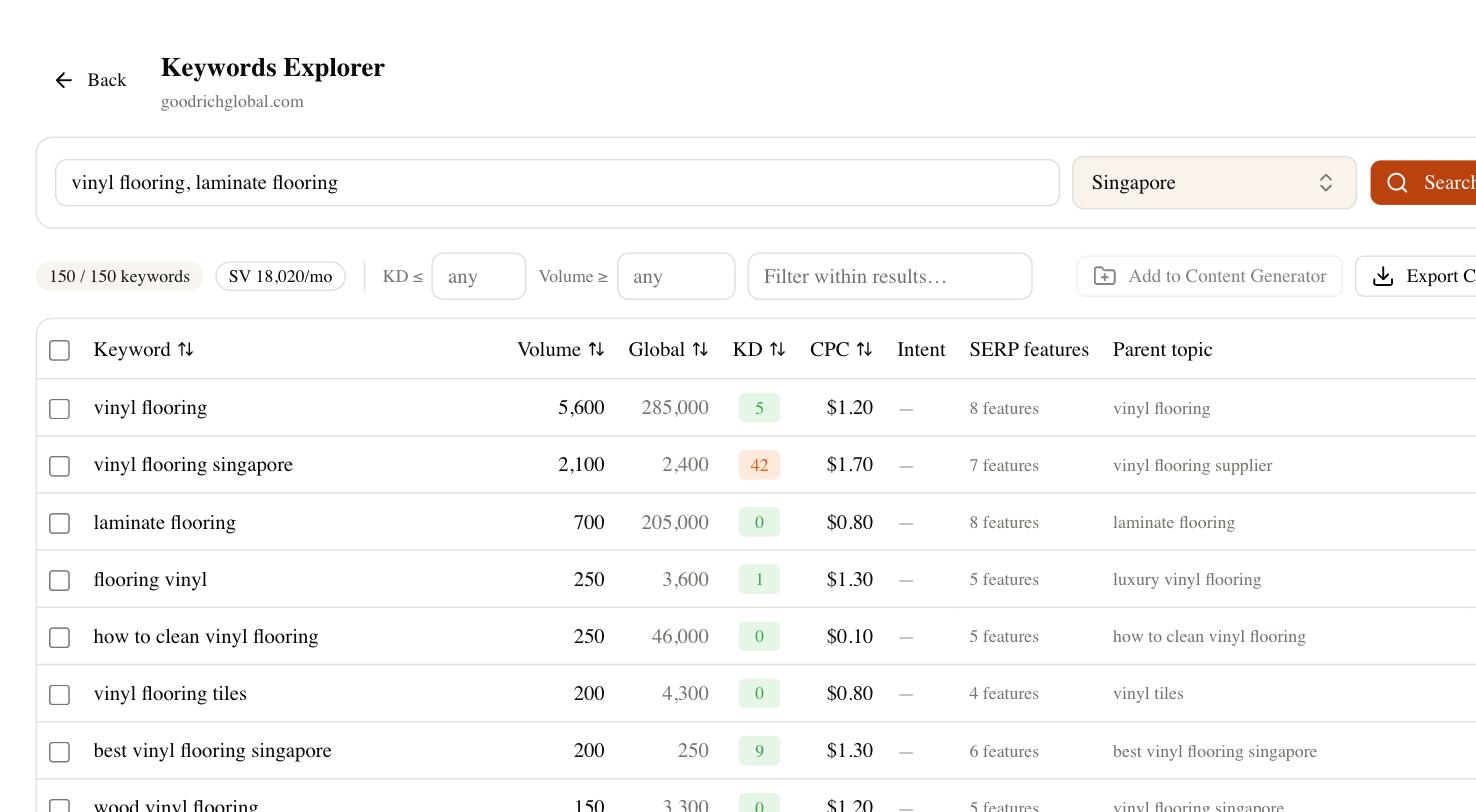
From there the same tool drafts the service pages and FAQs, tracks where you rank for each local term over time, and shows what the salon outranking you is doing differently. For a single-location business without an agency on retainer, that consolidation is the point — one connected workflow instead of a stack of tools you do not have time to learn. It will not replace doing genuinely great hair, but it makes sure the people searching for it can find you.
Where to start this month
Do not try to do everything at once. In your first few weeks, claim and fully optimize your Google Business Profile, add current photos, and set up a routine for asking every satisfied client for a review. That alone will move you in the map pack, and it costs nothing but consistency.
Once that foundation is set, build out one service page at a time, starting with your highest-margin offering — usually color, balayage, extensions, or corrections. Name your city on each page, add real photos and prices, and answer the questions clients ask. Give it a full ranking cycle before you judge results; local positions shift for weeks as Google recrawls, and the salons that win are simply the ones that keep showing up long after the impatient ones quit.