SEO for fashion brands does not work the way a SaaS blog or a plumber’s local page works. Your buyers search in bursts tied to seasons and trends, they shop with their eyes as much as their words, and the page that earns the sale is almost never a blog post. If you have been pouring effort into “how to style” articles while your collection pages sit unoptimized, you are working hard on the wrong 20%.
Done right, SEO for fashion brands is less about publishing volume and more about making your product and category pages the obvious answer when someone types “cropped wool blazer” or “linen midi dress” in November. This guide covers how fashion buyers really search, the keywords that convert, the highest-leverage fixes, and the mistakes that quietly cap your traffic.
How fashion buyers actually search
Fashion search behavior splits into three moods, and each wants a different page. There is discovery (“summer dresses 2026,” “quiet luxury outfits”), where the shopper is browsing and comparing. There is attribute-specific intent (“black linen jumpsuit petite,” “recycled polyester rain jacket”), where they know roughly what they want and are close to buying. And there is branded intent, where they already know you and just want the product or a size guide.
The pattern that trips people up: attribute searches convert best but rarely land on a blog. Someone searching “oversized cashmere cardigan” wants a grid of oversized cashmere cardigans, not a 1,500-word essay about cashmere. Demand is also seasonal and forward-dated. Interest in “wool coats” builds in early autumn, so the ranking work has to be done in summer. Google needs weeks to trust a page; if you publish in October, the season is already over. The brands that win treat their editorial calendar like a buying calendar, planning search content around the same drops their merchandising team is already scheduling months out.
The keywords that make money
Money keywords in fashion are built from stacked attributes: garment, plus fabric, fit, color, or occasion. The head term (“dresses”) is brutally competitive and low-intent. The stacked long-tail is where a smaller brand can realistically win and where the buyer is warmest.
| Keyword | Intent | Best landing page |
|---|---|---|
| summer dresses 2026 | Discovery / seasonal | Seasonal collection page |
| linen midi dress | Attribute — high buy intent | Filtered category page |
| black linen jumpsuit petite | Long-tail — near purchase | Product or tight sub-category |
| wedding guest outfits | Occasion — mixed intent | Curated “shop the look” page |
| are bamboo t-shirts worth it | Research — top of funnel | Blog / guide, linking to products |
Notice that only the last row belongs on a blog. Occasion terms like “wedding guest outfits” or “capsule wardrobe” sit in the middle: they deserve a curated, shoppable landing page, not a plain product grid and not a pure article. Build those and internally link them to the relevant category pages.
Fix your category pages first
This is the single highest-leverage move in SEO for fashion brands, and most stores skip it. Your collection and category pages (the product listing pages, or PLPs) are your money pages, but they usually ship with a title, a grid of images, and no real copy. Google has almost nothing to read, so it ranks a competitor who added a short, useful intro instead.
Give each important category a unique H1, a 60-to-120-word intro that naturally uses the attribute terms buyers search, and a sensible URL like /collections/linen-dresses rather than a parameter soup. Add a few internal links from that page to related categories and to any occasion guides. You are not stuffing keywords; you are giving a thin page enough substance to compete. A brand that does this across its top 15 categories usually sees more lift than from months of blogging.
Win at images and visual search
Fashion is the one vertical where image SEO is not optional. A large share of your discovery traffic can come through Google Images and visual search, and shoppers judge in a fraction of a second. Yet product images routinely ship with filenames like IMG_4821.jpg and empty alt text.
Name image files descriptively, write alt text that describes the garment as a shopper would (“model wearing sage green linen midi dress”), and keep files compressed so pages load fast on mobile, where most fashion browsing happens. Add Product schema with price, availability, and review markup so your listings can show rich results. These are unglamorous fixes, but they compound across thousands of product images.
Common mistakes fashion brands make
The recurring errors are technical and quietly expensive. Faceted navigation — every color, size, and price filter generating its own crawlable URL — can spawn thousands of near-duplicate pages that bury your real ones and waste crawl budget. Infinite-scroll product grids that load only via JavaScript can leave Google unable to see your products at all.
Then there is duplicate copy: pasting the manufacturer’s description onto every product so hundreds of pages read identically. Out-of-stock and end-of-season pages get deleted instead of redirected, dumping accumulated ranking equity. And too many brands chase informational blog traffic (“history of denim”) that never converts while their category pages go untouched. Audit for these before you write a single new article.
Where SEO Rocket fits
The workflow above needs data, and asking for it in plain language beats clicking through a dozen dashboards. In SEO Rocket you can run a competitor gap to see exactly which attribute keywords rival brands rank for that you do not, then feed those straight into category-page copy or a new collection.
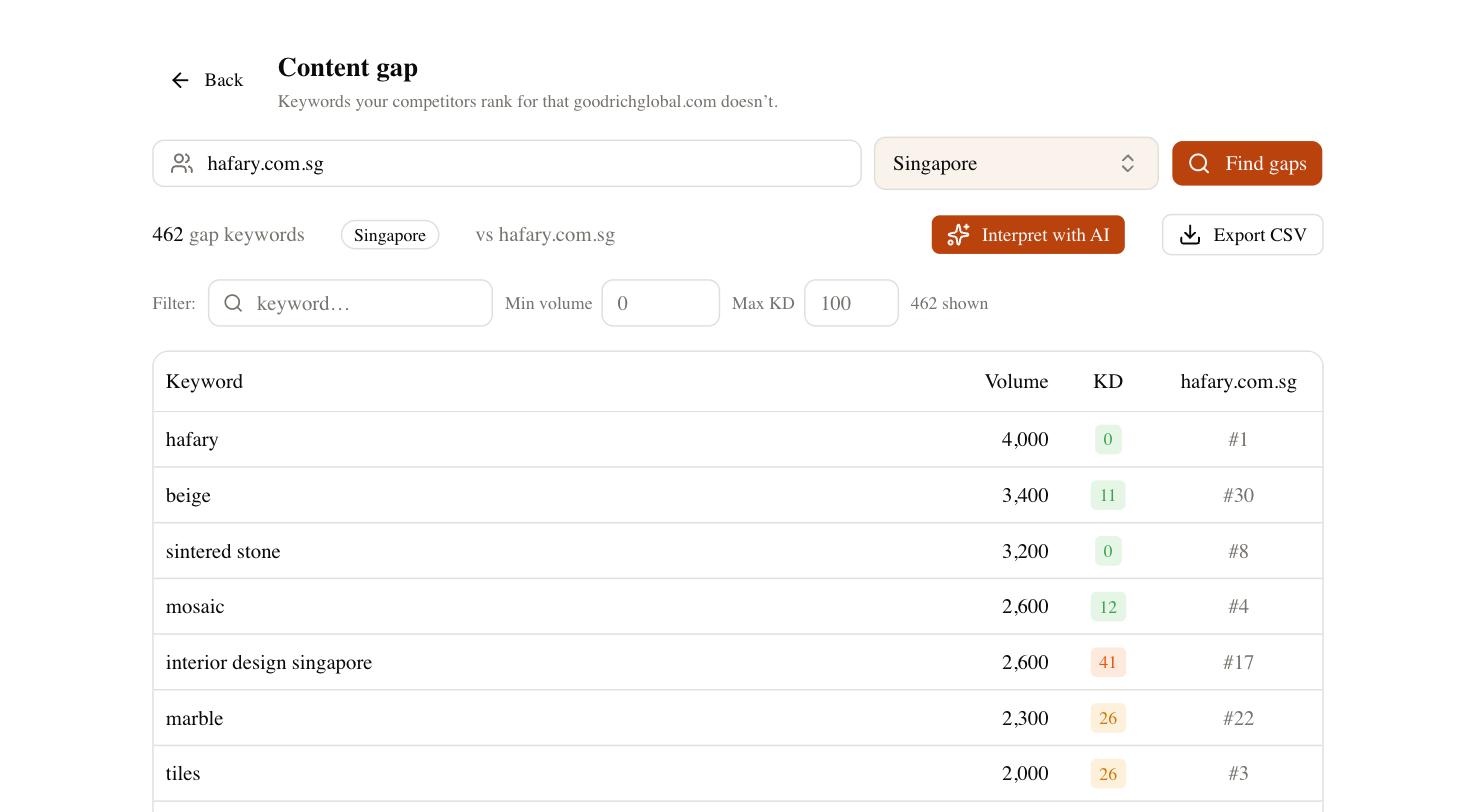
The site audit surfaces the technical traps — faceted-navigation bloat, uncrawlable grids, missing alt text, orphaned seasonal pages — so you fix causes, not symptoms. Rank tracking lets you watch seasonal terms climb over the weeks before peak demand, and the AI writer drafts category intros and occasion guides on real keyword data. Brand Radar adds the piece traditional tools miss: whether ChatGPT and Perplexity mention your brand when a shopper asks them for outfit ideas, which is increasingly where discovery starts.
Where to start this week
Do not try to do everything. Pull your top 10 category pages by potential and add unique intros and internal links to each. Run a crawl to catch faceted-navigation bloat and any JavaScript grids Google cannot see. Fix alt text and Product schema on your best sellers. Then, and only then, plan seasonal content two to three months ahead of demand so it has time to rank. That order — category pages, technical hygiene, images, forward-dated content — is what separates brands that grow from search from those that just publish. Give any change a full season before you judge it; fashion rankings move with demand, not overnight.