
SEO for fitness studios is almost entirely a local game, and that changes what you should work on. A prospect looking for a reformer pilates class or a Saturday spin session isn’t researching for weeks — they want a studio within a few miles, open at a time that fits, with enough reviews to feel safe booking a first class. Your job is to be the obvious answer in that ten-second decision, not to rank nationally for a broad term nobody in your postcode is typing.
That is why SEO for fitness studios looks different from SEO for a SaaS blog or an e-commerce store. The traffic that pays your rent comes from a short list of high-intent, geographically bound searches. Get those right and you fill classes; chase vanity keywords and you burn months for nothing.
What your buyers actually search for
Fitness searches split cleanly into two intents, and only one of them books. The first is discovery with location: “pilates studio near me,” “yoga classes downtown,” “crossfit gym [neighborhood].” These people are ready to try a class this week. The second is research: “is reformer pilates good for beginners,” “how many spin classes a week.” Useful for content, but slower to convert.
The pattern to notice is that class type plus location does the heavy lifting. Someone rarely searches “gym” — they search “hot yoga,” “barre,” “kickboxing,” or “strength training for women” attached to a place. Each discipline you teach is its own keyword cluster, and each deserves its own page instead of being buried in a single “Classes” list.
The money keywords worth ranking for
Before writing a word, map your keywords to intent so you spend effort where bookings live. Here is the shape of a typical studio’s priority list.
| Keyword example | Intent | Priority |
|---|---|---|
| reformer pilates near me | Ready to book | High |
| yoga studio [your city] | Ready to book | High |
| beginner spin class [neighborhood] | Ready to book | High |
| hot yoga classes [city] | Ready to book | High |
| drop-in pilates [city] | Ready to book | Medium |
| is barre a good workout | Research | Medium |
| pilates vs yoga for back pain | Research | Low |
The high-priority rows share three traits: a named class type, a location signal, and a buyer who is minutes from booking. Build a dedicated landing page for each of your top disciplines, name the city and neighborhood in the page title and first paragraph, and put the schedule and a “book a first class” button above the fold. The research keywords are worth a blog post each, but only after your booking pages exist.
The highest-leverage moves
Your Google Business Profile outranks your website for most of these searches, so it comes first. Claim it, pick the most specific category (“Pilates studio,” not “Gym”), add real photos of your space and instructors, list accurate class hours, and keep the booking link current. The map pack — those three listings above the normal results — is where near-me searches get won or lost.
Reviews are the second lever, and they compound. A studio with a steady stream of recent, detailed reviews wins the click even from a slightly lower position, because a first-time visitor is trusting you with their body and their card. Ask every member who finishes a first class, make it a two-tap link, and reply to each one. Volume and freshness both matter more than a perfect average.
The third lever is on-page structure. One clear page per class type, each with the discipline and location in the title tag, a short honest description of what a first session is like, the weekly schedule, pricing or a trial offer, and directions with parking notes. Add LocalBusiness schema so search engines read your address, hours, and price range without guessing.
Common mistakes fitness studios make
The most common one is a single flat “Classes” page that lists every discipline in a grid. It reads fine to a human but ranks for nothing, because it can’t be about reformer pilates and kickboxing and prenatal yoga at once. Split it. Each class type competing for its own search deserves its own URL.
The second mistake is ignoring the schedule as a landing page. Many studios lock their timetable inside a booking widget that search engines can’t read, so a search for “6am spin class [city]” never finds them. Publish a plain-HTML schedule page that names the classes, times, and location in real text.
Third, studios chase national or generic terms — “best workout,” “pilates benefits” — and feel busy while booking nothing. Those terms are dominated by big publishers and carry almost no local buying intent. Your realistic win is the near-me cluster in your own metro, and that is a far shorter, more winnable list.
How SEO Rocket fits your studio
The hardest part of all this is knowing which class-plus-location keywords are actually searched near you, and how hard each is to rank for. SEO Rocket’s Keywords Explorer pulls Ahrefs-grade volume and difficulty for exactly those terms, so you can see whether “reformer pilates” or “pilates reformer classes” is the phrase your city actually types before you name a page.
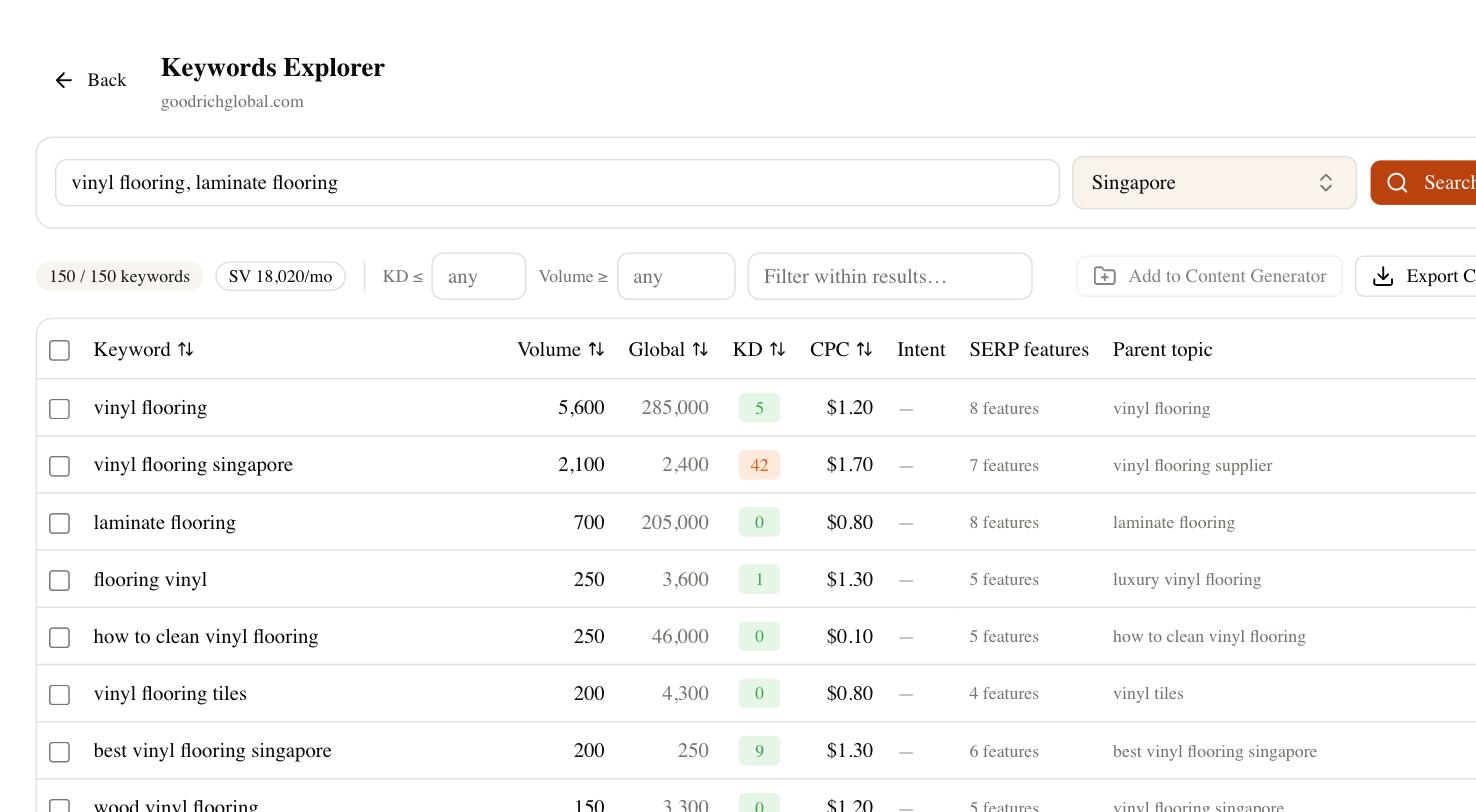
From there the rest of the toolkit lines up with the work above. The competitor gap view shows which class pages the studio ranking above you has that you don’t. Rank tracking follows your map-pack and organic positions for each near-me term week to week, so you can tell whether a new landing page is moving. And when it’s time to write the research posts, the AI writer drafts them on the real keyword data instead of guesses. It’s one workflow instead of four subscriptions.
Where to start this week
Do the cheap, high-return work first, in order. Claim and fully complete your Google Business Profile with the most specific category and real photos. Split your Classes page into one page per discipline, each naming your city in the title. Publish a readable schedule page. Set up a two-tap review request for every first-timer. Then, with keyword data in hand, add the two or three research posts your buyers actually ask about.
None of this ranks overnight — give a new page a full month or two before you judge it, and expect positions to wobble a few spots day to day. But the studios that own their near-me cluster rarely lose it, because reviews, local relevance, and a clean page structure compound while competitors keep chasing broad terms. Be the obvious answer within a few miles, keep the profile and reviews fresh, and the classes fill themselves without a paid-ads budget propping them up.