SEO for auto repair is not the same game as ranking a national e-commerce store or a SaaS blog. Almost every dollar a repair shop earns comes from someone within about a fifteen-minute drive, usually with a car that already has a problem, often searching from the driver’s seat. That single fact changes which keywords matter, which pages you build, and where you should spend your first week of effort.
This guide is specific to the trade. Below are the searches your customers actually type, the handful of moves that move the needle, the mistakes that waste months, and where a tool like SEO Rocket fits into the work.
How auto repair buyers actually search
Your customers fall into two very different buckets, and they type differently. The first is the emergency: a warning light, a grinding noise, a car that won’t start before work. These people search “brake repair near me,” “check engine light diagnostic,” or “mechanic open now” and they call the first shop that looks trustworthy and close. Intent is sky-high and the decision happens in minutes.
The second bucket is the researcher: someone comparing a quote or deciding whether a repair is worth it. They search “how much does a timing belt replacement cost,” “transmission flush vs change,” or “is a Subaru head gasket repair worth it.” These searches don’t ring the phone today, but they build trust and pull people in before the emergency hits. Good SEO for auto repair serves both — capture the panic searches with local pages, and earn the researchers with honest answers.
The money keywords worth targeting
Not all keywords are equal. A shop owner’s instinct is to chase “auto repair,” but that broad term is competitive, vague on intent, and often clicked by people miles away. The keywords that actually convert are service-plus-location and specific-symptom searches. Here’s a realistic priority map.
| Keyword example | Intent | Priority |
|---|---|---|
| brake repair [city] | Ready to book — high value | High |
| check engine light near me | Emergency, will call today | High |
| transmission repair [city] | High-ticket job, comparing shops | High |
| oil change [city] | Frequent, builds repeat customers | Medium |
| [car make] specialist [city] | Niche, loyal, less competition | Medium |
| timing belt replacement cost | Research, no immediate call | Low-Medium |
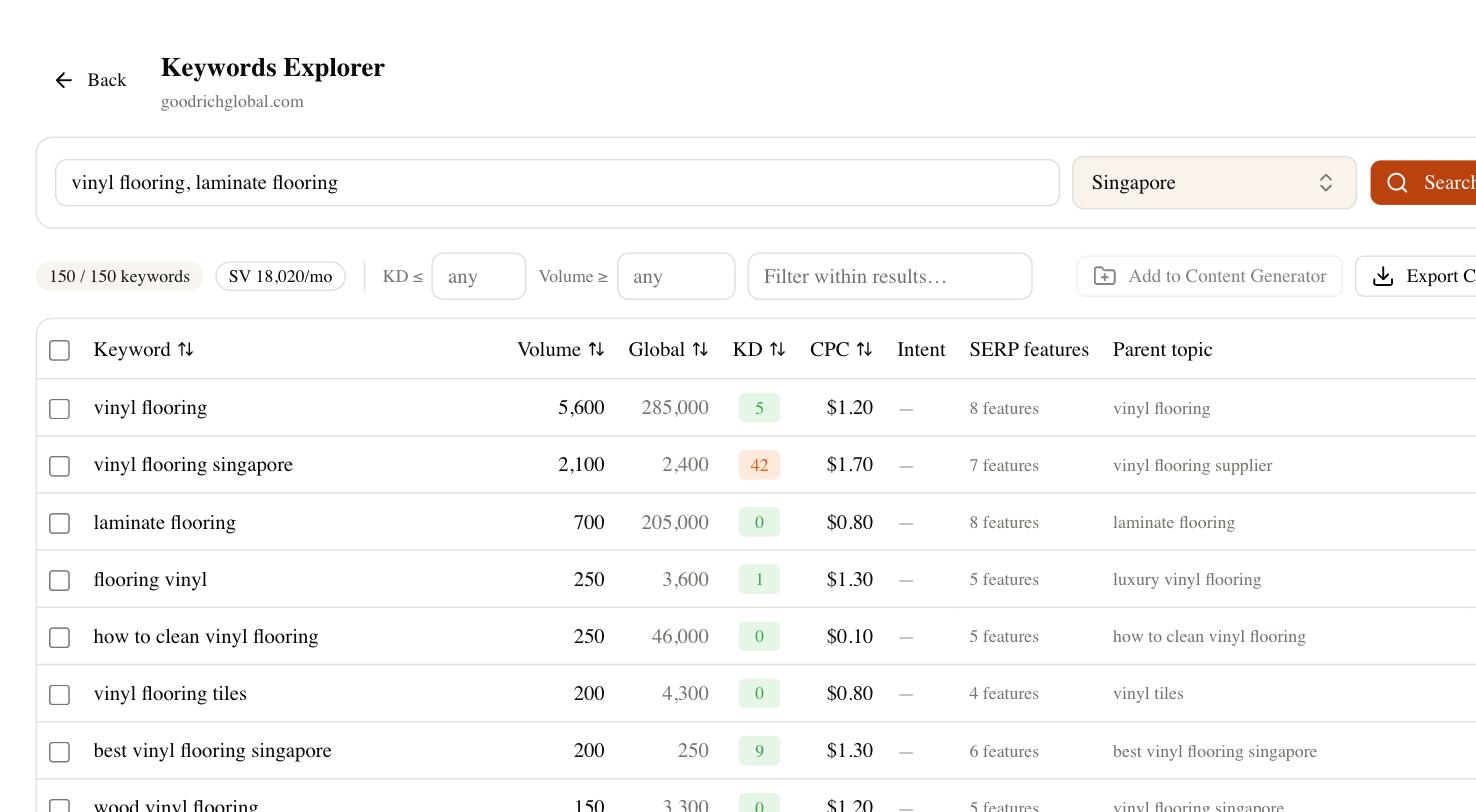
Notice the pattern: the highest-priority terms name a service and imply a place. That’s where you’ll win jobs, and it’s where a keyword tool earns its keep by showing real volume and how hard each term is to rank for in your area.
Your Google Business Profile is the whole ballgame
For most shops, the single highest-leverage asset isn’t the website — it’s the Google Business Profile that shows up in the local map pack. That’s the little block of three shops with stars and a map that appears above the regular results for “auto repair near me.” Landing in those three spots drives more calls than page one of the blue links below it.
Getting there is unglamorous but concrete. Pick the right primary category (“Auto repair shop,” not something vague), list every service you offer, keep your hours accurate down to holidays, add real photos of your bay and team, and make sure your name, address, and phone number are identical everywhere they appear online. Consistency signals sound boring, but Google leans on them heavily to decide who’s real and who’s close.
Reviews are your ranking factor and your close
Reviews do double duty. They’re one of the strongest local ranking signals, and they’re often the deciding factor when a nervous customer picks between two shops. A steady flow of recent, detailed reviews beats a pile of old five-stars from three years ago.
Build a simple habit: at pickup, hand the customer a card or text them a direct review link while the good experience is fresh. Respond to every review, including the rough ones — a calm, specific reply to a one-star does more for trust than any marketing copy. Don’t buy reviews or gate them; Google is good at spotting both, and a suspension costs you far more than a few extra stars ever earned.
Build a page for every service you offer
Most shop websites have a single “Services” page listing twenty things in a bulleted wall. That page can’t rank for “brake repair” and “transmission service” and “AC recharge” all at once. The fix is a dedicated page for each core service, each written to answer the searcher’s real questions: what the job involves, rough cost ranges, how long it takes, warning signs, and why your shop.
If you serve several towns, the same logic applies to location. A shop covering three suburbs benefits from a genuine page for each — not thin doorway copies, but real pages with local detail, directions, and the services offered there. The goal is that when someone in a specific town searches a specific service, you have an exact-match page ready to greet them.
The mistakes that waste months
A few errors show up in almost every underperforming shop site. Avoiding them is faster than fixing them later.
- Chasing broad terms. Ranking for “auto repair” nationally is a fantasy; ranking for “brake repair [your city]” is achievable and pays.
- Ignoring mobile speed. Your emergency customers are on phones with one bar. A slow, cluttered site loses the call before it loads.
- One thin services page. It forces every service to compete for the same words and wins none of them.
- Neglecting the Business Profile. A gorgeous website with a stale, half-filled profile still misses the map pack.
- Set-and-forget reviews. A shop that stops asking watches competitors pull ahead on the one signal customers see first.
Where SEO Rocket fits the work
You can do a lot of this by hand, but the research and tracking are where a tool saves real time. SEO Rocket runs on Ahrefs-grade data, so when you ask it for keyword ideas around “brake repair” or “check engine light,” you get true search volumes and difficulty scores for your market instead of guesses. That tells you which service pages to build first and which local terms are actually winnable.
From there, rank tracking shows whether your service and location pages are climbing week to week, the competitor gap tool reveals which terms the shop across town ranks for that you don’t, and the site audit flags the slow mobile pages and broken links that quietly cost you calls. If you want help writing those service pages, the AI writer drafts them from your own details rather than generic filler. It’s the same connected workflow, pointed at the searches that fill your bays.
A starting checklist for this week
You don’t need to do everything at once. If you’re starting from scratch, the order matters more than the volume. Claim and fully complete your Google Business Profile first, because it produces calls fastest. Then set up a review request at every pickup so the strongest local signal starts compounding. Next, build a real page for each of your top three services, targeting the service-plus-city terms your keyword research surfaced. Finally, run a site audit, fix the mobile speed and any broken pages, and start tracking your target keywords so you can see what’s working. Done in that order, effective SEO for auto repair is a few focused weeks of setup followed by steady, low-effort upkeep — not a mystery, and not a money pit.