SEO for barbershops is not the same game as ranking a national e-commerce store, and treating it like one is why most shop websites sit on page three. Almost every search that matters to you happens within a few miles of the chair, from someone who wants a cut this week — often today. Win those searches and you fill slow afternoons; lose them and you rely on foot traffic and luck.
The good news is that SEO for barbershops is one of the most winnable niches there is. Your competition is other local shops, most of which have a half-finished Google listing and no real website. A handful of deliberate moves puts you ahead of them. This guide covers what makes barbershop search different, the keywords worth chasing, and the errors that keep good shops invisible.
Why barbershop search is almost entirely local
Nobody in Denver searches for “barbershop” hoping to find one in Miami. Search engines know this, so for grooming queries they lean heavily on proximity, showing a map pack of three nearby shops before any regular website results. That map pack — the little list with stars and distances — is where the clicks and calls go. Your job is to land in it for the searches happening around your address.
Because intent is so immediate, the buyer’s journey is short. Someone types “barber near me” at 5 p.m., scans reviews and photos for thirty seconds, and either taps to call or opens directions. There is no long research phase. That means your visibility, your star rating, and your photos are doing the selling before anyone reads a word of your site.
The keywords barbershop buyers actually search
Barbershop keywords split into two buckets: “near me” queries where the searcher’s location is the modifier, and city or neighborhood queries where they name a place. Both signal someone ready to book. The volumes per term are modest, but the intent is high and the competition is local, so they convert far better than broad grooming articles ever would.
| Example keyword | Intent | Why it matters |
|---|---|---|
| barber near me | Ready to book now | Highest-volume local term; map pack decides the winner |
| barbershop [city / neighborhood] | Ready to book | Names the area — easy to target with a location page |
| fade haircut [city] | Specific service | Signals a skilled cut; less competition than the head term |
| hot towel shave near me | Premium service | Higher ticket, fewer shops offering it well |
| kids haircut [city] | Service + audience | Parents book repeat visits; underserved query |
| walk in barber near me | No appointment | Captures impulse demand your booking-only rivals miss |
| black owned barbershop [city] | Community fit | Loyal, specific audience worth naming honestly |
| beard trim [city] | Add-on service | Low competition; pairs with cut bookings |
Notice what is missing: nobody profitable is searching “history of barbering” or “best clippers 2026.” Chasing those wastes effort. Build around the terms that end in a booking.
Google Business Profile is your highest-leverage asset
If you do one thing this month, complete and optimize your Google Business Profile. For most barbershops it drives more bookings than the website does. Claim the listing, pick the primary category “Barber shop,” and add every service you offer with real prices. Then upload genuine photos — the interior, your barbers mid-cut, finished fades, the storefront — because listings with strong photos get noticeably more clicks than bare ones.
Keep it current. Set accurate hours, mark holidays, and turn on messaging or a booking link if you use one. Post updates when you have a promotion or a new barber. Google rewards active, complete profiles with better placement in the map pack, and that placement is the single biggest lever in barbershop SEO.
Build a small, sharp website that backs it up
You do not need forty pages. You need a fast, mobile-friendly site with a clear home page, a services page listing cuts and prices, an easy booking or call button, and — if you have more than one location — a separate page for each, written for its own neighborhood. Each location page should name the area, mention nearby landmarks, and avoid copy-pasting the same text with the city swapped, which search engines flag as thin.
Add proper local business schema so engines can read your name, address, phone, hours, and services cleanly. Make sure your name, address, and phone number match your Google profile exactly, character for character. Mismatches confuse the systems that decide who ranks locally. Speed matters too: a barbershop site is mostly photos, and unoptimized images are the usual reason a page crawls on a phone. Compress them, and test the site on an actual handset over cellular data, not just your office wifi.
Reviews and local links do the heavy lifting
Reviews are ranking fuel and sales copy at once. Ask every happy client to leave one — the simplest system is a short link or QR code at the register — and reply to each review, good or bad. A steady stream of recent, genuine reviews lifts you in the map pack and reassures the person deciding between you and the shop two blocks over. Do not buy fake ones; they get filtered and can get you penalized. A simple habit works best: the barber mentions it while ringing up, then the client gets a text with a one-tap link that evening. Even a few new reviews a week compounds fast when your rivals collect none.
For links, think local rather than national. Get listed accurately in the directories that matter, sponsor a local sports team or event, partner with nearby gyms or menswear shops, and get mentioned on neighborhood blogs. A few relevant local mentions outweigh a pile of generic directory links.
The mistakes barbershops keep making
The pattern is remarkably consistent. Shops leave their Google listing half-claimed with wrong hours. They build a slow, image-heavy site that takes six seconds to load on a phone, where nearly all your visitors are. They hide prices, forcing people to call, so impatient searchers pick the shop that showed a rate. And they ignore reviews entirely, letting one angry post sit unanswered at the top.
Two more quiet killers: inconsistent contact details scattered across old directories, and no location pages for a second or third shop, so those branches never rank. None of these are hard to fix. They persist only because most owners are cutting hair, not auditing websites.
A priority checklist and where SEO Rocket fits
Work these in order — the top items move the needle fastest.
- Claim and fully complete your Google Business Profile with services, prices, and real photos.
- Make your website load fast on mobile and put a call or book button above the fold.
- Publish a page per location, each written for its own neighborhood.
- Set up a simple, ongoing review-collection habit and reply to every review.
- Fix your name, address, and phone number so they match everywhere online.
- Earn a few genuine local links through sponsorships and partnerships.
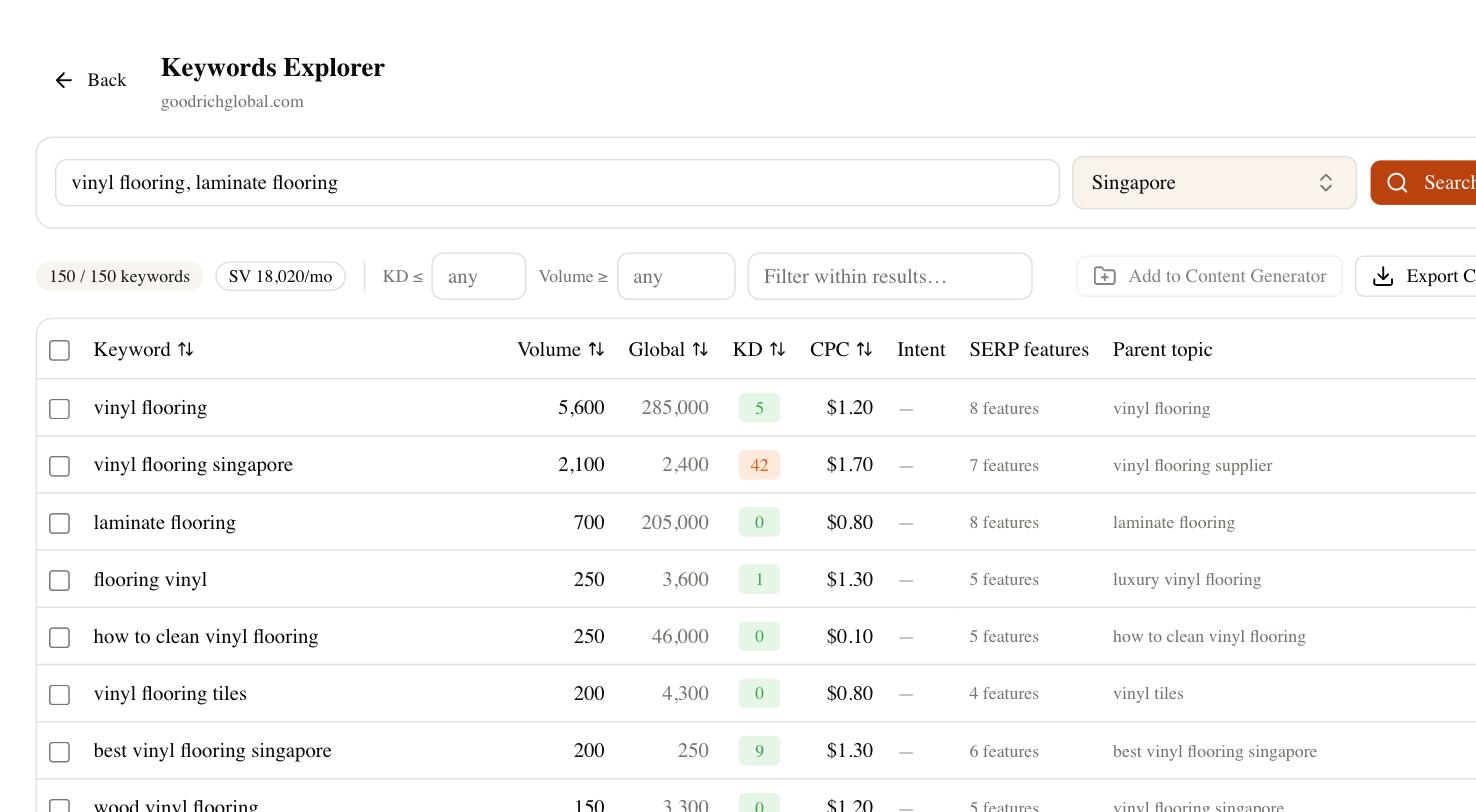
SEO Rocket helps with the research and tracking side of this. Its Keywords Explorer surfaces the exact “near me” and city terms your buyers use and how hard each is to rank for, so you build pages around real demand instead of guesses. Rank tracking watches your map-pack positions over time, the site audit flags the speed and mobile issues that quietly cost bookings, and the competitor gap shows which terms nearby shops rank for that you do not. Positions jitter a few spots day to day, so judge progress over a full month — but done steadily, this is how a single barbershop climbs above the competition and keeps its chairs full.