SEO for breweries is not the same job as SEO for a software company or an online store. Almost nobody types “buy craft beer” into Google and waits for a national brand to appear — they open Maps, thumb “breweries near me,” and pick one of the three places that show up with photos, hours, and a stack of recent reviews. That single behavior shapes everything below.
Because your buyers are standing within a few miles of your door when they search, SEO for breweries is mostly local SEO with a beer-shaped twist. Your competition isn’t the big regional label two states over. It’s the taproom across town that answers the same searches faster, so this guide focuses on the moves that actually put you in front of a thirsty person deciding where to go tonight.
How beer drinkers actually search
Watch the intent, not the volume. A search like “breweries near me” or “taproom open now” comes from someone ready to leave the house in the next hour — that is your most valuable traffic, and it converts into a bar tab, not a newsletter signup. Below that sit planning searches: “dog friendly brewery Austin,” “brewery with food truck tonight,” “kid friendly breweries near me,” and “brewery patio downtown.” Each modifier is a filter your visitor cares about, and each one is a page or a Google Business Profile attribute you can win.
There’s a second layer most breweries ignore entirely: occasion searches. “Brewery wedding venue,” “private event space for 40 people,” “brewery birthday party,” and “brewery tour and tasting” are booked in advance, carry a much higher ticket than a pint, and face far less competition than the crowded “near me” terms. If your building has a back room or a patio you rent out, those searches are money left on the table. The same goes for seasonal intent — “Oktoberfest near me,” “brewery Valentine’s Day,” “brewery trivia night” — which spikes on a predictable calendar you can plan pages and posts around weeks ahead.
The keywords that fill your taproom
Skip the national beer terms — you will not outrank Untappd or a Wikipedia list for “best IPA,” and even if you did, the traffic wouldn’t drive to you. Chase the local and occasion terms instead. Here’s how the main buckets break down by intent:
| Example keyword | Intent | Why it matters |
|---|---|---|
| breweries near me / [city] breweries | Ready to visit now | Highest-value traffic; won in the map pack, not the blue links |
| dog friendly brewery [city] | Planning tonight | Low competition; a single attribute + page can own it |
| brewery with food [neighborhood] | Planning tonight | Food and food-truck searches filter heavily by location |
| brewery wedding venue [city] | Booking weeks ahead | High ticket, low competition, needs a dedicated page |
| brewery tour [city] / tasting | Booking days ahead | Bookable experience; groups and tourists search this |
| [your beer name] where to buy | Loyal fan | Cheap to win; drives retail and taproom visits |
Notice what’s missing: broad, ambitious terms with no place attached. A keyword tool will tempt you with them because the volume looks huge, but volume you can’t convert is a distraction. Sort your list by local intent first, and let search volume break ties, not lead.
Your Google Business Profile does most of the heavy lifting
For a physical brewery, your Google Business Profile is more important than your website — and it’s free. The map pack sits above the regular results for nearly every “near me” search, and Google decides who ranks there based on proximity, relevance, and prominence. You can’t move your building, but you control the other two. Fill out every attribute (patio, dog friendly, live music, food, wheelchair access), pick the right primary category, post your real hours including holidays, and load current photos. Breweries with fresh, plentiful photos consistently get more profile actions than ones with a stale logo and nothing else.
Reviews are the prominence lever. Ask for them out loud at the taproom, respond to every one, and never buy them. A steady trickle of honest reviews with the word “brewery” and your city in them does more for map rankings than a month of blog posts. This is the single highest-leverage thing most breweries can fix this week.
Build pages for the things you actually sell
Your website’s job is to answer the planning and occasion searches your profile can’t. That means real, indexable pages — not a menu trapped inside a PDF or a JPEG that Google can’t read. Give your beer menu its own crawlable page with names and descriptions. Build a dedicated events page, and if you host private parties or weddings, a separate page for each with a clear “request a booking” call to action. Add a page for tours and tastings if you run them.
Every one of these pages should name your city and neighborhood in the headline and copy, because that’s how Google connects “brewery wedding venue Denver” to your back room. Keep hours, address, and parking notes on the site too — a visitor who can’t confirm you’re open in five seconds will pick the next result. If you distribute cans or growlers, a simple “where to buy” page listing the shops and bars that carry you captures fan searches and earns links from those retailers at the same time.
Common mistakes breweries make
Most breweries lose local SEO on unforced errors, not on some deep algorithmic secret. Run down this checklist and fix what applies:
- Living on social only. A Facebook page and an Instagram grid don’t rank in Google Maps or answer a “breweries near me” search. You still need a real website.
- Menus and hours as images or PDFs. If Google can’t read the text, it can’t rank you for the food, styles, or hours people search.
- Wrong or inconsistent name, address, and phone. A different address on Yelp, Untappd, and your site confuses Google and splits your prominence.
- Chasing national beer keywords. Ranking for a generic style term won’t bring anyone through the door.
- Ignoring beer directories. Untappd, BeerAdvocate, and local “things to do” lists are where drinkers and Google both look.
- No event pages. The highest-ticket searches — weddings, private parties — go unanswered because there’s nothing to rank.
How SEO Rocket fits a brewery workflow
You don’t need a full-time SEO to run this, but you do need to see the data. SEO Rocket lets you ask, in plain language, for the local keywords worth chasing and get real search volume and difficulty back — so you can tell the winnable “dog friendly brewery” term from the national one you’ll never touch.
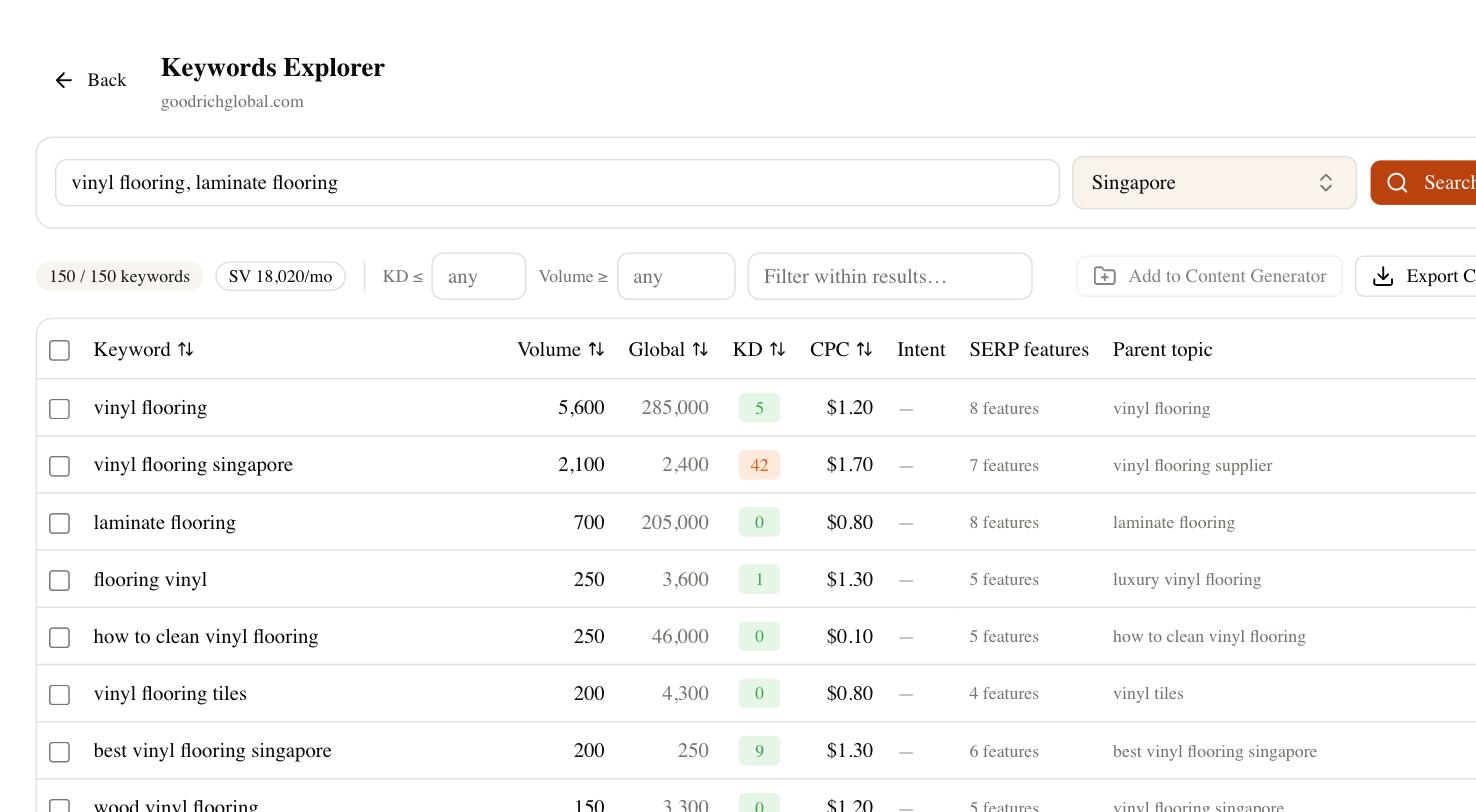
From there, rank tracking shows where you sit for “[city] brewery” over time, competitor gap surfaces the terms the taproom across town already ranks for that you don’t, and the site audit flags the unreadable-PDF-menu and missing-page problems above. Brand Radar checks whether AI answers name you when someone asks ChatGPT for the best breweries in your city — a search surface that’s quietly growing, and one most breweries haven’t looked at once. If you manage marketing for several venues, the client dashboards keep each one’s data in its own view.
A simple priority order
Do these in order and you’ll cover the moves that matter. First, claim and fully complete your Google Business Profile, then start asking for reviews every shift. Second, get an indexable website up with readable hours, a text menu, and your city named throughout. Third, build event and tour pages for the high-ticket occasion searches. Fourth, get listed consistently on Untappd and the local directories with identical name, address, and phone. Only after all that is the moment to invest in blog content or chase competitive terms. Good SEO for a brewery isn’t clever — it’s answering the searches your buyers are already making, before the taproom across town does.