
SEO for catering companies is not the same job as ranking a blog or a national e-commerce store. Almost every search that matters to you is tied to a specific occasion in a specific place — a wedding in June, a corporate lunch next Tuesday, a funeral reception this weekend. Get that right and you win bookings; treat catering like generic SEO and you’ll rank for words nobody hires from.
This guide is SEO for catering companies written for how buyers actually search and decide. No filler about “engaging content.” Just the keywords that carry money, the moves that pay back fastest, the mistakes caterers keep making, and where a tool like SEO Rocket saves you time.
Why catering SEO works differently
Two things define search in this niche. First, intent is local and event-driven. Someone typing “wedding caterer” isn’t browsing — they have a date, a headcount, and a budget, and they’re comparing three or four quotes this week. Second, the buyer segments barely overlap. A bride, an office manager ordering lunch for forty, and a family arranging a wake want completely different things, use different words, and read different pages. One “Services” page cannot serve all three well.
That changes your whole approach. You’re not chasing traffic; you’re chasing a handful of high-intent, city-plus-occasion searches and building a dedicated page for each one. Ten pages that each own a real buying query will out-earn a fifty-post blog every time.
Seasonality matters too. Wedding and corporate-party demand spikes in certain months, and searches climb well before the event date, so the ranking work you do in the quiet season is what captures the busy one. If you wait until peak to publish, you’re too late — pages need weeks to earn trust before they hold position.
The keywords your buyers actually search
Catering searches cluster into three intent types, and each deserves its own page. Commercial searches (“corporate catering Chicago”) are ready to book. Occasion searches (“wedding buffet menu ideas”) are earlier — useful for capturing people before they shortlist. Modifier searches (halal, vegan, kosher, gluten-free, drop-off) let you own a niche a bigger competitor ignores.
| Example keyword | Intent | What to build |
|---|---|---|
| corporate catering [city] | High — ready to quote | Dedicated corporate landing page + quote form |
| wedding caterers near me | High — shortlisting | Wedding service page, gallery, package pricing |
| office lunch catering delivery | High — recurring buyer | Drop-off menu page, minimum order, lead times |
| halal catering [city] | High — niche modifier | Dietary-specific page with certification proof |
| funeral catering [city] | High — urgent, low competition | Sensitive, fast-response landing page |
| buffet menu ideas for 50 guests | Informational — early | Blog post that links to your quote page |
Notice the pattern: the money is in “[occasion] + [city]” and “[diet/format] + catering.” National head terms like “catering services” are broad, brutally competitive, and usually the wrong customer. Skip them and go straight for the searches attached to a booking.
The highest-leverage moves
Start with your Google Business Profile, because for “catering near me” and map-pack searches it outranks your website in influence. Fill every field, pick the right primary and secondary categories, add real photos of plated food and setups, and get reviews that mention the occasion and city (“great wedding caterer in Austin”). Those exact words help you surface for those exact searches.
Next, build one strong page per money keyword instead of cramming everything onto a services page. A “corporate catering [city]” page should name the city, show sample corporate menus, list minimums and lead times, and end with an easy quote request. Real photos of your own food beat stock every time — buyers can smell a template.
Then earn a few local links. Sponsor a venue’s preferred-vendor list, get listed on wedding directories, partner with event planners and photographers who’ll link back. You don’t need hundreds of links — a dozen relevant local ones move rankings in a market this specific. Add FAQ and LocalBusiness schema so your lead times, pricing bands, and service area are machine-readable.
Common mistakes catering companies make
The biggest one is the single “Services” page listing weddings, corporate, and private parties together. Google can’t tell which occasion it’s for, so it ranks well for none. Split them. The second mistake is hiding pricing entirely — you don’t need a full menu with dollar figures, but “packages from $28 per head” filters tire-kickers and signals relevance for buyers who searched with budget in mind.
A third trap is ignoring service-area geography. If you cover five suburbs, a single homepage won’t rank in all of them; you need location content that honestly reflects where you actually deliver. Faking twenty city pages you can’t service gets you thin-content problems and wasted leads. Finally, plenty of caterers publish recipe blogs that pull hobby cooks, not clients. Blog for buyers — menu planning, headcount math, dietary guides — and link every post to a booking page.
How SEO Rocket fits a catering workflow
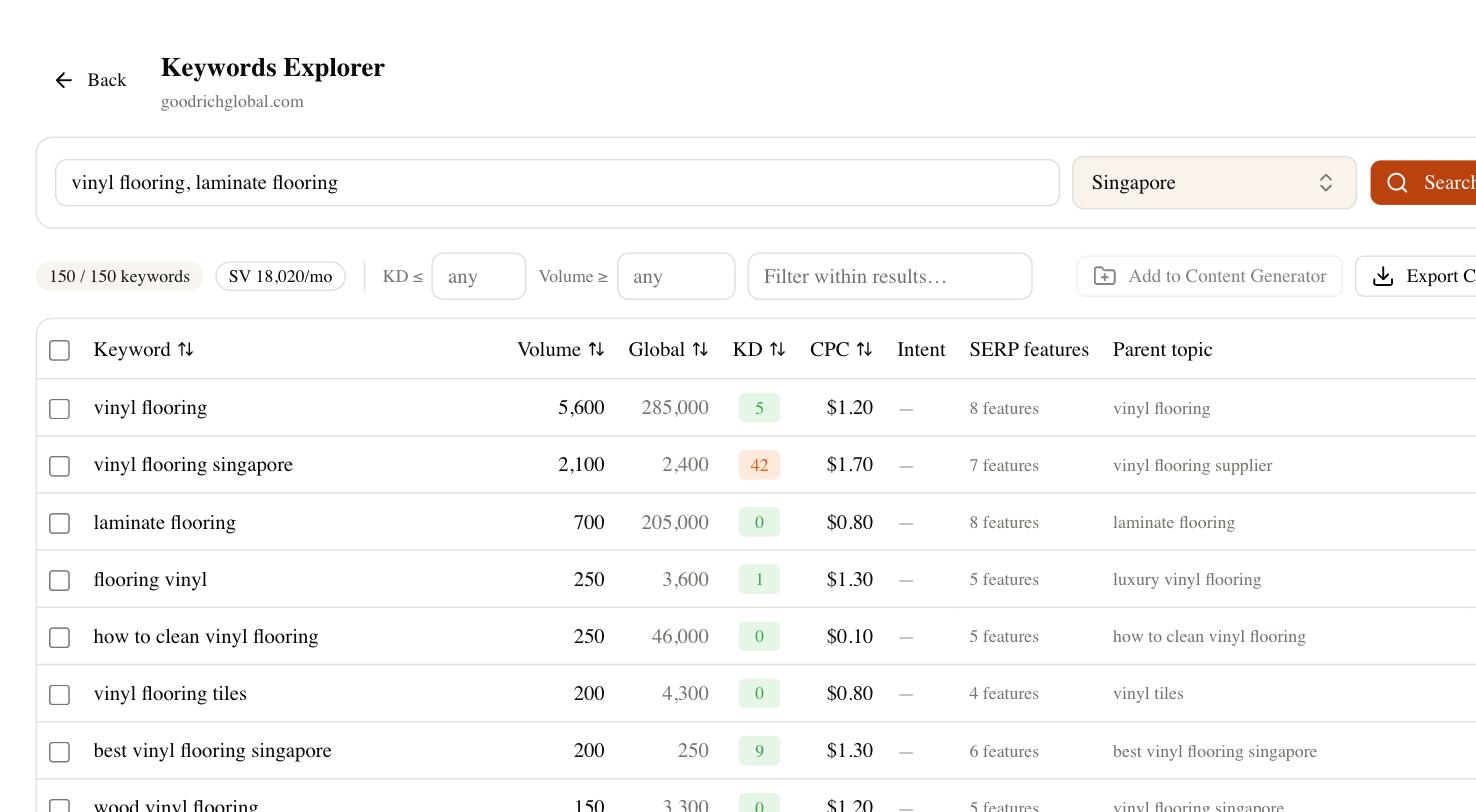
The slow part of this work is research, and that’s where a chat-first tool earns its keep. Ask SEO Rocket for keyword ideas around “corporate catering” or “wedding catering” in your city and it returns the real searches with volume and keyword difficulty, so you can see which occasion-plus-city terms are winnable rather than guessing. The competitor gap tool shows which pages the caterer already ranking above you has that you don’t — often it’s exactly those dedicated occasion pages.
From there you can draft each landing page and menu-guide post inside the same workflow, track your positions for those city-specific terms week to week, and run a site audit to catch the slow-loading photo galleries that quietly hurt catering sites. If you manage SEO for several venues or a franchise, the client dashboards hand each location a clean read-only report without exporting spreadsheets.
The Brand Radar side matters more than it used to. When someone asks an AI assistant “who caters weddings in my area,” you want your business named in that answer, not just ranked in blue links. Tracking whether you show up in those AI responses tells you where to focus next, because a growing share of buyers now start there instead of a search box.
Where to start this week
You don’t need to do everything at once. Work this priority order and you’ll see movement within a ranking cycle or two — remembering that positions jitter a few spots day to day, so judge progress over weeks, not mornings.
- Claim and complete your Google Business Profile — categories, photos, service area, and a steady flow of occasion-specific reviews.
- Split your services into dedicated pages — one each for weddings, corporate, and any diet or format you specialize in.
- Research the real keywords — pull volume and difficulty for “[occasion] + [your city]” before you write a word.
- Add pricing signals and clear quote forms — packages-from pricing, minimums, lead times, and a fast response promise.
- Earn a handful of local links — venues, planners, directories, and photographers in your area.
- Fix site speed — compress those food galleries; a heavy page loses the mobile buyer comparing quotes on their phone.
Catering is one of the friendlier niches for SEO precisely because the competition is often careless — generic pages, no pricing, stock photos, one buried services list. Do the specific, occasion-first work above and you won’t just rank; you’ll rank for the searches that end in a signed booking. That’s the whole point.