
SEO for blogs is a different job from ranking a homepage or a product page. A blog is dozens or hundreds of pages that all compete for attention from the same search engine, link from each other, and go stale on their own schedule. Most advice you’ll read treats a blog like any other site with the word “blog” pasted in — that misses what actually makes ranking a blog hard.
Good SEO for blogs is less about any single post and more about how the whole library behaves: which pages get crawled, which ones cannibalize each other, and which quietly decay six months after you hit publish. Get the structure right and individual posts rank almost by default. Get it wrong and you’ll write brilliant articles that never leave page five.
What makes blog SEO different
Three things set blogs apart. First, scale: you’re managing a growing pile of URLs, and search engines only crawl so much of any site per visit. On a five-page brochure site that never matters. On a 300-post blog, your best new article can sit undiscovered for weeks because the crawler is busy re-fetching tag pages nobody reads.
Second, internal competition. When you write ten posts around the same theme, they start fighting each other for the same query — keyword cannibalization — and search engines pick one, often the wrong one. Third, decay. A post that ranked all last year slides down as competitors publish fresher, deeper pieces. A blog is never “done,” which is the part most people underestimate.
What you can and can’t control
How much SEO leverage you actually have depends heavily on where your blog lives. A self-hosted platform hands you every lever; a hosted, walled-garden platform hands you a fraction of them. Be honest about which one you’re on before you plan any work, because half the tactics below are simply unavailable on some setups.
| Control | Self-hosted (WordPress, Ghost) | Hosted (Medium, many builders) |
|---|---|---|
| Custom URL slugs | Full control | Often locked to date or title |
| Title tag & meta description | Editable per post | Frequently auto-generated |
| 301 redirects | Yes | Rarely, if ever |
| Structured data (schema) | Plugin or manual | Usually none |
| Page speed / caching | You own it | Out of your hands |
| Canonical tags | Yes | Platform decides |
The honest takeaway: if you’re building anything you want to rank long-term, a self-hosted blog is worth the extra setup. Hosted platforms are fine for distribution and audience, but you’re renting your SEO from someone who can change the rules. If you’re stuck on one, focus your energy on the levers you do have — headlines, internal links, and genuinely useful content — and stop fighting the ones you don’t.
The highest-leverage moves
Start with topic clusters, not scattered posts. Pick a handful of themes you want to own, write one thorough pillar page per theme, and surround it with supporting posts that each target a specific long-tail question and link back up. This gives search engines a clear map of what your blog is about and concentrates authority instead of spreading it thin across unrelated one-offs.
Then fix internal linking, which is the most undervalued move in blog SEO. Every time you publish, add two or three links from older relevant posts to the new one, using descriptive anchor text. This is how crawlers find fresh pages fast and how authority flows to the articles you care about. It costs ten minutes and outperforms most link-building most bloggers ever attempt.
Finally, match search intent before you write a word. Look at what already ranks for your target query — if the top results are step-by-step tutorials, a rambling opinion piece won’t break in no matter how good it is. Confirm there’s real search demand first, target keywords a page-one competitor is winning without heavy backlinks, and write the version that answers the question faster than they do.
Platform-specific mistakes
The classic blog mistake is letting the platform generate thin pages you never meant to publish. Tag archives, author pages, date archives, and paginated category listings can bloat your index with near-empty duplicates that dilute your crawl budget. Most SEO plugins let you no-index these — do it. You want search engines spending their crawl on your actual articles.
Two more that quietly cost rankings: publishing five posts that all target the same keyword until they cannibalize each other, and leaving old URLs broken when you rename or delete a post instead of redirecting them. On a self-hosted blog both are fixable in minutes. Also watch category and date-based URL structures — a slug like /2019/03/my-post signals age and buries your keyword. Keep slugs short, descriptive, and dateless.
Content decay is the real blog problem
Nobody warns new bloggers about this: your traffic doesn’t just grow, it leaks. Posts that ranked well slowly lose position as the query evolves and competitors refresh their pages. The single highest-return activity on a mature blog isn’t writing new posts — it’s updating the old ones that used to rank and no longer do.
Build a simple habit. Every quarter, find the posts that have slipped from page one to page two or three, and rework them: update the facts, expand the thin sections, refresh the intro, and re-publish. Those pages already have some authority and history, so a good update often recovers rankings far faster than a brand-new article ever would. A blog that never updates is a blog slowly going quiet.
Where SEO Rocket fits
Most of this work is research and tracking, which is exactly where a tool earns its keep. Instead of guessing which topics have demand, you ask SEO Rocket in plain language and it pulls real keyword data — search volume, difficulty, and related questions — so you build clusters around queries people actually type. You can see, before writing, whether a keyword is winnable for a blog your size.
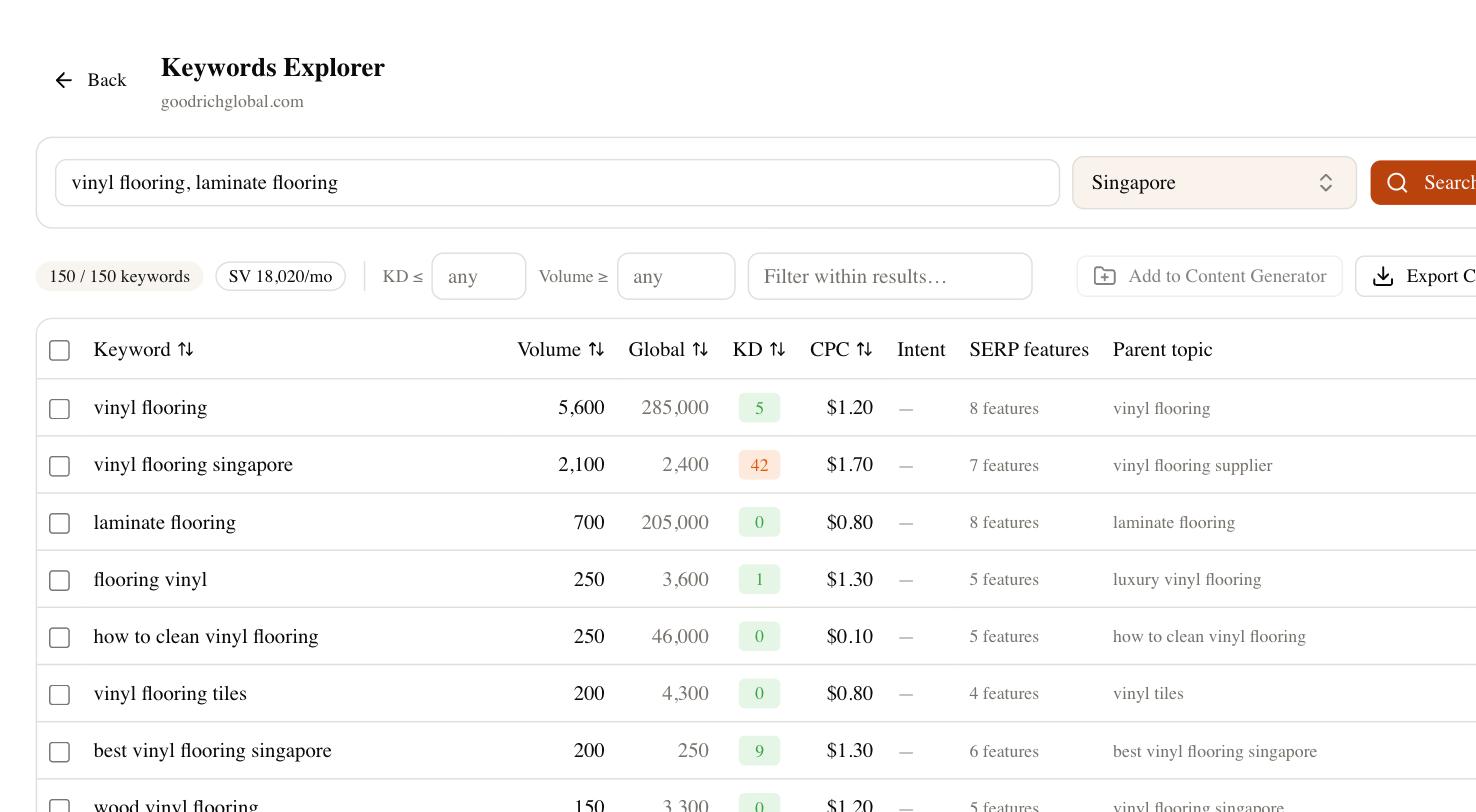
It also closes the loop the platform can’t. Rank tracking flags the posts sliding down the results so you know what to update before the traffic’s gone. The competitor gap shows which topics rivals rank for that you’ve never covered. When a draft is due, the AI writer produces it against real data rather than thin prompts, and Brand Radar shows whether AI search tools like ChatGPT and Google’s AI Overviews are citing your blog at all — a question no traditional blog dashboard answers.
A blog SEO checklist
Run through this whenever you publish or audit a blog. If you can tick most of it, your structure is already ahead of the competition.
- Every post belongs to a topic cluster and links to its pillar.
- Slugs are short, keyword-first, and free of dates.
- Title tags and meta descriptions are written by hand, not auto-generated.
- Thin archive, tag, and pagination pages are no-indexed.
- No two posts target the exact same keyword.
- Renamed or deleted posts have 301 redirects in place.
- New posts get two or three internal links from older articles.
- Search intent is confirmed against page-one results before writing.
- Slipping posts are reviewed and refreshed every quarter.
None of this requires a big budget or a technical background. Blog SEO rewards consistency more than cleverness: a clear structure, honest content that matches intent, internal links that tie it together, and the discipline to keep old posts alive. Do those four things well and the rankings follow.