Moz was, for a lot of people reading this, the first SEO tool they ever used — Domain Authority became shorthand for link equity across the entire industry, and Moz Pro’s simplicity made it approachable in a way competitors weren’t. If you’re now looking to switch from Moz to SEO Rocket, you’re probably not chasing a trend — you’re likely someone who’s noticed the data feels thinner than it used to, or who wants more than keyword and link tracking in one subscription. This guide is written honestly, for people who still respect what Moz built, but who want a clear-eyed answer on whether a switch makes sense.
What Moz Does Well
Moz Pro is genuinely easy to learn, which matters more than tool vendors like to admit — a lot of teams don’t need the deepest index, they need something a junior marketer can pick up in a day. Domain Authority and Page Authority, whatever their limitations as raw ranking predictors, remain widely understood shorthand across the industry, useful for quick comparisons in client reporting. MozBar is a lightweight, well-liked browser extension for on-the-fly SERP and on-page checks. Moz Local is a genuinely strong, purpose-built product for local citation management if that’s part of your work. And Moz’s educational content — the Whiteboard Friday archive especially — has trained a meaningful chunk of the SEO industry over the years. None of that disappears just because you’re considering a switch.
Why People Move On
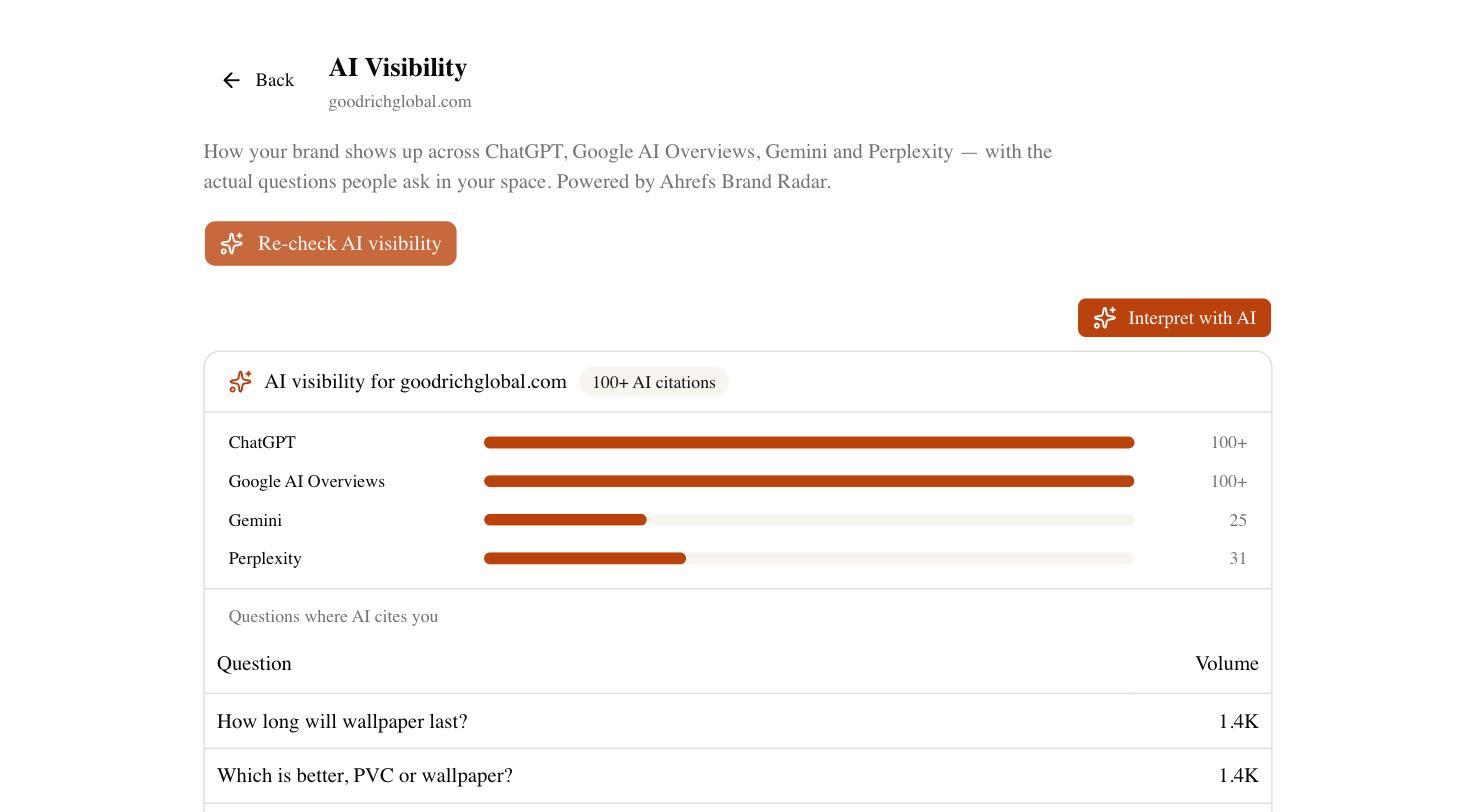
The most common complaint isn’t hidden — it’s that Moz’s link index and keyword database have fallen behind the market leaders in size and freshness over the past several years, and serious link-building or competitive research work often means supplementing Moz with another tool anyway, which defeats the point of paying for it. Moz Standard starts around $99/month, which is a meaningful spend for a toolset that increasingly gets used alongside, not instead of, something else. And like most tools built before the AI-search shift, Moz has no visibility into how a brand is cited inside ChatGPT, Gemini, Google AI Overviews, or Perplexity — a growing blind spot as more discovery traffic moves off the traditional results page.
Moz vs SEO Rocket: Feature by Feature
| Capability | Moz | SEO Rocket |
|---|---|---|
| Keyword research | Keyword Explorer, solid volume/difficulty estimates | Keywords Explorer with volume/KD/CPC plus a 2D/3D semantic Keyword Graph |
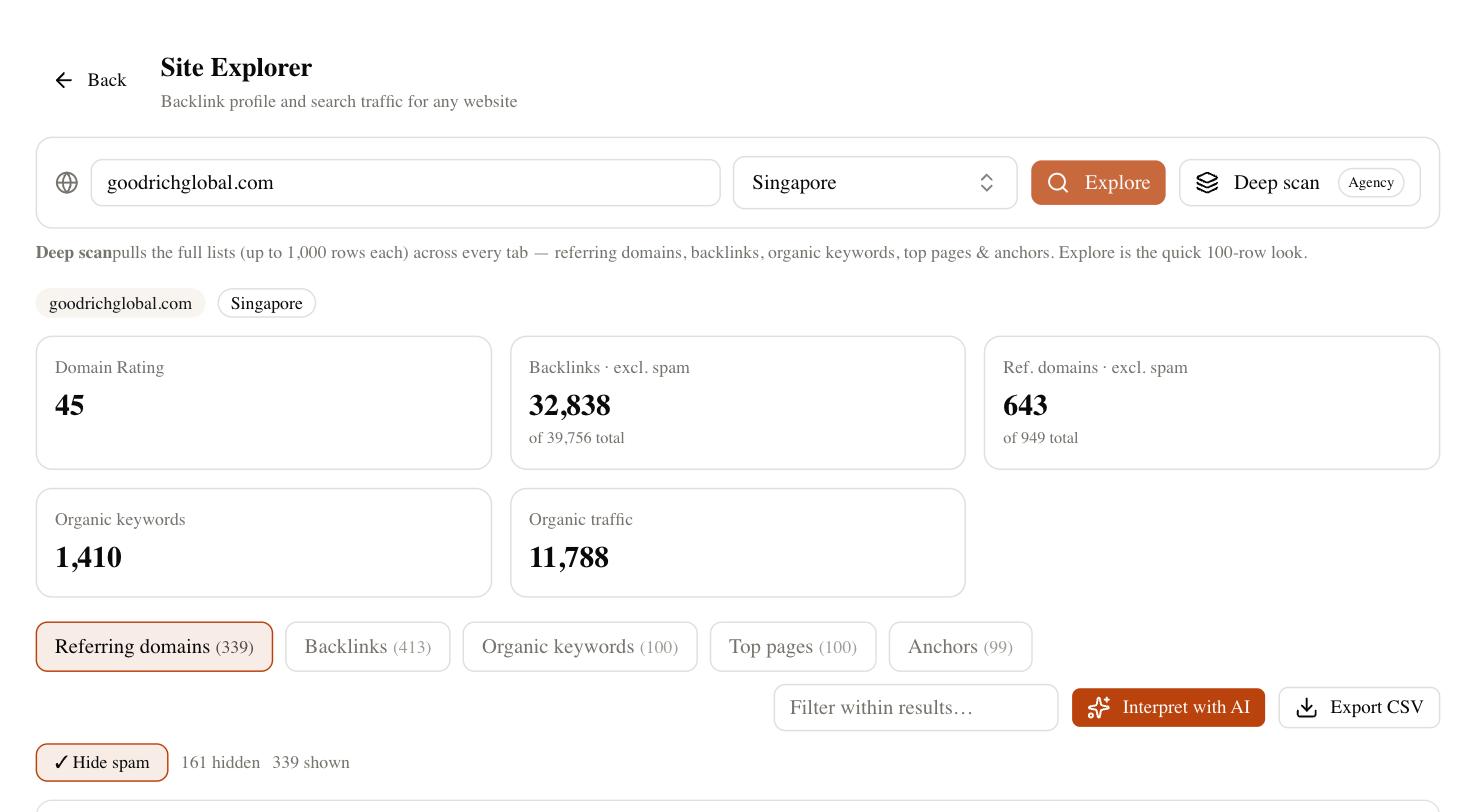
| Backlinks / Site Explorer | Link Explorer, Domain Authority metric, smaller index than category leaders | Full Site Explorer (backlinks, referring domains, top pages, organic keywords) on Ahrefs Enterprise data |
| Rank tracking | Included, straightforward, less granular segmentation | Built-in rank tracking in the same chat-first workflow |
| AI content writing | Not a core feature | Claude-powered AI Content Writer, built into the platform |
| AI-search / GEO visibility | Not offered | AI Visibility / Brand Radar across ChatGPT, AI Overviews, Gemini, Perplexity |
| Technical audit | Site Crawl, decent but not deep | Technical Audits plus a free Website Speed Test |
| Local SEO / citations | Moz Local — dedicated, well-regarded | Not a dedicated focus |
| Free plan | Limited free tools (MozBar, small free Keyword Explorer allowance) | Free plan: 1 site, 50 starter credits |
| Entry price (2026, approx.) | ~$99/mo (Moz Standard) | $49/mo (Pro, 3 sites, 400 credits/mo) |
Prices are approximate 2026 entry-tier figures — confirm current pricing on each vendor’s site before deciding.
What You Keep, What Changes
You keep the fundamentals: keyword research, backlink visibility, rank tracking, and technical auditing, all backed by a considerably larger and more current data source, since SEO Rocket’s Site Explorer and Keywords Explorer run on Ahrefs Enterprise data rather than Moz’s own smaller index. You gain AI Visibility, a category Moz doesn’t touch at all, plus a chat-first workflow that trades Moz’s simple-but-separate dashboards for a single conversational interface with dedicated tools underneath. What you lose is Domain Authority itself — SEO Rocket doesn’t report DA/PA, since they’re Moz-proprietary metrics — so if your reporting or client contracts are built around DA specifically, you’ll need to either keep a lightweight Moz subscription for that metric or transition your reporting to a different authority signal. You’ll also lose Moz Local if you were using it; SEO Rocket isn’t built as a local-citation-management tool.
How to Migrate, Step by Step
1. Export your data from Moz first. Pull CSV exports of your Keyword Explorer lists, your tracked rankings, and your top links from Link Explorer before you do anything else.
2. Set up your SEO Rocket project. Add your domain and let the initial site snapshot run — you’ll get a fresh technical audit and backlink profile to compare against your Moz baseline.
3. Rebuild rank tracking from your export. Import your Moz keyword list into SEO Rocket’s rank tracking rather than starting over, so you keep continuity in reporting.
4. Connect Google Search Console and GA4. This lets you validate both tools’ estimates against real click and conversion data — especially useful since Moz’s and SEO Rocket’s underlying indexes differ in size.
5. Decide what to do about Domain Authority. If DA appears in client contracts or historical reports, either keep a minimal Moz subscription just for that metric during a transition period, or agree with clients on a different authority signal going forward.
6. Rebuild your content workflow using the AI Content Writer and Content Gap tool.
7. If you use Moz Local, keep it running separately — SEO Rocket doesn’t replace local citation management — and only fold in the parts of your workflow that genuinely overlap.
8. Run both tools in parallel for two to four weeks, comparing a sample of rankings and top backlinks, before fully canceling Moz.
Pricing Comparison
| Plan tier | Moz (approx., 2026) | SEO Rocket |
|---|---|---|
| Entry | Standard ~$99/mo | Pro $49/mo (3 sites, 400 credits/mo) |
| Mid | Medium, higher usage limits | Growth $99/mo (10 sites, 1,000 credits/mo) |
| Team / Agency | Large, multi-user pricing | Agency $199/mo (25 sites, 2,500 credits/mo) |
| Enterprise | Premium / custom | Custom |
| Free tier | Limited free tools only | Free — 1 site, 50 starter credits |
Annual billing saves roughly 8% (one month free) on SEO Rocket. Monthly credit allowances reset each cycle; one-time top-up credits never expire. Figures are approximate 2026 entry pricing — verify current rates before switching.
Who Should NOT Switch
If Moz Local is core to your work — you’re managing citations for local businesses at scale — that’s a dedicated, well-built product with no direct equivalent in SEO Rocket, and switching away from it would mean sourcing a replacement elsewhere. If your agency’s client reporting and contracts are built specifically around Domain Authority as a metric, ripping that out mid-engagement is disruptive, and it’s worth a longer transition plan or keeping a minimal Moz subscription rather than switching cold. And if you value Moz specifically for its simplicity and are not bothered by its smaller index or lack of AI-search visibility, there’s no obligation to chase either — a tool that fits how your team actually works is worth more than one with a longer feature list you won’t use.
Frequently Asked Questions
Does SEO Rocket have a Domain Authority equivalent?
No — SEO Rocket doesn’t report DA/PA, since those are Moz-proprietary metrics. If DA matters for your reporting, plan to either keep a minimal Moz subscription or transition your client reporting to a different authority signal.
Will my backlink counts look different after switching?
Likely yes, since SEO Rocket’s Site Explorer draws on a considerably larger index (Ahrefs Enterprise data) than Moz’s own link index — expect to see more referring domains, not fewer, in most cases.
Can I import my Moz keyword and ranking lists?
Yes — export your Keyword Explorer lists and tracked rankings as CSV, then import them into your new SEO Rocket project to keep continuity.
What happens to Moz Local if I switch?
SEO Rocket doesn’t include local citation management, so if you rely on Moz Local, plan to keep that piece running separately rather than expecting a replacement.
If Moz’s shrinking data edge or missing AI-search visibility is the reason you’re weighing a change, you can start free at app.seorocket.ai — one site, 50 starter credits, and a real side-by-side look before you commit to anything.