Most people who look to switch from Semrush to SEO Rocket aren’t unhappy with what Semrush does — they’re unhappy with what they’re paying for a toolkit they only use a fraction of. Semrush is a genuinely sprawling suite: SEO, PPC, social, content, competitive intelligence, and more, bundled into one subscription. That breadth is exactly why a lot of smaller teams and solo consultants end up paying for modules they never open. This guide is for that group: people who want core SEO capability — keywords, backlinks, rank tracking, content, and increasingly AI-search visibility — without paying for a suite built for enterprise marketing departments.
What Semrush Does Well
Semrush earned its market position honestly. Its keyword database is enormous and its Keyword Magic Tool is genuinely fast for building large keyword lists with intent grouping. Position Tracking is mature and handles local and device-level segmentation well. The competitive intelligence tools — Traffic Analytics, Market Explorer, and the ability to benchmark a domain against several competitors at once — are strong, and there’s real depth in Semrush’s PPC and advertising research tools if you need cross-channel data in one place. For agencies running paid and organic side by side, or for teams that genuinely use the PPC, social, and content modules together, Semrush’s all-in-one breadth is hard to replicate with a single point tool.
Why People Switch Away
The most common reason is simple: paying for a suite when you only need the SEO third of it. Semrush Pro starts around $139.95/month, and a lot of that spend covers advertising and social tools a pure-SEO user never touches. The interface, because it covers so much ground, can feel heavy for someone who just wants a quick answer about why a page dropped in rankings — you often have to know which of a dozen tools to open first. And like most legacy SEO suites, Semrush’s AI-search coverage is limited; it wasn’t built around measuring how a brand shows up inside ChatGPT, Gemini, or Google’s AI Overviews, which is increasingly where a meaningful share of discovery now happens. For teams that have already trimmed their PPC or social usage down to zero, that’s a lot of subscription paying for nothing.
Semrush vs SEO Rocket: Feature by Feature
| Capability | Semrush | SEO Rocket |
|---|---|---|
| Keyword research | Keyword Magic Tool, very large database, intent grouping | Keywords Explorer with volume/KD/CPC plus a 2D/3D semantic Keyword Graph |
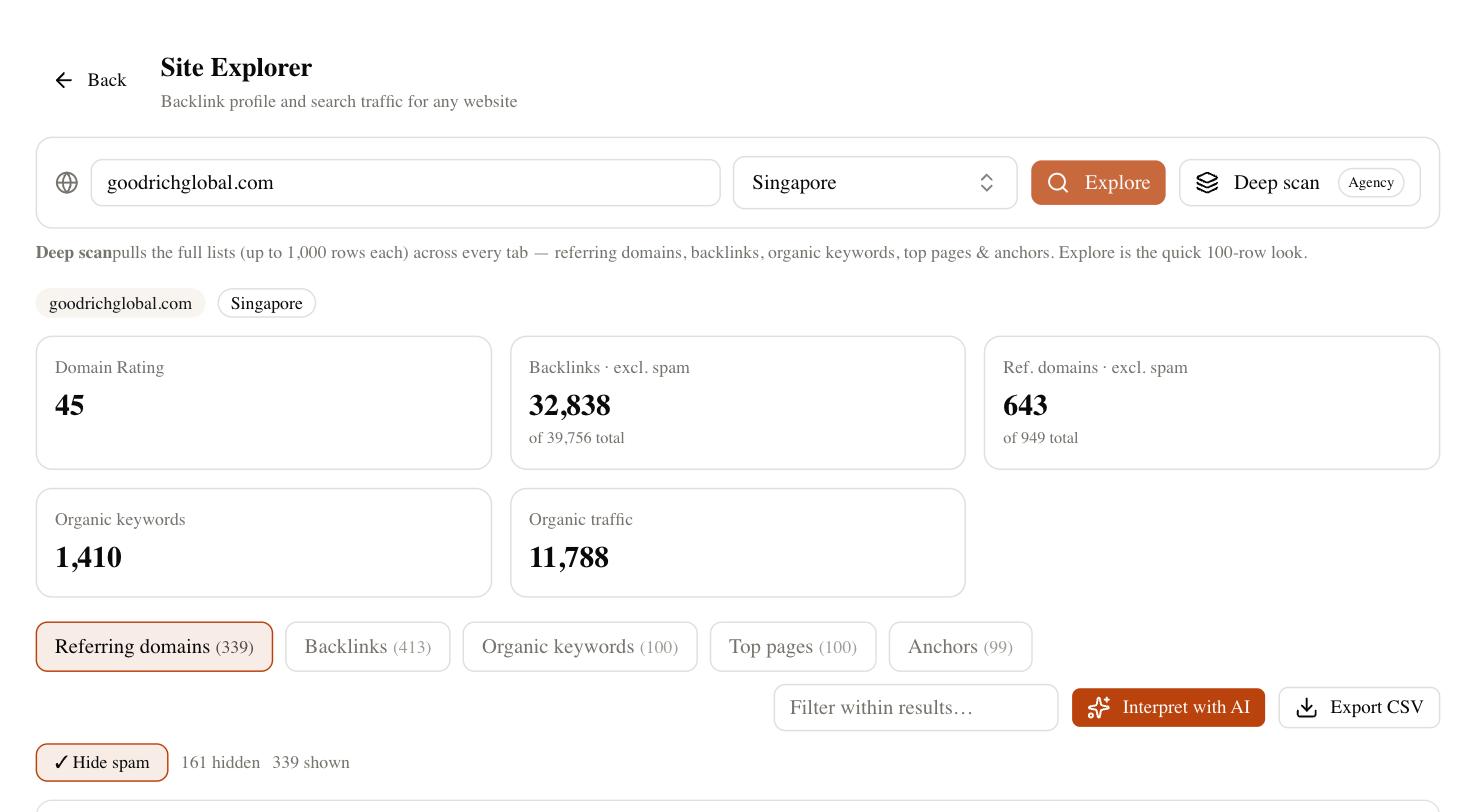
| Backlinks / Site Explorer | Backlink Analytics, solid index, backlink gap tool | Full Site Explorer (backlinks, referring domains, top pages, organic keywords) on Ahrefs Enterprise data |
| Rank tracking | Mature Position Tracking, strong local/device segmentation | Built-in rank tracking in the same chat-first workflow |
| AI content writing | Basic AI writing assist inside content tools | Claude-powered AI Content Writer, built into the core workflow |
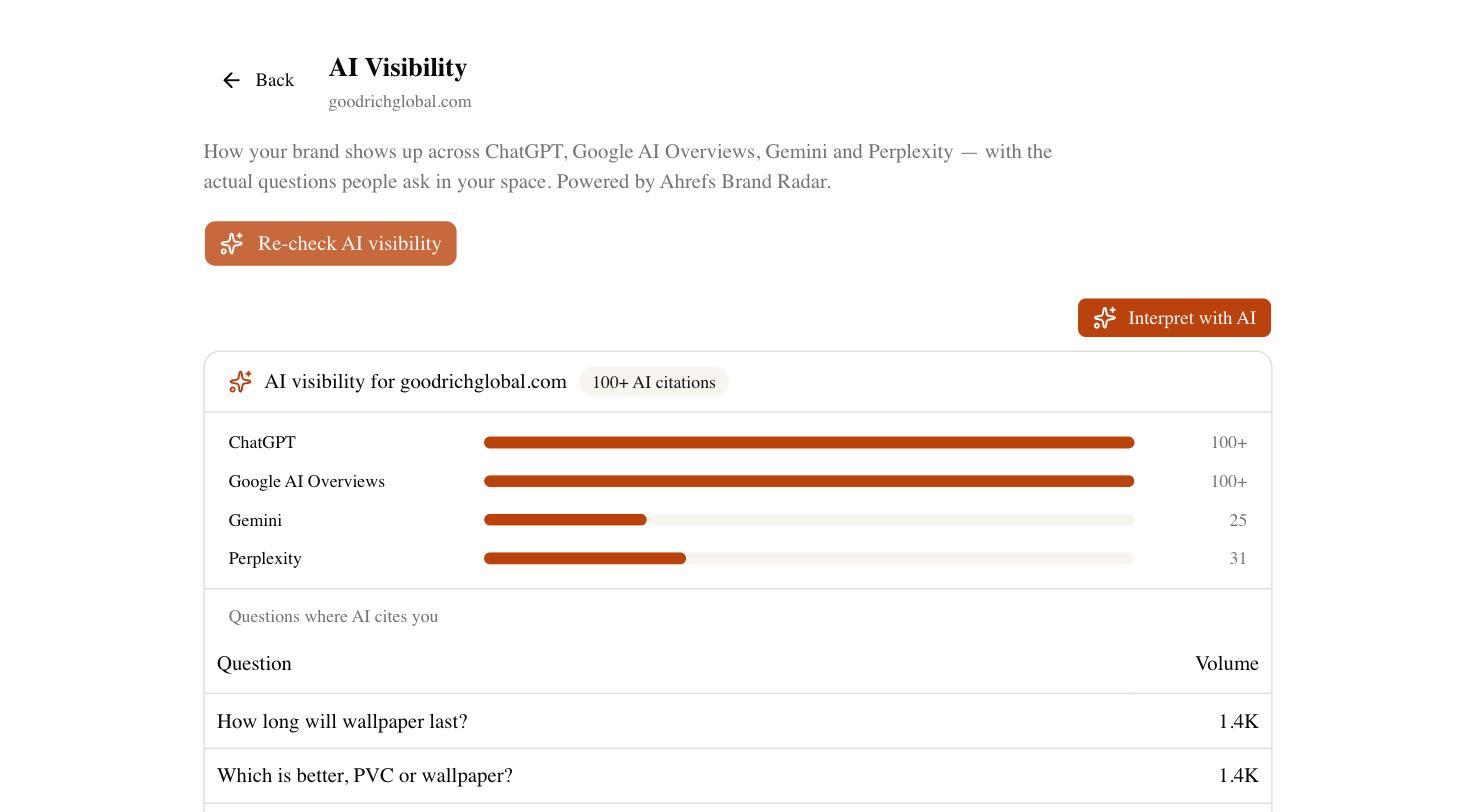
| AI-search / GEO visibility | Emerging, limited | AI Visibility / Brand Radar across ChatGPT, AI Overviews, Gemini, Perplexity |
| Technical audit | Site Audit, thorough and mature | Technical Audits plus a free Website Speed Test |
| PPC / social / content suite | Full suite included | Not offered — SEO Rocket is SEO/AI-search focused |
| Free plan | Very limited free trial | Free plan: 1 site, 50 starter credits |
| Entry price (2026, approx.) | ~$139.95/mo (Semrush Pro) | $49/mo (Pro, 3 sites, 400 credits/mo) |
Prices are approximate 2026 entry-tier figures — check current pricing before making a final decision.
What You Keep, What You Give Up
What you keep: real keyword and backlink data (SEO Rocket’s Site Explorer and Keywords Explorer run on Ahrefs Enterprise data), rank tracking, technical audits, and content tooling — the core SEO stack most Semrush users actually rely on day to day. What you gain: AI Visibility tracking, which nothing in Semrush’s current suite replicates, and a chat-first interface where you can ask “what’s my biggest technical issue right now” instead of navigating to Site Audit and reading through a report yourself. What you give up: Semrush’s PPC research (Advertising Research, PPC Keyword Tool), its social media toolkit, and its broader content marketing platform (Topic Research, SEO Content Template at that scale). If any of those are core to your workflow, you’ll need a separate tool for them — SEO Rocket doesn’t attempt to replace Semrush’s full breadth, only its SEO core, plus AI-search visibility Semrush doesn’t have.
How to Migrate, Step by Step
1. Export everything from Semrush first. Pull CSV exports of your Position Tracking keyword list, your Backlink Analytics top links and referring domains, and any saved keyword lists from Keyword Magic Tool or keyword strategy builder projects.
2. Create your SEO Rocket project. Add your domain, let the initial site snapshot and technical audit run, and compare the resulting backlink and keyword baseline against your Semrush export.
3. Rebuild rank tracking from your export. Rather than re-adding keywords by hand, import your Position Tracking CSV into SEO Rocket so historical context isn’t lost in the switch.
4. Connect Google Search Console and GA4. This is the step that lets you validate both tools’ estimates against your actual traffic and conversions — the most reliable way to judge data quality during a transition.
5. Rebuild your content workflow around the AI Content Writer and Content Gap tool, replacing Semrush’s Topic Research and SEO Writing Assistant with a single chat-first equivalent.
6. If you use Semrush’s PPC or social tools, decide now whether you need a replacement for those specifically — don’t assume SEO Rocket covers them, because it doesn’t.
7. Run both tools in parallel for two to four weeks before canceling Semrush, checking a sample of rankings and backlink counts against each other as you go.
Pricing Comparison
| Plan tier | Semrush (approx., 2026) | SEO Rocket |
|---|---|---|
| Entry | Pro ~$139.95/mo | Pro $49/mo (3 sites, 400 credits/mo) |
| Mid | Guru, higher tier with content/history features | Growth $99/mo (10 sites, 1,000 credits/mo) |
| Team / Agency | Business, higher seat and API limits | Agency $199/mo (25 sites, 2,500 credits/mo) |
| Enterprise | Custom / Enterprise solutions | Custom |
| Free tier | Limited free trial only | Free — 1 site, 50 starter credits |
Annual billing saves roughly 8% (one month free) on SEO Rocket. Credits refresh monthly per plan; one-time top-up credits never expire. Figures are approximate 2026 entry pricing — confirm current rates directly with each vendor.
Who Should NOT Switch
If your team genuinely uses Semrush’s PPC research, social media management, or full content marketing platform alongside SEO — not just occasionally, but as a real part of your workflow — switching to an SEO-focused tool means adding separate subscriptions elsewhere, which may cost more in total, not less. Agencies running integrated paid-and-organic campaigns for clients, or teams that rely on Semrush’s Market Explorer for broader competitive and market-sizing research beyond SEO, will likely find that Semrush’s breadth still earns its price. If that’s your situation, the honest move is to stay — or to keep Semrush for its full suite and evaluate SEO Rocket separately just for AI-search visibility.
Frequently Asked Questions
Does SEO Rocket replace Semrush’s PPC and social tools too?
No. SEO Rocket is focused on SEO and AI-search visibility. If you rely on Semrush for advertising research or social management, you’ll need to keep a separate tool for those.
How different will my keyword volumes look after switching?
Volume and difficulty figures will differ somewhat between any two providers due to different methodologies — expect broadly similar trends, not identical numbers, and validate against Google Search Console data during your transition.
Can I bring over my Semrush Position Tracking list?
Yes — export it as CSV and import your keyword list into SEO Rocket’s rank tracking to preserve continuity.
Is SEO Rocket cheaper than Semrush?
At entry tier, yes — SEO Rocket Pro is $49/month versus roughly $139.95/month for Semrush Pro, though Semrush’s price includes PPC and social tools SEO Rocket doesn’t offer, so the comparison depends on what you actually use.
If Semrush’s breadth outweighs what you actually use each month, you can try SEO Rocket’s core SEO and AI-search tools for free at app.seorocket.ai — one site, 50 starter credits, no card required, and a real comparison point before you decide anything.