SEO for SaaS is a different game from ranking a local business or an ecommerce store, and treating it like either one is the fastest way to waste a year of content budget. A software company sells an intangible product with a long sales cycle, a free trial or freemium tier, and buyers who research heavily before they ever open your pricing page. That changes which keywords matter, which pages convert, and where you should spend first.
This guide covers what makes SEO for SaaS genuinely different, the moves that return the most for the least effort, and the mistakes that quietly drain pipelines. It is written for founders, growth leads, and the solo marketer who has to do all of it without a ten-person team.
Why SaaS SEO is its own discipline
Most SaaS traffic that converts is not top-of-funnel. Someone typing “what is workflow automation” is often years from buying, if they buy at all. The person searching “zapier alternative for small teams” or “how to sync HubSpot with Slack” has a problem your product solves right now. SaaS demand clusters around problems, integrations, and competitor comparisons far more than around broad category terms.
The second difference is the conversion path. You are not asking for a purchase on the page — you are asking for a signup. That means the whole funnel has to be measured on trials started and activated accounts, not on raw sessions. A page that pulls 5,000 visitors and zero signups is worse than a page that pulls 200 and starts 15 trials. Keep that scoreboard in front of you, because vanity traffic is the most common way SaaS content teams fool themselves.
Start where intent is highest, not where volume is highest
The single highest-leverage move is to rank for bottom-of-funnel terms before you touch the big awareness topics. These pages are unglamorous and they compound. Prioritize in roughly this order:
- Comparison and alternative pages — “[competitor] alternative,” “[you] vs [competitor].” These buyers are already sold on the category and are picking a vendor.
- Integration pages — “[your product] + [popular tool] integration.” Cheap to build, high intent, and they capture demand from every tool your customers already use.
- Jobs-to-be-done queries — “how to do X” where X is exactly what your product does, ending with your tool as the natural answer.
- Use-case and role pages — “project management for agencies,” “CRM for real estate teams.” Narrow, winnable, and they speak to a specific buyer.
The reason to start here is competitive. Your homepage keyword — the fat category term — is defended by incumbents with thousands of referring domains, and you will not outrank them this quarter. A comparison page for a mid-sized rival might have a page-one competitor with almost no links pointing at it. Benchmark against that weakest result, not the market leader, and you will find winnable pages hiding in plain sight.
Build topical authority around the problem, not the product
Google rewards sites that comprehensively cover a subject, so your content should map the entire problem space your product lives in — not just the features you ship. If you sell email marketing software, you own the topics of deliverability, list segmentation, automation, and compliance, whether or not each one names your product. This is how you earn the right to rank for the harder middle-funnel terms later.
Structure it as clusters: one thorough pillar page per major topic, supported by focused articles that each answer a single question and link back to the pillar. The goal is for a reader — and a crawler — to be able to answer any reasonable question in your domain without leaving your site. Depth beats volume here; ten genuinely complete pages outperform fifty thin ones, and thin content loses even when you have decent links. This is also where product-led SEO earns its keep: the strongest SaaS pages solve the reader’s problem in full and let the tool appear as the obvious way to do the job faster, rather than interrupting the answer with a sales pitch. Done well, the same page that ranks also demonstrates the product.
Where programmatic and comparison pages fit
SaaS is one of the few niches where programmatic SEO genuinely works, because your integrations, use cases, and competitor set form natural templates you can scale. The trick is to make each page genuinely useful, not a spun shell — a real feature comparison, a working screenshot, an honest note on who each option suits. Here is how the main page types stack up.
| Page type | Buyer intent | Effort to rank | Best for |
|---|---|---|---|
| Alternative / vs pages | Very high | Low–medium | Capturing competitor demand |
| Integration pages | High | Low | Scaling from partner ecosystems |
| Use-case / role pages | High | Medium | Speaking to a specific segment |
| How-to / JTBD guides | Medium | Medium | Building topical authority |
| Category / definition pages | Low | High | Long-term brand awareness |
Notice the pattern: the pages that are easiest to rank are also the ones closest to a decision. Fund those first, prove they start trials, then reinvest into the slower awareness plays once the compounding base is in place.
The mistakes that quietly kill SaaS SEO
Almost every struggling SaaS content program shares the same handful of failures. Watch for these:
- Chasing volume over intent. Ranking for a 40,000-search term that never converts feels like progress and pays nothing.
- Gating everything behind the product. If every page funnels to a demo in the first paragraph, you lose the reader who is still learning — and Google reads the thin, salesy page for what it is.
- Ignoring the trial-to-activation gap. SEO that drives signups from a mismatched audience inflates churn and teaches you nothing.
- Publishing and forgetting. SaaS features and competitors change monthly; a comparison page that is a year stale actively misleads buyers and slides down the rankings.
- No link building at all. Great content without authority stalls on page two. Links are necessary but not sufficient — you need both.
None of these is exotic. They persist because the metrics that expose them — assisted signups, activation by landing page — take real instrumentation to see, and it is easier to celebrate a traffic chart that goes up.
How SEO Rocket fits a SaaS workflow
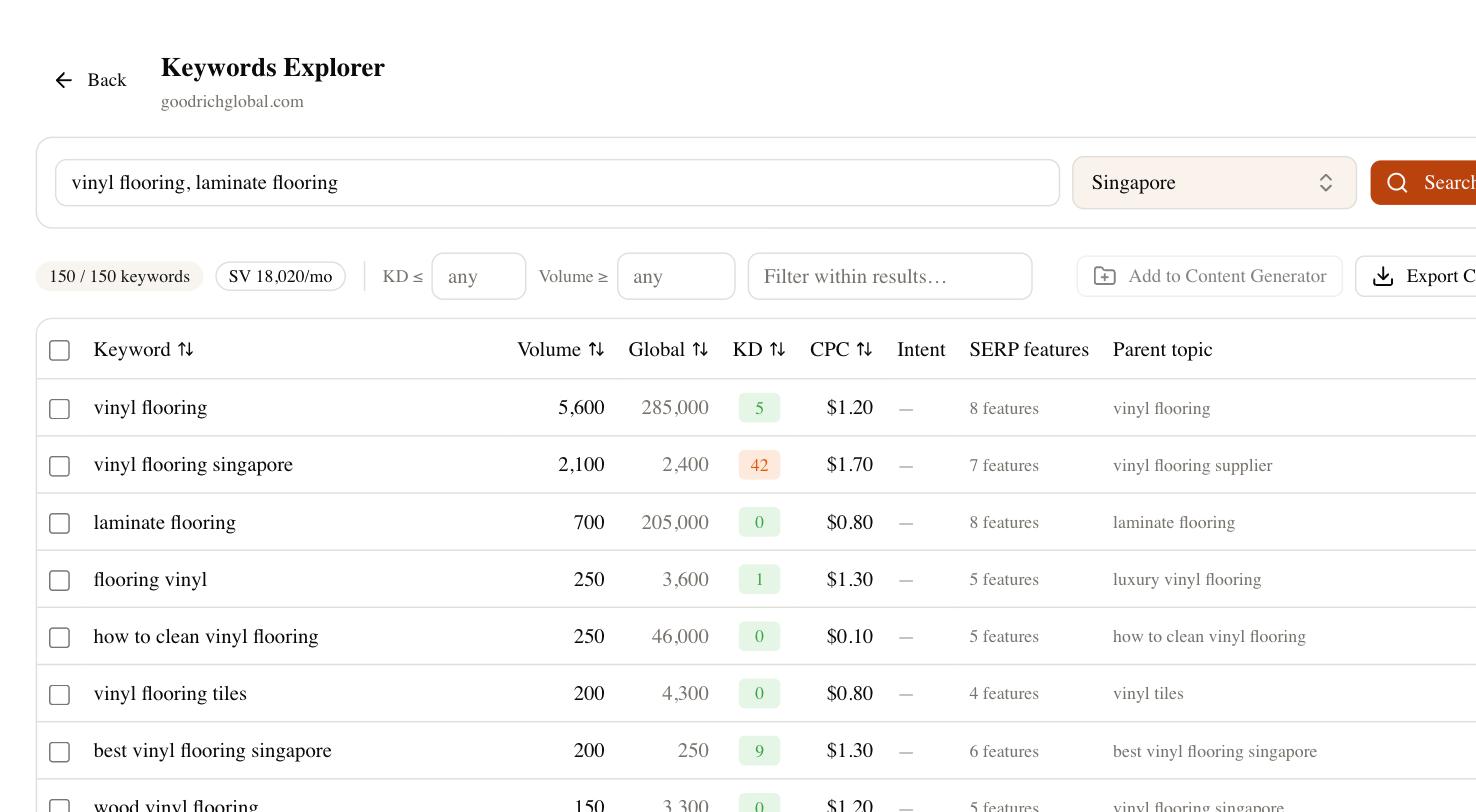
Doing all of this normally means a keyword tool, a separate writer, a rank tracker, and a spreadsheet stitching them together. SEO Rocket collapses that into one chat-first workflow running on real, Ahrefs-grade data. You can ask it to surface low-difficulty comparison and integration keywords in your space, check the actual page-one competition for each, draft the page, and then track where it lands over time. The keyword difficulty and volume live in Keywords Explorer; the competitor gap view shows which terms your rivals rank for that you do not.
The part traditional tools miss is AI search. A growing share of SaaS buyers now ask ChatGPT, Perplexity, or Google’s AI Overviews to shortlist vendors, and a page that ranks first on Google can still be absent from that answer. SEO Rocket’s Brand Radar tracks whether your product gets cited across those surfaces, so you are optimizing for the search that is actually happening. For a lean SaaS team, that consolidation is the point — fewer subscriptions, one place to find the winnable pages and prove they moved the number that matters.
Your first 90 days
Keep it tight. Spend the first month shipping your three most obvious comparison and integration pages and instrumenting signups by landing page. Use month two to build one topic cluster around your core problem and earn a few relevant links to your best comparison page. In month three, review what actually started trials, double down on the templates that worked, and only then start the slower awareness content. Give every page a full ranking cycle before you judge it — positions jitter a few spots day to day, and no tool’s estimates are precise. The teams that win at SaaS SEO are not the ones who publish most; they are the ones who measure honestly and reinvest where the pipeline actually moved.